
Last updated October 15, 2026
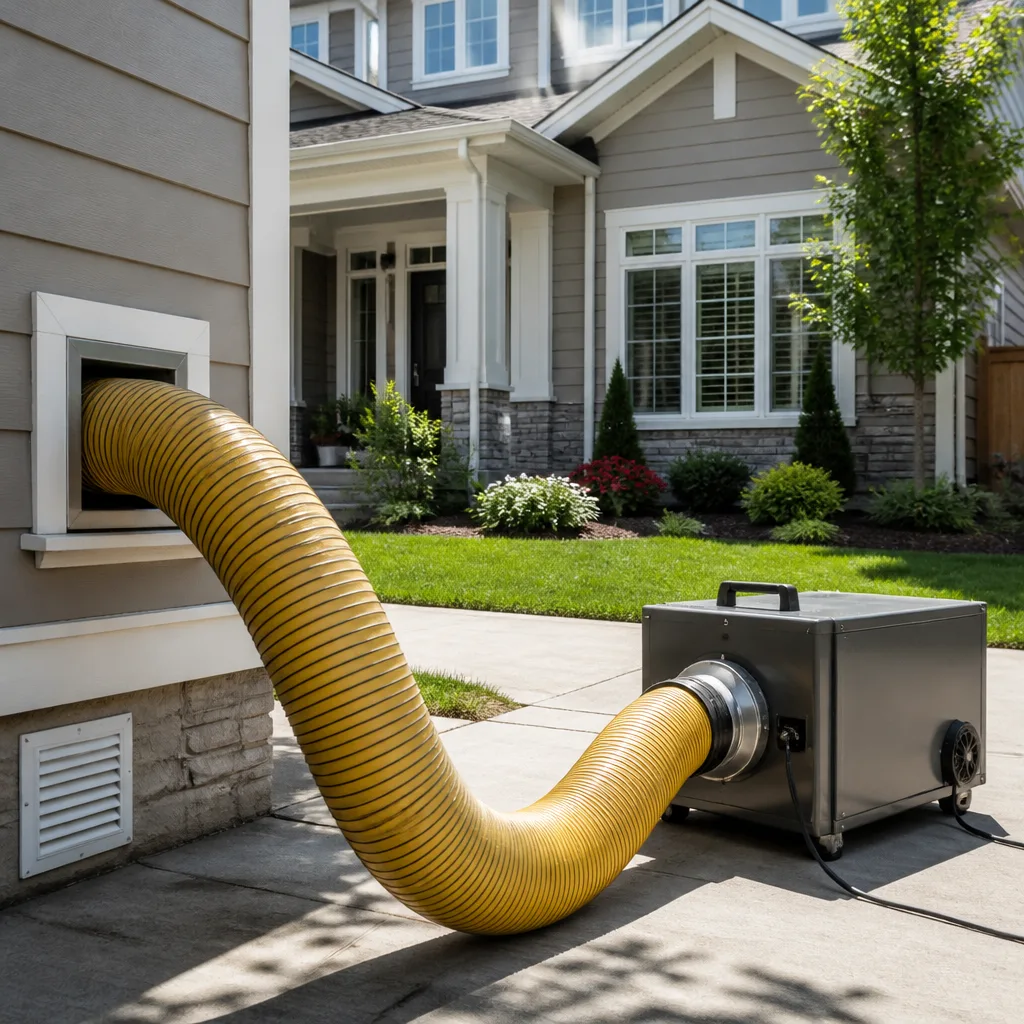 Whole-home duct cleaning
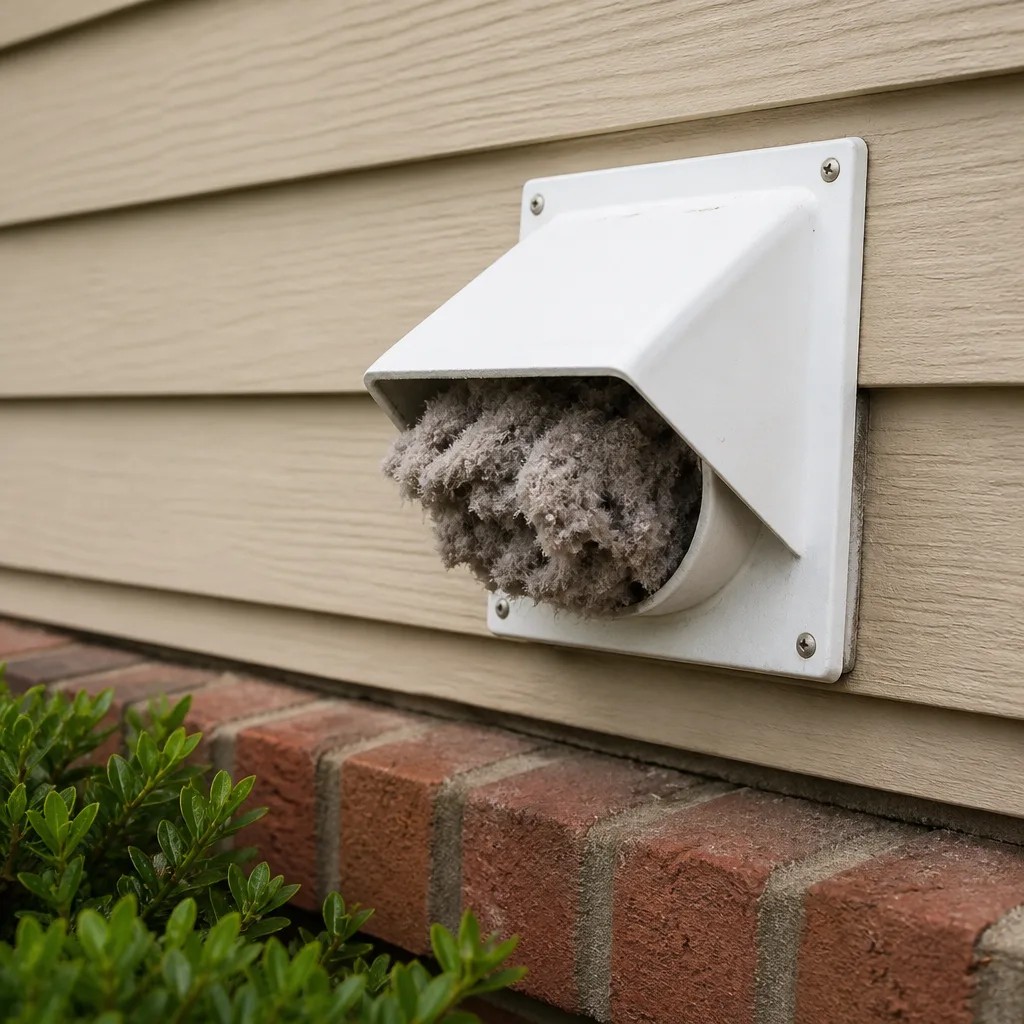 Dryer vent cleaning
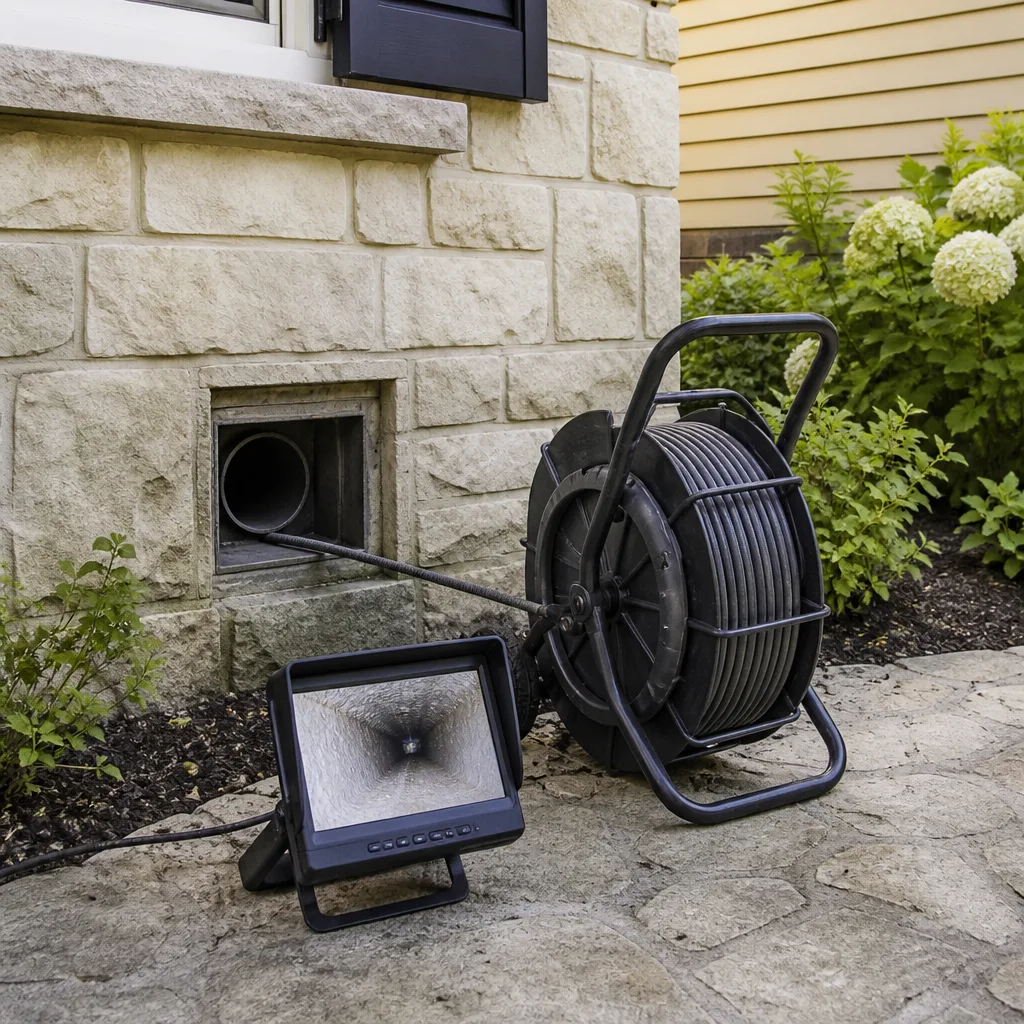 Camera inspection
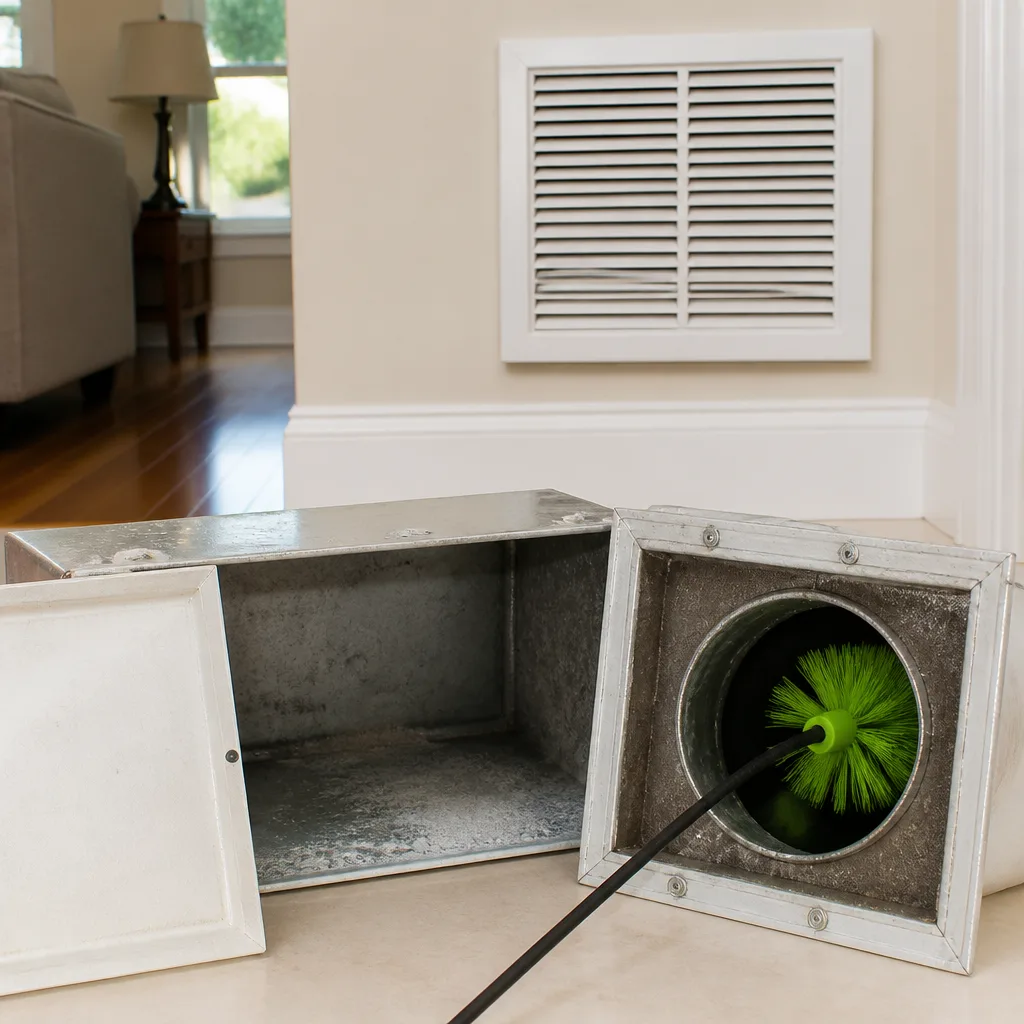 Sanitizing & deodorizing
Whole-system duct and dryer vent check with before-and-after photos - you see exactly what came out of your vents
That "$99 whole-house special" is a bait ad - the real number appears once they are in your hallway, or the "clean" is a shop-vac at the register. We photograph the inside of your ducts before and after instead.
Seasonal Air Duct Cleaning Care for San Antonio: Year-Round Homeowner’s Guide
Here’s the thing most San Antonio homeowners don’t realize: if you’re cleaning your ducts on a fixed January schedule because that’s what you’ve always done, you’re cleaning them at the worst possible time. Right before the system sits mostly idle for two months, instead of after the 8-month cooling marathon that actually loaded them with debris. This guide breaks down what your ducts actually need in each phase of a San Antonio year, when the single best cleaning window falls, and why the city’s cedar and oak pollen seasons change the whole equation.
Quick Answer
The best time to clean air ducts in San Antonio is late September through November, after peak cooling season ends and before holiday indoor air demand begins. A full Air Duct Cleaning in this window removes eight months of accumulated dust, pollen, and debris before your windows close and your indoor air becomes the only air you breathe. Spring and summer are for lighter maintenance tasks: clearing return air grilles of cedar and oak pollen, mid-season filter changes, and visual inspections of the blower compartment.
Styles & brands we work with
Table of Contents
- Why San Antonio’s Climate Demands a Different Duct Schedule
- The Optimal Cleaning Window: Late September Through November
- Spring: Cedar and Oak Pollen Return Air Grille Maintenance
- Summer: Filter Checks and Blower Compartment Inspections
- Fall: The Full Professional Cleaning and Filtration Assessment
- Winter: Dryer Vent and Bathroom Exhaust Fan Inspection
- How Often Does a San Antonio Home Really Need Duct Cleaning?
- What Does Air Duct Cleaning Cost in San Antonio?
Why San Antonio’s Climate Demands a Different Duct Schedule
San Antonio doesn’t have four equal seasons. It has a dominant cooling season that runs roughly March through October, a mild shoulder period in November and February, and a short winter that barely qualifies as cold by national standards. Each phase creates a distinct duct maintenance task, and a one-size-fits-all annual schedule completely misses that reality.
Here’s what that means in practice. Your air conditioner runs 10 to 12 hours a day from late spring through early fall. That’s not an exaggeration: San Antonio regularly sees 100-degree days from June through September, and even May and October frequently hit the high 80s and low 90s. During those months, your HVAC system pulls air through the return ducts, across the filter, and back through supply vents continuously. Every hour of runtime pulls whatever is in your air, and whatever settles in the ducts, deeper into the system.
Contrast that with a northern climate, where furnaces run hard for four months, then stay mostly idle through summer. The debris load builds differently. In San Antonio, the long cooling season means fine dust, pollen, and pet dander accumulate steadily over the better part of a year, compressed and compacted by constant airflow. By October, the average duct system in this city carries a load that would take many northern homes two years to accumulate.
Then there’s the pollen factor. Mountain cedar season peaks December through February, and oak follows in March and April. These aren’t minor irritants: San Antonio is consistently ranked among the worst cities in the country for cedar allergies. That pollen gets drawn into return air grilles, pushed through ductwork, and caked onto blower components. If you’re cleaning ducts in January, you’re doing it at the tail end of cedar season, when the system is about to pull in several more months of oak pollen without a break. The timing simply works against you.
We’ve worked in ducts across San Antonio, from Stone Oak to Alamo Heights to Helotes, and the seasonal pattern is unmistakable. The systems we clean in October have a different debris profile than the ones we see in April. October cleanings pull out months of compacted summer dust and early pollen. April cleanings pull out cedar and oak pollen layered onto whatever was already in the duct. One is a reset after a marathon. The other is an interruption in the middle of allergy season. Neither is wrong, but they serve different purposes.
This guide is organized by season because that’s how your ducts actually experience the year, and you can find more guides & resources on our blog. Each section covers what to do, why that timing matters, and what you can reasonably handle yourself versus what needs professional equipment.
The Optimal Cleaning Window: Late September Through November
If you do one professional duct cleaning a year, do it between late September and November. Here’s the logic.
By late September, the brutal part of San Antonio’s cooling season is usually winding down. You might still run the AC on warm afternoons, but the 10-to-12-hour days are mostly behind you. The system has just finished its hardest stretch of work. Everything pulled in from March through September, all the dust, pollen, dander, and whatever else circulates through a busy household, is sitting in the ducts right now. That’s the moment to remove it.
Then comes the window-closing shift. Sometime in October or November, depending on the year, San Antonio gets its first sustained cool front. Windows that have been open during the mild shoulder evenings get closed. The heater gets turned on for the first time in months. And suddenly, your indoor air is the only air. If your ducts are carrying a full season’s worth of debris, your HVAC system is now circulating that debris through every room, over and over.
There’s also the holiday factor. November and December mean more indoor time, more cooking, more guests, and for many households, more candles, more decoration dust, more everything. If someone in the house has allergies or asthma, the holiday season is exactly when you don’t want a dirty duct system pushing particulates into the living room. A late-October cleaning clears the system right before this indoor-heavy period begins.
- Wait until peak cooling is over. Late September at the earliest. Cleaning while the system still runs 10 hours daily just means new debris starts accumulating immediately.
- Clean before sustained window-closing. You want the ducts clear before the house seals up for the season. In San Antonio, that’s typically late October to early November.
- Pair the cleaning with a whole-home filtration assessment. Once the ducts are clean, you want a filter that keeps them cleaner longer. Aprilaire media filters, for example, can capture a much higher percentage of airborne particles than a standard one-inch fiberglass filter.
- Document the work. Before-and-after photos of the duct interior are the industry’s version of a receipt. Any reputable duct cleaner should provide them without being asked.
One more thing about this window. Late-season cool fronts in San Antonio can be erratic. Some years, October stays warm into November. Don’t wait for a specific date on the calendar; watch the forecast. When you see the first sustained cool front pushing nighttime temperatures into the 50s, that’s your signal to book the cleaning.
Spring: Cedar and Oak Pollen Return Air Grille Maintenance
Spring in San Antonio is beautiful and brutal for anyone with allergies. Mountain cedar, which actually pollinates in the winter, peaks December through February. Oak pollen follows from March into April. By the time both seasons overlap in March, return air grilles across the city are coated with a fine yellow-green film that homeowners often mistake for ordinary dust.
This is the most overlooked seasonal task in San Antonio duct care, and it’s one you can do yourself in about fifteen minutes per grille. Here’s what happens: return air grilles are the intake points where air gets pulled into the HVAC system. Close to the floor, they’re effectively pollen traps. Every particle that settles on them gets pulled through the grille, into the return duct, and toward the filter. Some gets caught by the filter. Some migrates past it. Some cakes onto the grille itself, restricting airflow and forcing the system to work harder.
Think of it this way. If your return grille is visibly coated with pollen, that’s pollen that has already been drawn into the ductwork. The grille is just the visible evidence of what’s happening further in. Before the long cooling season loads that pollen deeper into the system, clear it from the easiest access point you have.
- Locate your return air grilles. Most San Antonio homes have one or two large returns in central hallways, plus possibly one in each bedroom. They’re typically larger than supply vents and located closer to the floor.
- Vacuum the grille face. Use a brush attachment to pull pollen and dust off the grille exterior. Do this before you touch anything else, so you’re not pushing debris through the slots.
- Remove the grille and clean the fins. Most return grilles pull off with light pressure or a couple of screws. Wipe each fin with a damp cloth. Don’t soak it; a wrung-out cloth is enough.
- Check the visible duct opening. Shine a flashlight into the return duct. If you see a visible accumulation of dust or pollen on the duct walls, that’s the moment to schedule a professional cleaning. Spring is not the ideal full-cleaning window, but catching visible buildup early prevents it from being pushed further in by summer airflow.
- Replace the grille and repeat in May. Oak pollen season can stretch into early May. One thorough cleaning in March, plus a quick touch-up in May, keeps the return side of your system clearer through the worst of allergy season.
This task matters more in San Antonio than in most cities because of the pollen volume. Mountain cedar is so dense that it shows up on cars, patios, and windowsills as a visible dust even when you can’t see it in the air. The amount that makes it into a home’s HVAC system over a single cedar season is substantial. Clearing the return side before cooling season is cheap insurance against a full season of pollen recirculation.
Summer: Filter Checks and Blower Compartment Inspections
We said this earlier and it bears repeating: San Antonio air conditioners run 10 to 12 hours daily through the summer. That’s far more runtime than the system was really designed for, which means two things happen faster than the manufacturer’s maintenance schedule assumes. Filters load up faster, and debris migrates deeper into the blower compartment faster.
Summer is not the time for a full duct cleaning. The system is running too hard, and whatever you clean out will be replaced quickly by the continuous airflow. But summer is absolutely the time for two lighter maintenance tasks that most homeowners skip.
Filter checks, every 30 days. A standard one-inch filter in a San Antonio home during August should be checked monthly, not every 90 days. The combination of constant runtime, summer dust, and whatever pollen is still in the air means filters load up quickly. A clogged filter restricts airflow, which forces the blower to work harder, which shortens its lifespan and drives up your electric bill. It also means more unfiltered air bypassing the filter around the edges, especially if the filter is bowed or ill-fitting. If the filter looks dirty when you hold it up to a light, it’s done. Change it.
Blower compartment visual inspection, once mid-summer. This one requires some caution. The blower compartment houses the fan that pushes air through the system, and it’s usually accessible through a panel on the air handler. With the system powered off, you can remove the panel and look for visible dust accumulation on the blower wheel and housing. What you’re looking for is not subtle: if the blower wheel fins look fuzzy with dust, that dust is being blown into your supply ducts all summer. You don’t need to fix it yourself, and you shouldn’t attempt to clean the blower without proper training. But knowing the condition of the blower tells you how urgent a professional cleaning is when the fall window opens.
Here’s a practical summer checklist:
- Check the air filter at the start of June, July, August, and September. Mark it on the calendar.
- If the filter shows visible buildup, replace it immediately, even if it hasn’t been 30 days.
- Listen for new sounds from the air handler: rattling, ticking, or a change in pitch. These can indicate debris in the blower wheel.
- Check supply vent grilles in high-traffic rooms. If they’re developing dust streaks, that’s air bypassing the filter and carrying debris into the living space.
- Consider a mid-summer professional visual inspection if you have pets, recent renovation work, or a household member with asthma.
The migration issue is real. Dust that enters the return side in June gets pulled through the filter, past it, or around it, and then pushed through the blower and into the supply ducts. Ten hours a day of that, for four months, moves debris far deeper into the system than most homeowners realize. By August, what started as a light dust film in May is a compacted layer lining the supply trunks.
Fall: The Full Professional Cleaning and Filtration Assessment
The fall cleaning is the main event. This is when professional equipment earns its cost, because this is when the duct system is at its dirtiest and about to be sealed up for the season.
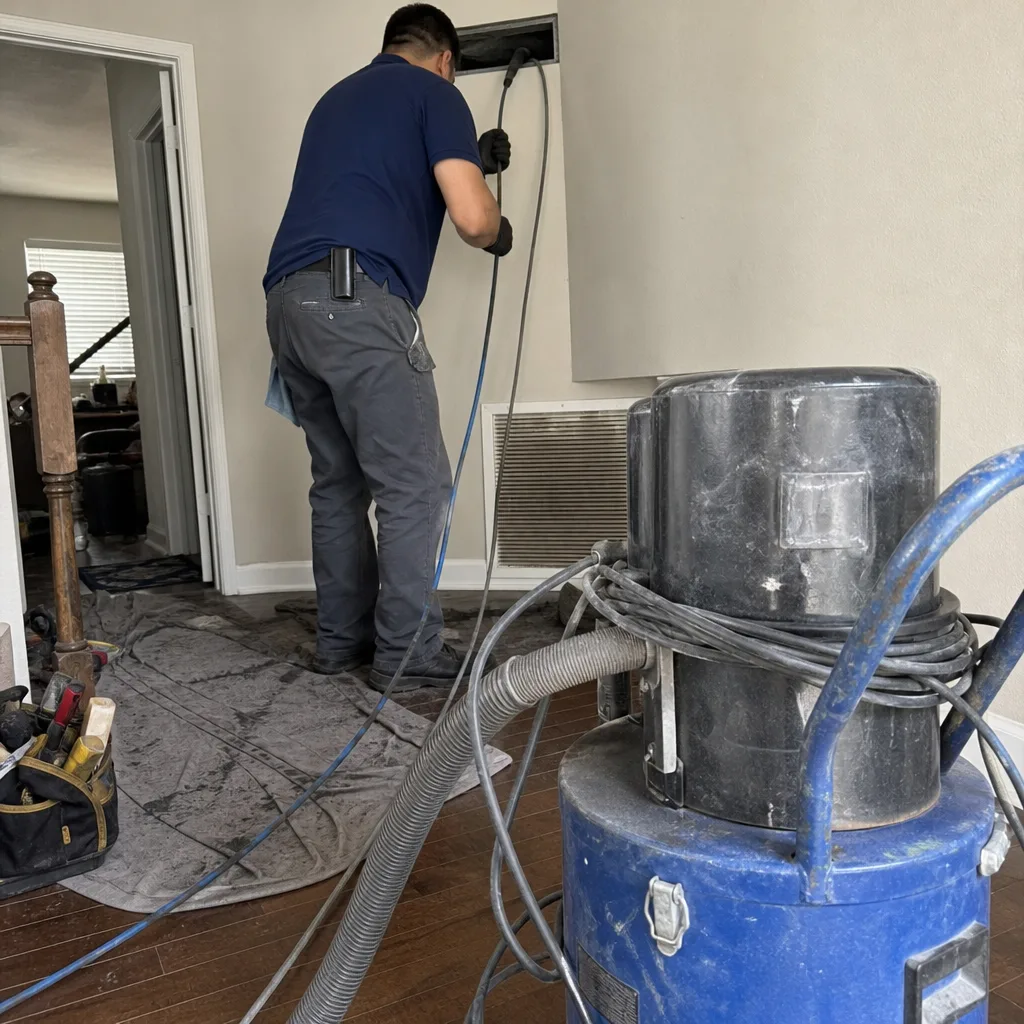
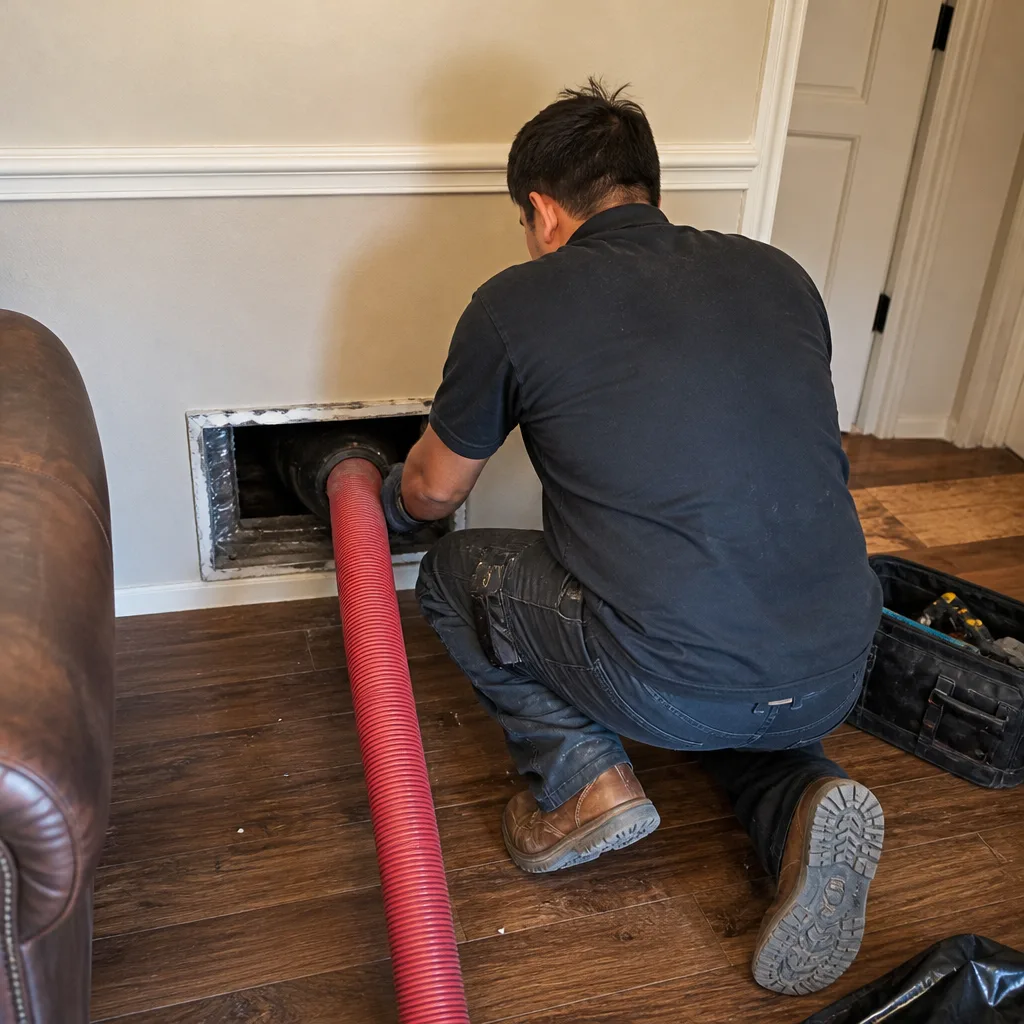
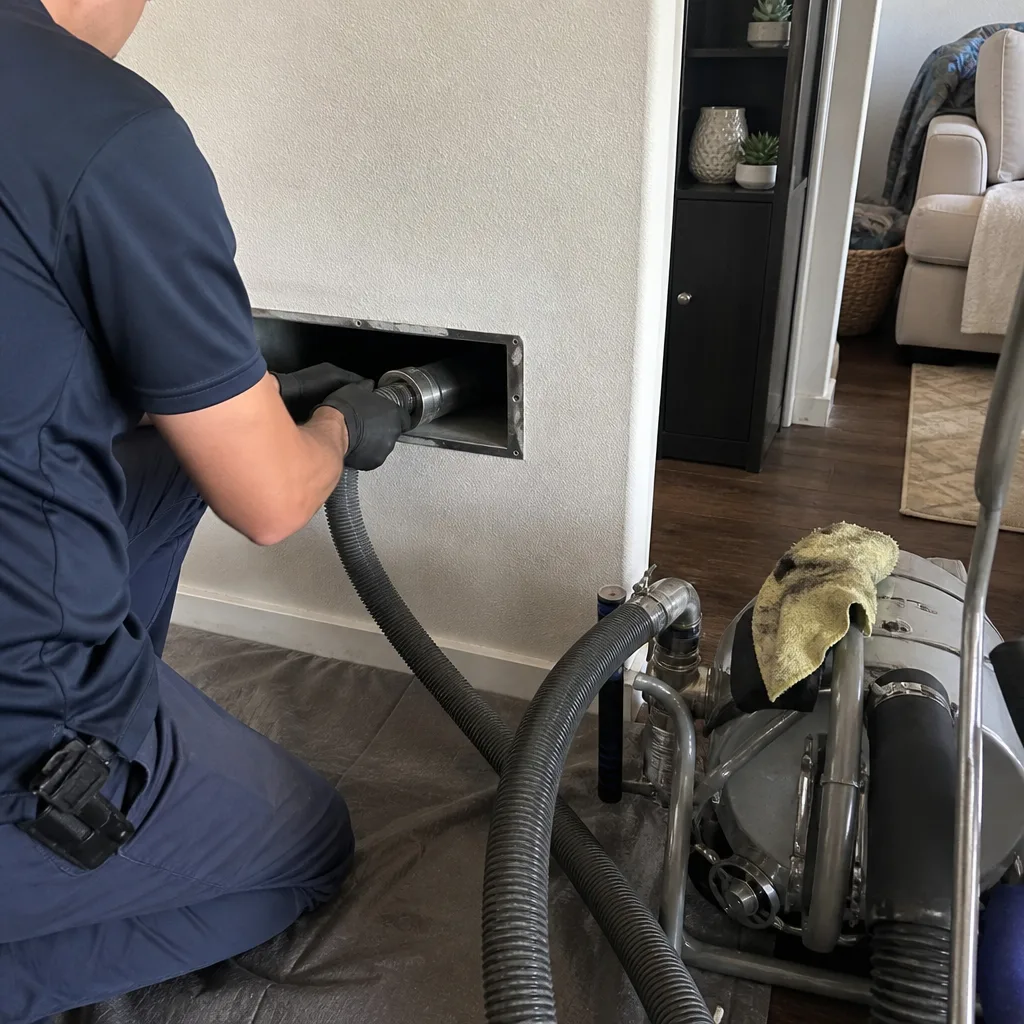
A proper professional duct cleaning in San Antonio is not a guy with a shop vac. It should involve rotary brush agitation and negative-pressure extraction. The rotary brush is exactly what it sounds like: a powered brush that spins inside the duct, loosening debris that has adhered to the duct walls. Negative-pressure extraction means the system is set up so the loosened debris goes straight into the vacuum, not back into your living room. The type of equipment matters here. Rotobrush systems are designed for exactly this. Nikro HEPA-rated vacuums handle the extraction side, capturing particles small enough to pass through ordinary shop-vac filters. Abatement Technologies containment units seal off the work area so the dust you paid to remove doesn’t resettle in the hallway.
The fall cleaning should also include an assessment of your whole-home filtration setup. Here’s the reality of San Antonio housing stock: many homes, especially those built before 2000, are still running the cheapest one-inch fiberglass filters available. These filters catch the big stuff and let the small stuff pass. An Aprilaire media filter, which fits into a dedicated cabinet installed at the air handler, can capture a dramatically higher percentage of airborne particles. It also lasts longer under high runtime conditions, which matters in San Antonio more than almost anywhere in the country. The fall cleaning is the right time to make this upgrade because the ducts are clean, the system is about to close up for the season, and whatever filtration you install will be starting from a clean baseline.
Let us be direct about what this should cost. For a typical single-family San Antonio home with one air handler and standard duct count, a full professional air duct cleaning runs roughly $400 to $800. Larger homes, multiple systems, or severely neglected ductwork push that higher. Anyone quoting significantly below that is almost certainly not using proper containment or HEPA extraction, and the savings disappear the moment the dust resettles through the house. This is the bait-and-switch pattern the industry is known for: a low teaser price that multiplies once the technician arrives. Ask for a written price before any work starts, and confirm that the price covers the entire system, not a per-vent add-on.
Here’s what a complete fall professional cleaning should include:
- Written price before work begins. Not an estimate. Not a range. A written price that does not change at the door.
- Sealing and containment of the work area. The air handler is isolated so dust removed from the ducts doesn’t escape into the living space.
- Rotary brush agitation of supply and return ducts. Both sides need to be done, not just the returns.
- Negative-pressure HEPA extraction throughout the cleaning. Debris is captured at the source, not blown around.
- Blower wheel and housing cleaning. This is where San Antonio summer runtime accumulates a lot of the debris you’re paying to remove.
- Filter replacement or upgrade. The old filter comes out. A new one goes in, or better, a media filter upgrade is offered with the price clearly stated.
- Before-and-after photos. A duct camera shot of the same location before and after. This is your proof the work was done properly.
If a quote is missing any of these, ask why. The fall cleaning is the one time each year when you can set the system up for cleaner operation through the sealed-up winter months, and a sloppy job in October means living with the result until the next fall.
Winter: Dryer Vent and Bathroom Exhaust Fan Inspection
Winter in San Antonio is short, but it’s not skippable. This is the season when two often-neglected vent systems get their heaviest use, and both deserve attention while the HVAC system is taking its brief breather.
Dryer vents. In the warmer months, many San Antonio households line-dry or use the dryer less. Once cooler weather arrives, the dryer runs more often. Every load pushes lint through the dryer vent, and a portion of that lint stays behind in the duct. A dryer vent that’s partially clogged forces the dryer to work harder, which means longer dry times, higher energy use, and in the worst case, a fire risk. The National Fire Protection Association identifies dryer vent cleaning as a critical fire-prevention task, and it’s one of the most commonly skipped maintenance items in rental properties and older homes. The duct behind your dryer is not built to handle years of accumulated lint without attention. Winter is the time to inspect it because winter is when it’s working hardest. If clothes are taking two cycles to dry, or the outside vent flap isn’t opening fully when the dryer runs, the vent needs cleaning.
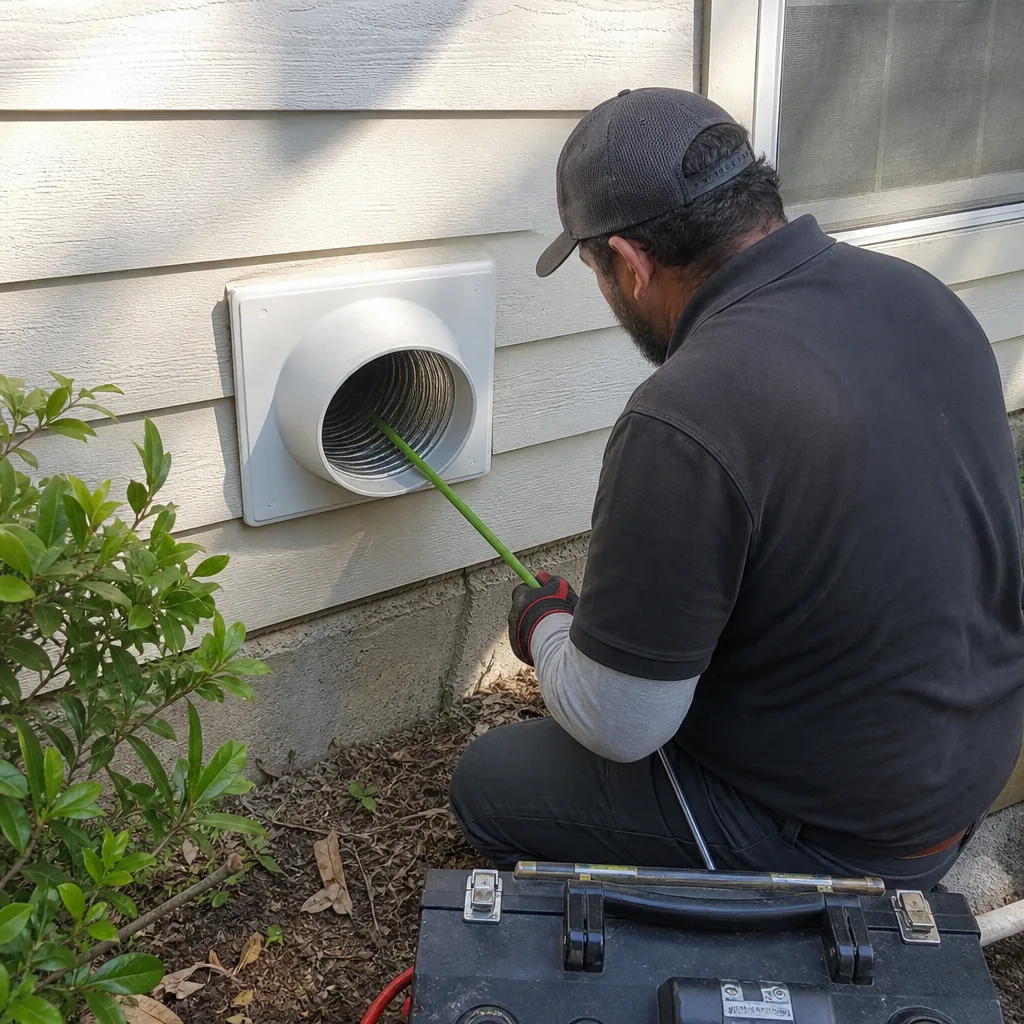
This is also a job where professional equipment matters more than most people think. A proper dryer vent cleaning uses a rotary brush system run through the entire vent run from the dryer to the exterior exit, with a vacuum attached at the dryer end to capture the dislodged lint. A long flexible brush run by hand helps, but it doesn’t get everything, and it doesn’t verify the full run is clear. In a city where many homes have long vent runs under slab foundations or through attics to reach an exterior wall, the difference between professional dryer vent cleaning in San Antonio and a DIY attempt is substantial.
Bathroom exhaust fans. Winter means closed windows and longer hot showers. Bathroom exhaust fans pull humid air out of the bathroom and push it through a short duct to the exterior. If that duct is clogged with dust and lint, the fan can’t do its job. Moisture stays in the bathroom, condenses on walls and ceilings, and creates the conditions for mold. The fan itself also runs longer, working against a restricted duct, and that shortens its lifespan. Check the fan by holding a tissue to the grille while it runs: if the tissue doesn’t stick to the grille, airflow is weak and the duct needs cleaning. This is a simple inspection you can do in under a minute, and it’s worth doing in December or January when the fan is getting its most consistent use.
Neither of these tasks should wait for the fall cleaning. The dryer vent especially is its own thing: separate from the HVAC system, separate from the supply and return ducts, and cleaned with different tools. A good duct cleaning company should offer it as a standalone service, priced separately, with the same written-price standard. Before hiring anyone, check our guide to Air Duct Cleaning Permits, Codes & Inspections in TX: What You Need to Know.
How Often Does a San Antonio Home Really Need Duct Cleaning?
The standard industry answer is every 3 to 5 years, and we’ll give you the honest version: for most San Antonio homes, 3 to 4 years is reasonable, with some households needing it more often and a few needing it less.
Here’s what shortens the interval in this city. Pets, especially indoor dogs and cats, are the single biggest accelerant of duct debris. A household with two indoor pets will load its ducts noticeably faster than a pet-free home. Allergies or asthma in the family shorten the interval because the occupants are more sensitive to whatever is in the ducts. Recent renovation work, even just a bathroom remodel, floods the air with drywall dust that the HVAC system distributes house-wide. Smoking indoors, burning candles frequently, or running the fireplace in winter all add particulate load. And if your home is older, with original ductwork that may have small gaps at the joints, it’s pulling in attic or crawlspace air, which means extra dust year-round.
What lengthens the interval? A home with no pets, no smokers, and a good whole-home media filter can go longer between cleanings. The filter upgrade matters here. A one-inch fiberglass filter catches big particles and lets small ones through. A four-inch Aprilaire media filter catches the finer stuff that would otherwise settle in the ducts. That’s an investment in the system, not just the air, and it pays off over years of cleaner duct interiors.
The honest rule of thumb for San Antonio: if you can’t remember the last time the ducts were cleaned, or you’ve been in the home more than three years without a cleaning, or you can see dust streaks around the supply vents, it’s time. The fall window is ideal, but if you’re reading this in April and the system is visibly dirty, don’t wait seven months. An off-season cleaning is still better than no cleaning, and the air duct cleaning service in San Antonio we recommend most often is the one that gets done.
What Does Air Duct Cleaning Cost in San Antonio?
No mystery pricing. Most standard single-system air duct cleanings in San Antonio run $400 to $800. Two-story homes, homes with multiple air handlers, or systems that haven’t been cleaned in a decade will run higher. A full HVAC cleaning that includes the blower, coil, and housing, not just the ducts, adds cost. Dryer vent cleaning is typically a separate line item, often in the $100 to $200 range depending on the vent run length.
The low quotes you’ll see advertised, the $99 whole-house specials, are not real. They’re bait. The price changes once the technician is in the house, and suddenly there’s a per-vent charge, or the blower is “extra,” or the system is “heavily contaminated” and needs an add-on treatment. The air duct cleaning industry has this reputation for a reason, and San Antonio’s market is as saturated with these offers as any city in Texas.
Here’s what a defensible price includes, and what you should confirm before anyone starts:
- A written total price for the complete system, agreed before work begins, that does not change at the door.
- Coverage of supply and return ducts, the main trunk lines and branch runs, plus the blower wheel and housing.
- HEPA-rated extraction equipment, not a truck-mounted shop vac.
- Containment of the work area so removed dust doesn’t escape into the home.
- Before-and-after photos of the duct interior.
- A warranty on the work that lasts longer than a few weeks.
We’ve seen the aftermath of low-bid cleanings across San Antonio, from the older neighborhoods around Jefferson and Woodlawn Lake to the newer builds in Stone Oak and Cibolo. The pattern is the same: dust streaks return within weeks, the blower never got touched, and the homeowner paid twice because the first job didn’t hold up. The 365-Day Done Right Promise exists because of this problem. If the work isn’t right within a year, you’re entitled to have it made right at no charge. Ask any other duct cleaner if they’ll match that. Most won’t.
If you’re comparing quotes, compare them line by line. Not the bottom line only. A $450 quote that doesn’t include the blower isn’t cheaper than a $600 quote that does. The line-items tell you what’s actually being cleaned, and the written price protects you from the bait-and-switch that defines the low end of this industry. For an exact quote on your system, call Cardinal Air Duct San Antonio at (254) 347-3897. Estimates are free, and the price you’re quoted is the price you pay.
Common Mistakes to Avoid
- Cleaning on an arbitrary calendar date instead of after peak cooling. A January cleaning in San Antonio means the system sits idle for two months right after being cleaned, then starts fresh in March with a full season of pollen and dust ahead. Clean after the system has done its hard work, not before a rest period.
- Skipping the return air grilles during pollen season. March through May, return grilles in San Antonio collect cedar and oak pollen that gets drawn into the system. A visible pollen film on the grille means pollen is already entering the ducts. Clear it before cooling season pushes it deeper.
- Running a one-inch fiberglass filter for 90 days through a San Antonio summer. Ten to twelve hours of daily runtime loads these filters in about half that time. A clogged filter forces air around the edges, which means unfiltered air goes straight into the blower and supply ducts.
- Accepting a low per-vent price without seeing the whole-system total. The $99 special becomes $600 once the technician counts vents and adds the blower, the coil, the return side, and the “sanitizing treatment.” Get a written total price for the complete system before anything starts.
- Choosing a duct cleaner that doesn’t provide before-and-after photos. Duct interiors are out of sight, which is exactly why photos matter. A company that won’t or can’t show you what the ducts looked like before and after is asking you to take the work on faith.
- Treating dryer vent cleaning as a once-in-a-decade chore. In San Antonio’s cooler months, dryers run harder and lint accumulates in the vent line. A restricted dryer vent extends dry times, raises energy cost, and is a fire risk. This one should be checked annually.
- Ignoring the bathroom exhaust fan because it’s “not an air duct.” It is a duct, and it handles moisture, and it’s the most commonly skipped vent in the house. Winter is when it matters most, because winter is when windows close and showers get longer.
See the difference
 Before
 After
After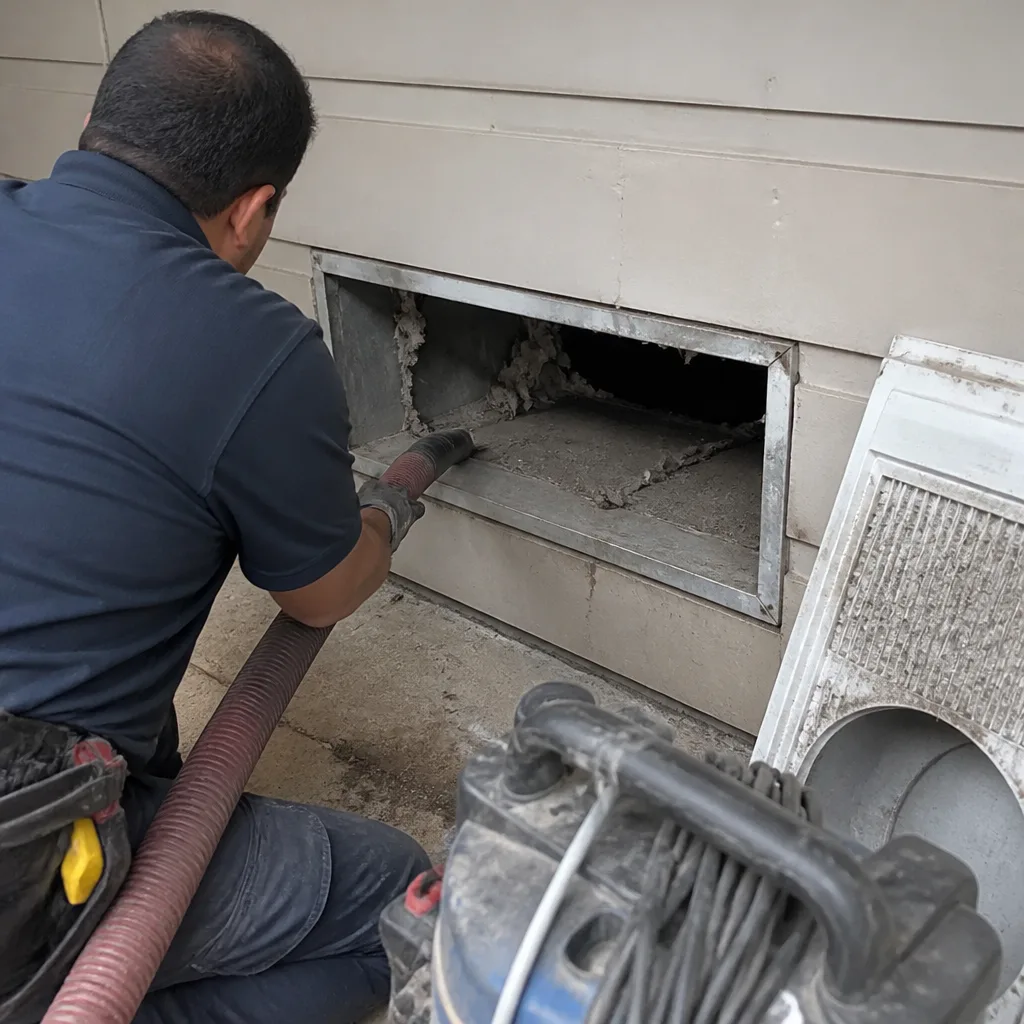 Before
 After
After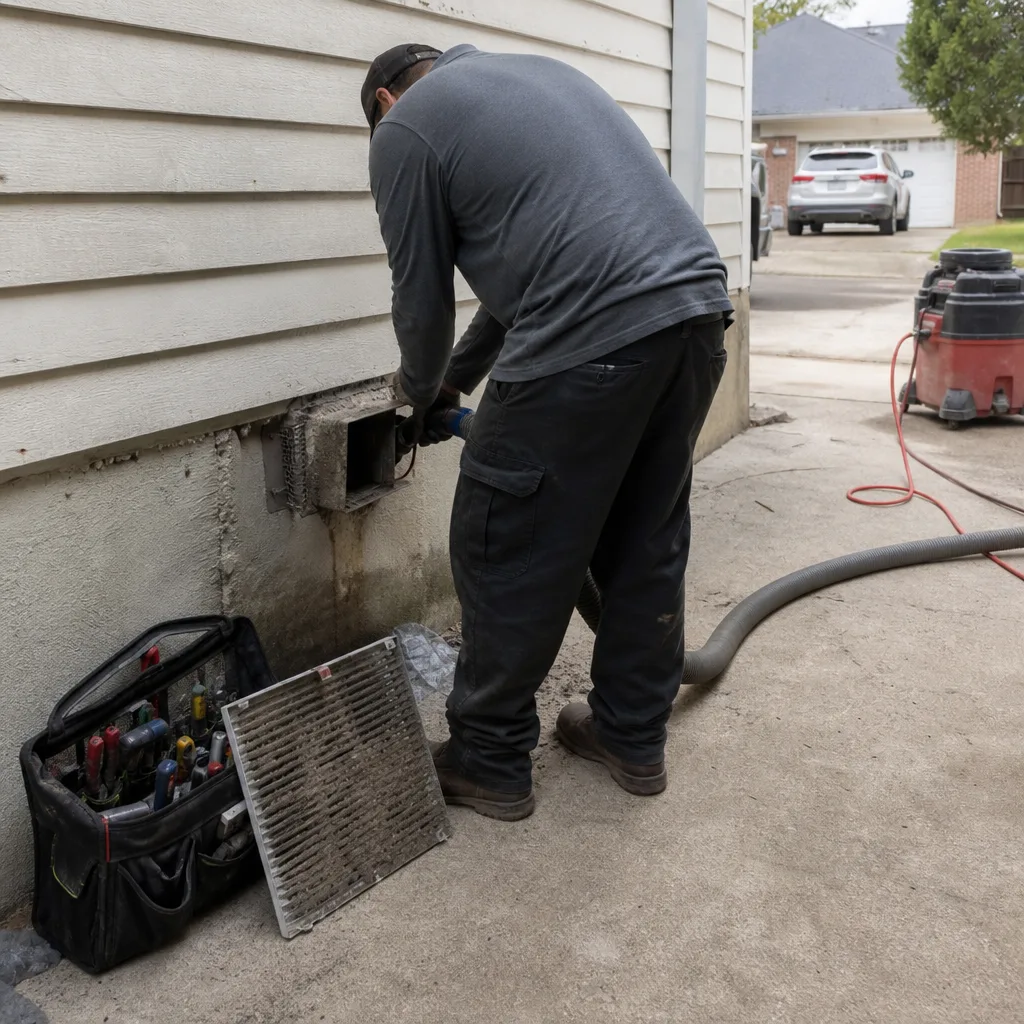 Before
 After
AfterWhen to Call a Professional
Some duct issues are visible from the living room, and those are the ones to act on immediately. Dust streaks radiating from supply vents, especially soon after cleaning, indicate air bypassing the filter and carrying debris into the living space. A consistent musty odor when the HVAC runs suggests moisture inside the ductwork, which is a mold risk and needs professional assessment. Rising energy bills with no change in usage often mean the blower is working against a restricted system, whether that’s a clogged filter, a dirty blower wheel, or obstructed ducts. And if anyone in the home has allergies that worsen indoors, the ducts are a likely reservoir. If you’re seeing any of these signs in San Antonio, HVAC cleaning in San Antonio is the service to ask about. Cardinal Air Duct San Antonio offers free estimates across the city, call (254) 347-3897 to book an assessment.
Frequently Asked Questions
Yes. Late September through November is the optimal window because it comes after the 8-month cooling season that loads the ducts with debris, and before windows close and holiday guests arrive. Cleaning in January means the system sits idle for two months right after being cleaned, which wastes the benefit. If you missed the fall window, clean as soon as you can rather than waiting another year.
Most standard single-system cleanings in San Antonio run $400 to $800 for a typical home. Larger homes, multiple systems, or severely neglected ductwork cost more. A low advertised price like $99 is bait: the total rises once the technician counts vents and adds the blower and other line items. A written whole-system price agreed before work begins is the standard to insist on.
Cheap quotes usually leave out something essential: the blower, the return side, proper HEPA extraction, or containment of the work area. Some low-bid companies run a shop vac through the ducts and call it done. The debris they miss resettles within weeks. Compare quotes line by line, not by the bottom number alone, and ask whether the price covers the complete system with before-and-after photo proof.
Before-and-after photos of the duct interior are the proof. A duct camera should show the same location before cleaning, with visible dust and debris, and after, with the duct walls clean. If a company cannot or will not provide photos, treat that as a red flag. The photos are also your record for warranty purposes if dust returns sooner than it should.
Every 3 to 4 years for most San Antonio homes, with some households needing it more often and a few less. Pets, allergies, renovation work, smoking, and older ductwork all shorten the interval. A whole-home media filter, like an Aprilaire cabinet filter, extends it by capturing finer particles before they settle in the ducts. If you can’t remember the last cleaning or see dust streaks at supply vents, schedule one regardless of the calendar.
No. Dryer vent cleaning is a separate service with separate tools and a separate purpose. The dryer vent carries hot, lint-laden air from the dryer to the exterior. HVAC ducts carry conditioned air through the house. Both need professional attention, but they’re different systems. Dryer vents should be checked annually because restricted airflow there is a fire risk and a dryer-killer. In San Antonio’s cooler months, when dryers run hardest, this check is especially worthwhile.
The Bottom Line
San Antonio’s climate doesn’t reward a generic duct cleaning schedule. The dominant cooling season from March through October loads ducts with debris at a pace few other cities experience, and the cedar and oak pollen seasons add a layer most maintenance calendars ignore. The winning pattern is simple: clear return grilles in spring, check filters and watch the blower through summer, do the full professional cleaning in the fall before windows close, and give the dryer vent and bathroom exhaust fan attention in winter. That’s four seasonal tasks, one of which requires professional equipment, and all of which together cost far less than ignoring the system until it fails. The fall window is open now. If your ducts haven’t been cleaned in the last three years, there’s no better time than this season to get the house ready for the months of closed windows ahead.
Written by Omar Haddad, Owner at Cardinal Air Duct San Antonio, serving San Antonio since 2005.