
Last updated October 15, 2026
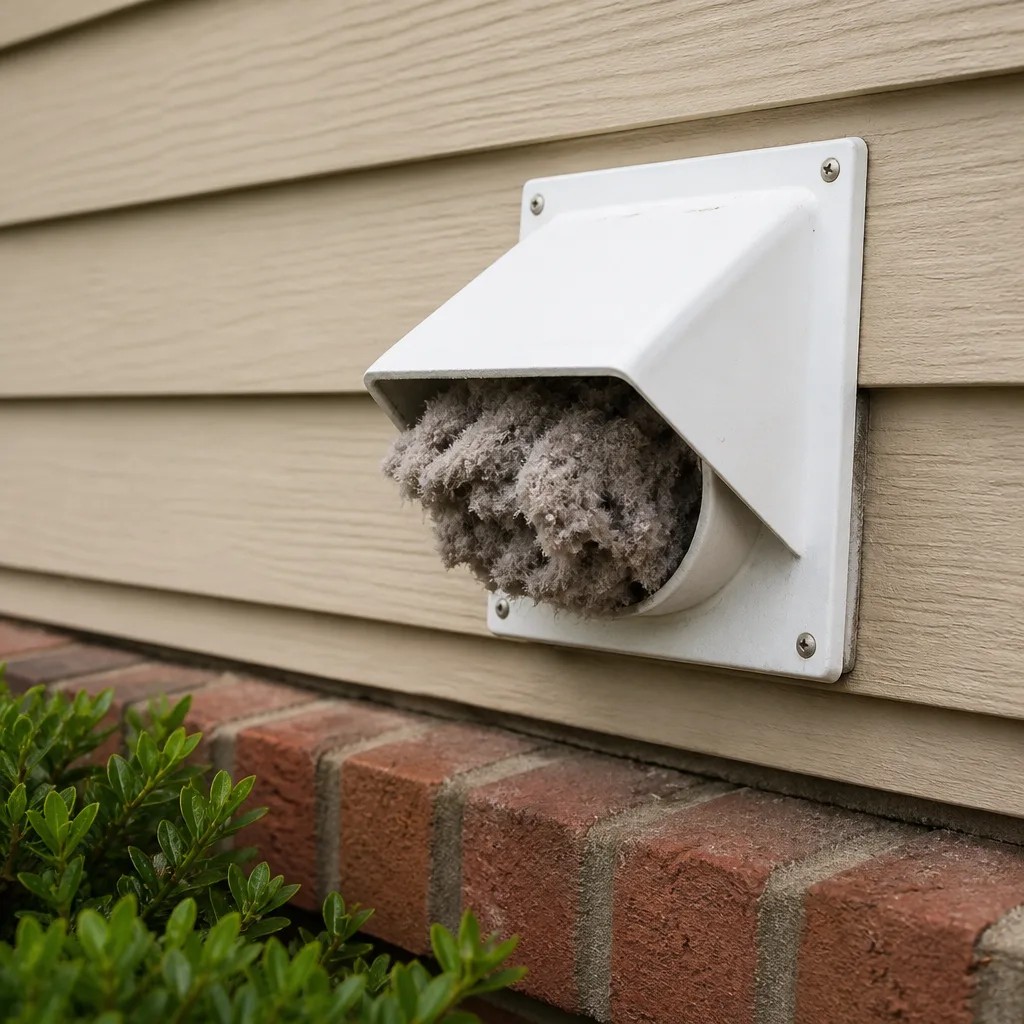 Dryer vent cleaning
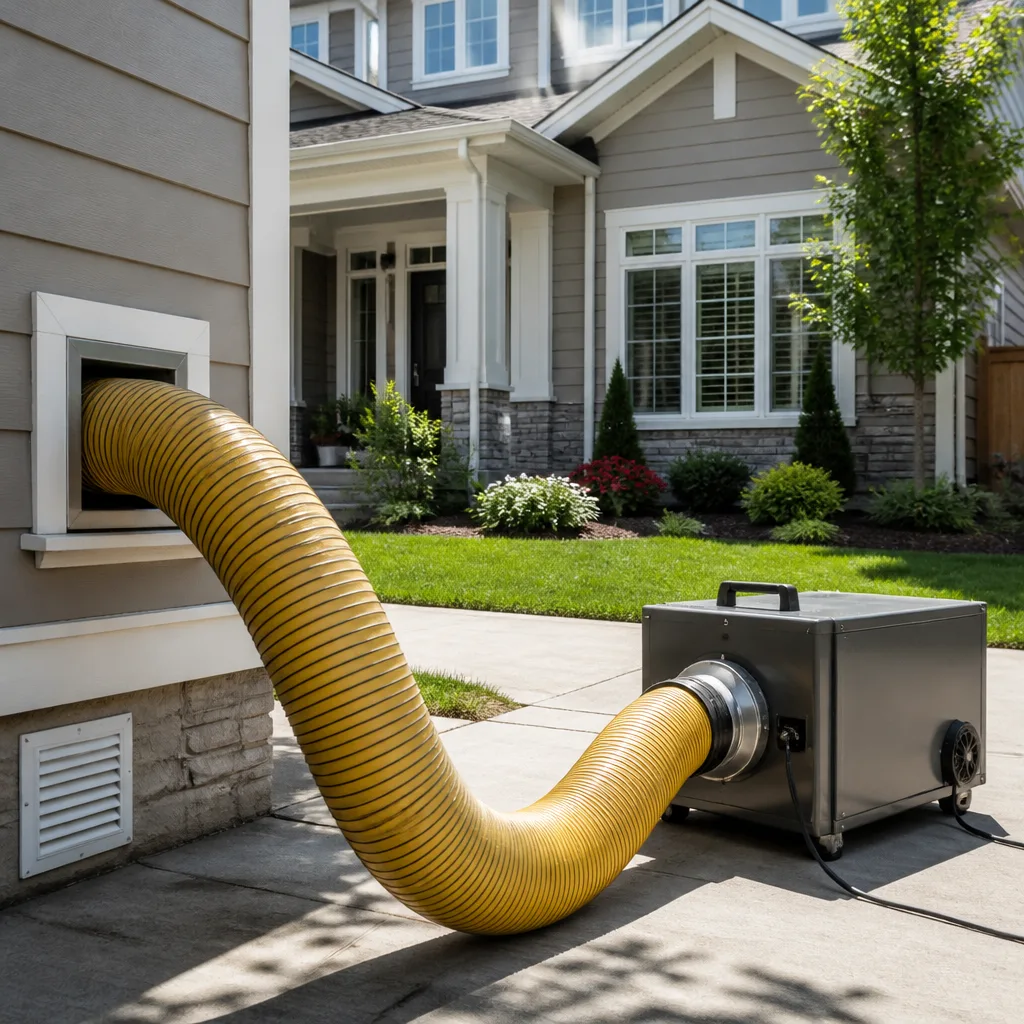 Whole-home duct cleaning
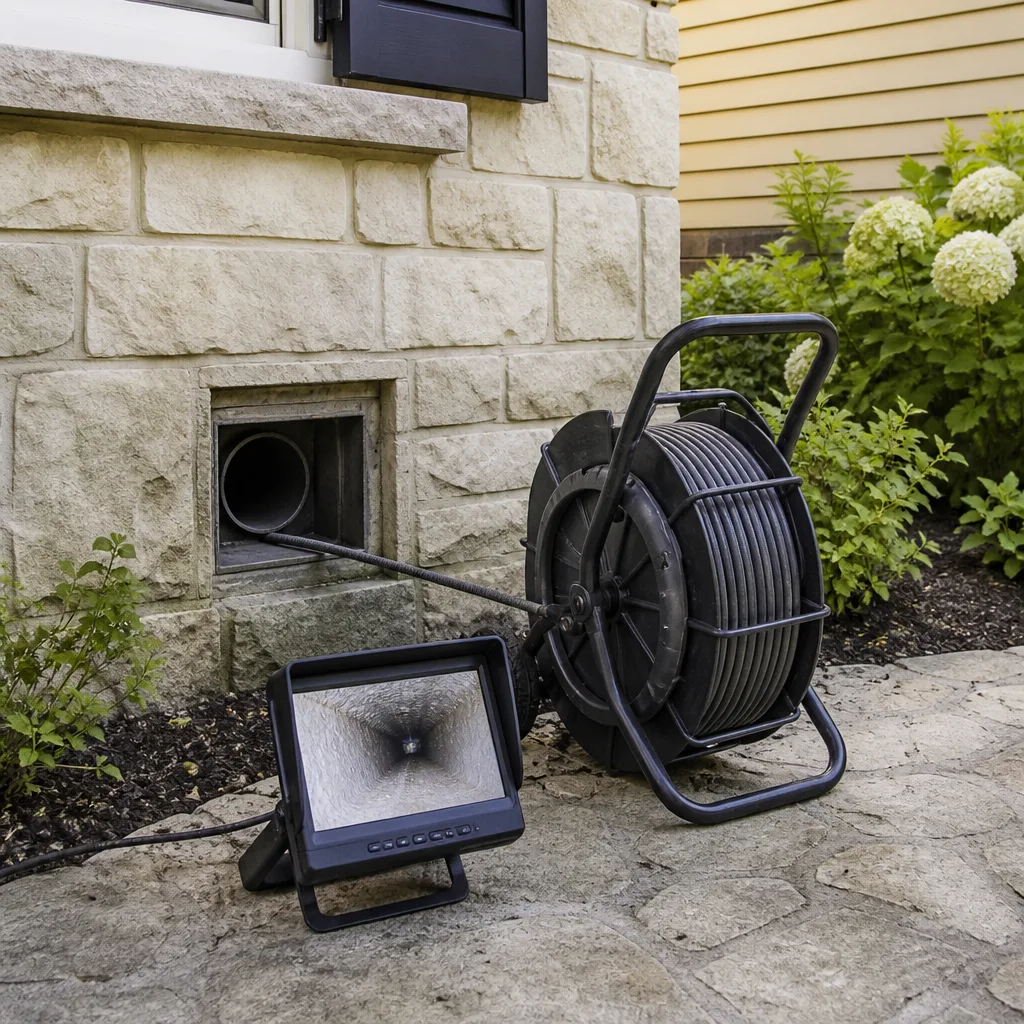 Camera inspection
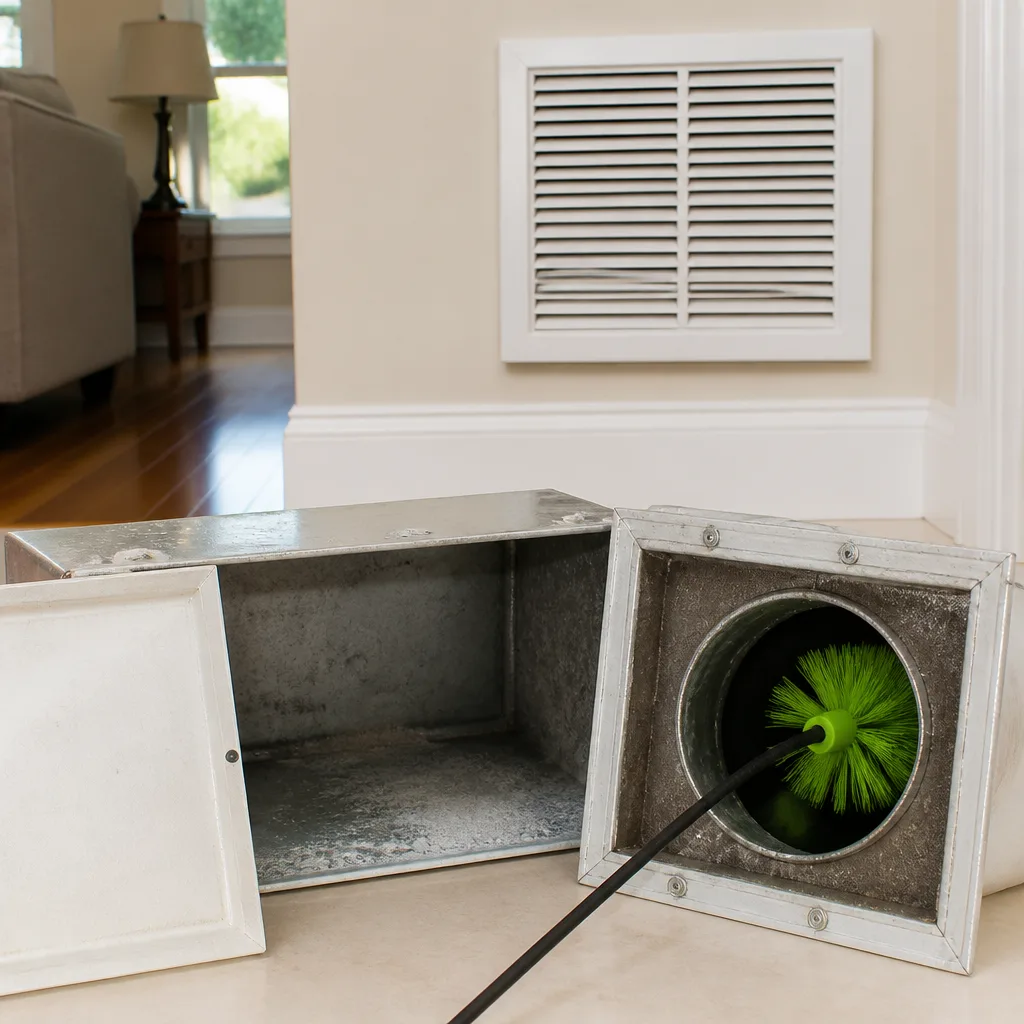 Sanitizing & deodorizing
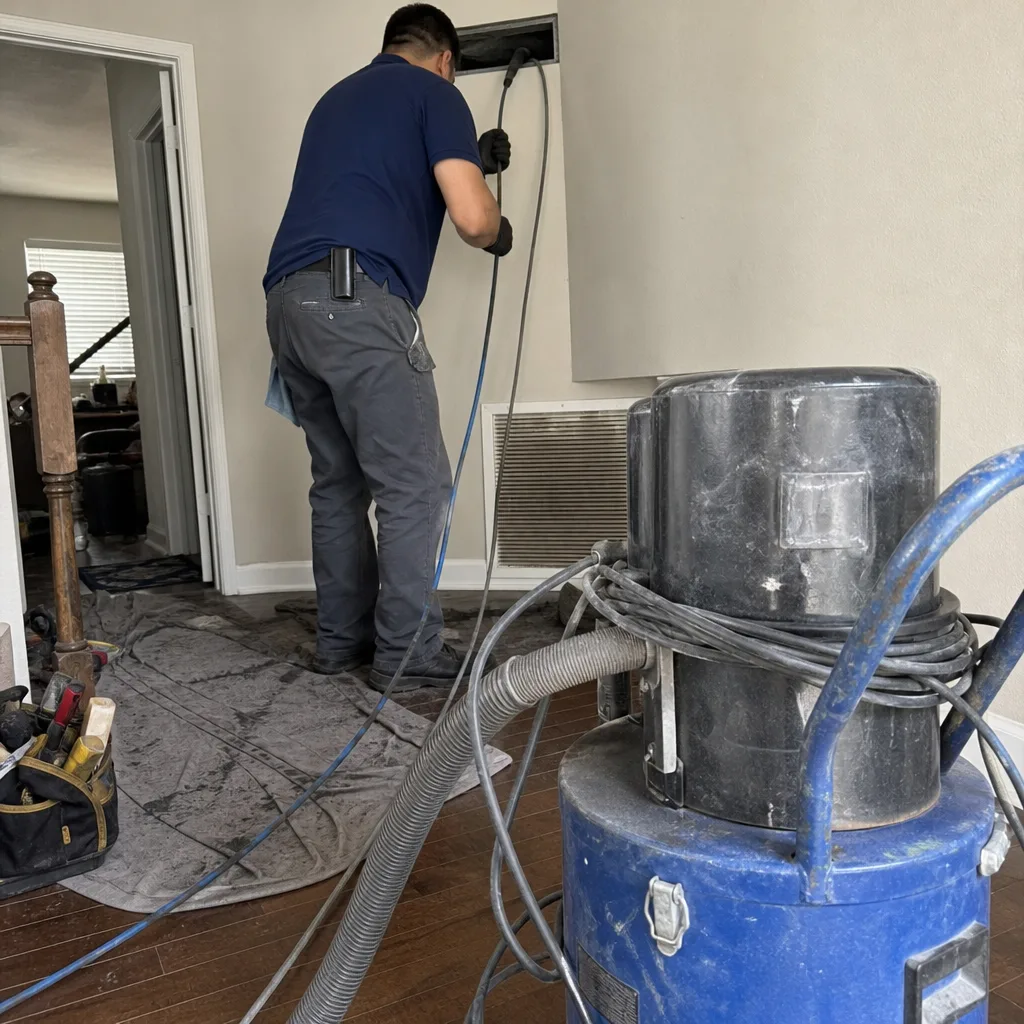
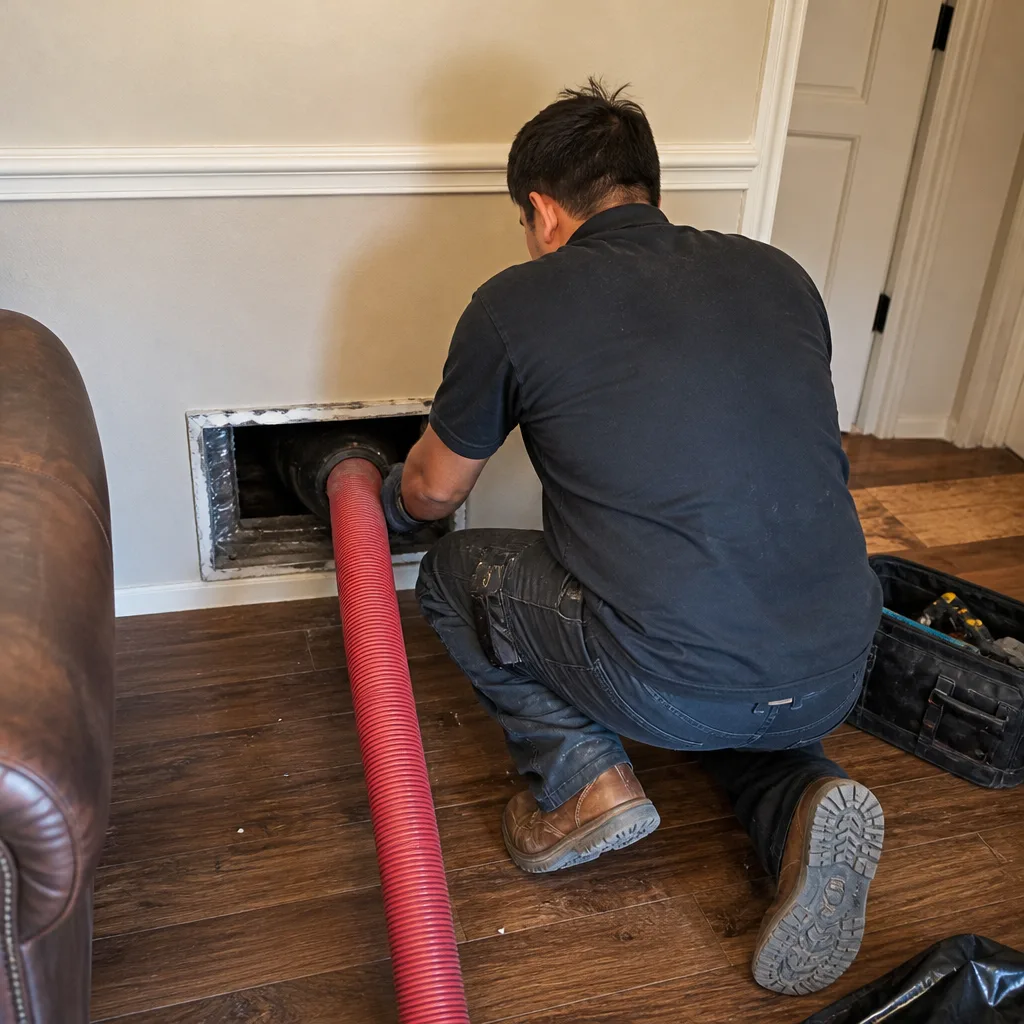
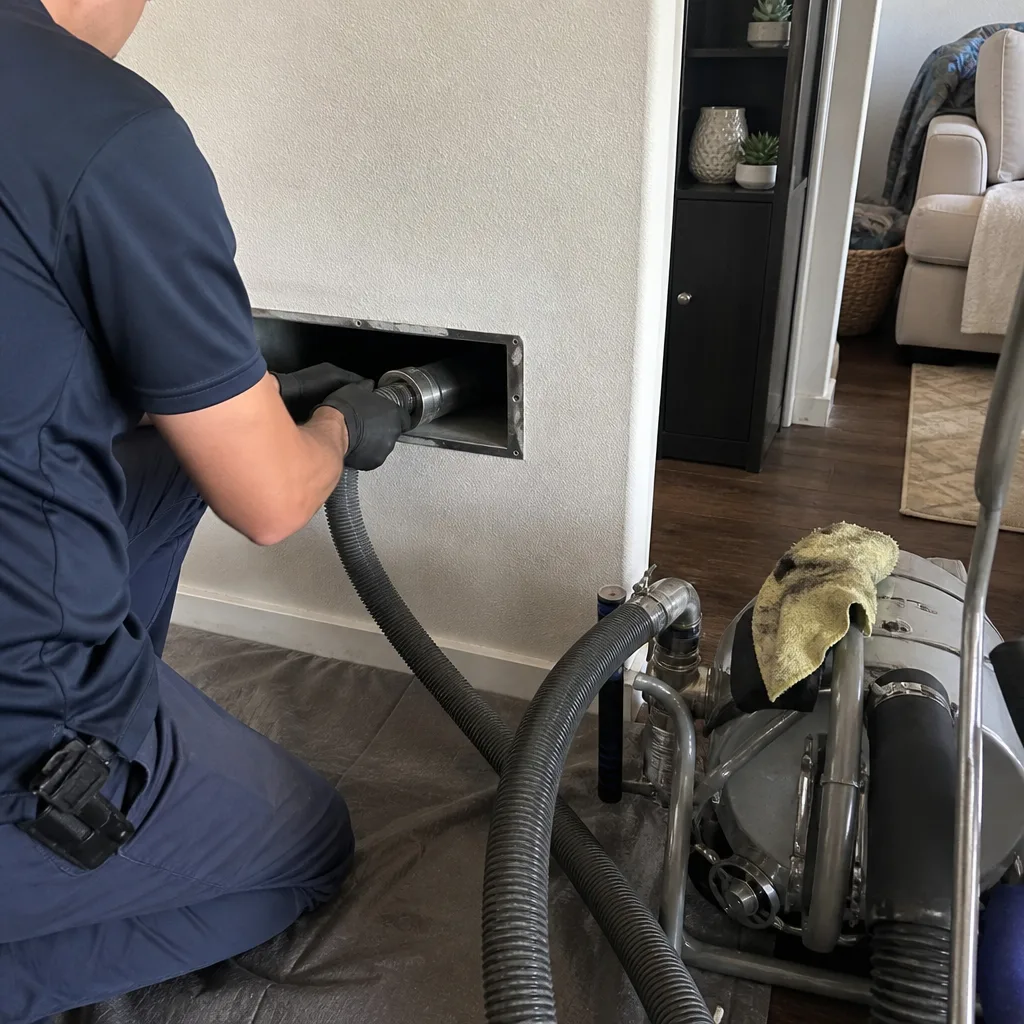
Whole-system duct and dryer vent check with before-and-after photos - you see exactly what came out of your vents
That "$99 whole-house special" is a bait ad - the real number appears once they are in your hallway, or the "clean" is a shop-vac at the register. We photograph the inside of your ducts before and after instead.
Dryer Vent Cleaning Maintenance Checklist for San Antonio Homeowners
The U.S. Fire Administration logs roughly 2,900 dryer fires every year, and the statistic quietly omits the part that matters most in San Antonio: homes with vent runs exceeding 25 feet, which are common in our sprawling single-story ranch layouts, see lint ignition risk climb sharply with every added foot. This guide gives you a working maintenance checklist built for the actual houses we have here, not the idealized short-run new construction most national guides imagine. You’ll learn how to measure your vent run, spot code violations without moving the dryer, and time your cleaning to San Antonio’s calendar, not a generic once-a-year rule.
Styles & brands we work with
Quick Answer
Dryer Vent Cleaning in San Antonio should happen at least once a year, and more often if your vent run exceeds 10 feet or has more than two elbows. The real maintenance checklist starts with measuring your total equivalent vent length against the IRC 35-foot maximum, verifying you don’t have plastic accordion flex duct, and clearing the exterior cap every spring when oak pollen and construction debris clog screens across the city. A professional rotary brush cleaning, like the Nikro kit our technicians run, removes what a homeowner’s brush simply cannot reach in longer San Antonio vent runs.
Table of Contents
- How to Measure Your Dryer Vent Run Length (and Why 35 Feet Is the Number)
- Plastic Accordion Flex Duct: The Pre-2006 San Antonio Code Violation
- A Seasonal Cleaning Checklist Timed to San Antonio’s Calendar
- What a Rotary Brush System Reaches That a Homeowner Kit Cannot
- The “My Dryer Is Old” Misdiagnosis That Is Actually a Blocked Vent
- How Often Should You Actually Clean Your Dryer Vent in San Antonio?
- Common Mistakes to Avoid
- When to Call a Professional
- Frequently Asked Questions
- The Bottom Line
How to Measure Your Dryer Vent Run Length (and Why 35 Feet Is the Number)
The International Residential Code sets a 35-foot maximum for a dryer exhaust duct, measured as equivalent length, not the straight-line distance from your dryer to the wall cap. Equivalent length is the actual duct length plus a penalty for every turn: each 90-degree elbow adds 5 feet, and each 45-degree elbow adds 2.5 feet. A dryer in the middle of a San Antonio ranch home, routed through a wall, down a joist bay, and out a soffit, can easily hit 35 feet equivalent while the straight-line distance is only 18.
Here’s how to check yours:
- Find the vent path. If your dryer sits on an interior wall, the duct probably runs through the attic, a floor cavity, or a crawlspace. In many 1960s and 1970s San Antonio homes, the duct takes a long detour through a garage or utility room before reaching the exterior.
- Measure each visible segment with a tape measure. For hidden sections, estimate using the distance between known points, like the wall penetration and the exterior cap.
- Count your elbows. Every 90 adds 5 feet. Every 45 adds 2.5 feet. San Antonio homes frequently have three or four elbows, adding 15 to 20 feet of equivalent length before the straight pipe is even counted.
- Add it all together. If the total exceeds 35 feet, your vent is technically over the code maximum. That doesn’t mean your house is unsafe today, but it does mean lint accumulates faster, airflow is weaker, and cleaning intervals should be shortened.
In our experience, homes in neighborhoods like Castle Hills, Oak Hills, and Leon Valley, where ranches were built in the 1960s and 1970s, are the most likely to exceed 35 feet equivalent. Builders of that era treated dryer vents as an afterthought, and the long horizontal runs through attic heat create exactly the conditions where lint packs into corners and turns.
One practical note: if your equivalent length is over 35 feet, the IRC actually requires a booster fan. Very few San Antonio homes have one. We’ll talk about what a professional dryer vent cleaning in San Antonio can do for long runs later, but for now, know that longer than 35 feet means cleaning is not optional, it’s twice-a-year maintenance.
Plastic Accordion Flex Duct: The Pre-2006 San Antonio Code Violation
Plastic accordion-style flex duct, the white or silver ribbed tubing that looks like a slinky wrapped in vinyl, has been a fire code violation for dryer exhaust since the early 2000s, but San Antonio homes built before 2006 still have plenty of it. The problem is structural: the ribs catch lint at every fold, the plastic melts at dryer exhaust temperatures, and once the duct sags, it creates a low spot that fills with flammable debris. The IRC was updated in 2012 to explicitly prohibit plastic flex for dryer exhaust, yet it’s still one of the most common things we find in older San Antonio neighborhoods.
You can identify plastic accordion duct without pulling the dryer away from the wall. Here’s how:
- Look behind the dryer with a flashlight. Plastic flex has a shiny, vinyl-like surface and visible spiral ribbing. Metal semi-rigid flex has a duller, aluminum-colored surface. If you see white plastic back there, that’s the bad one.
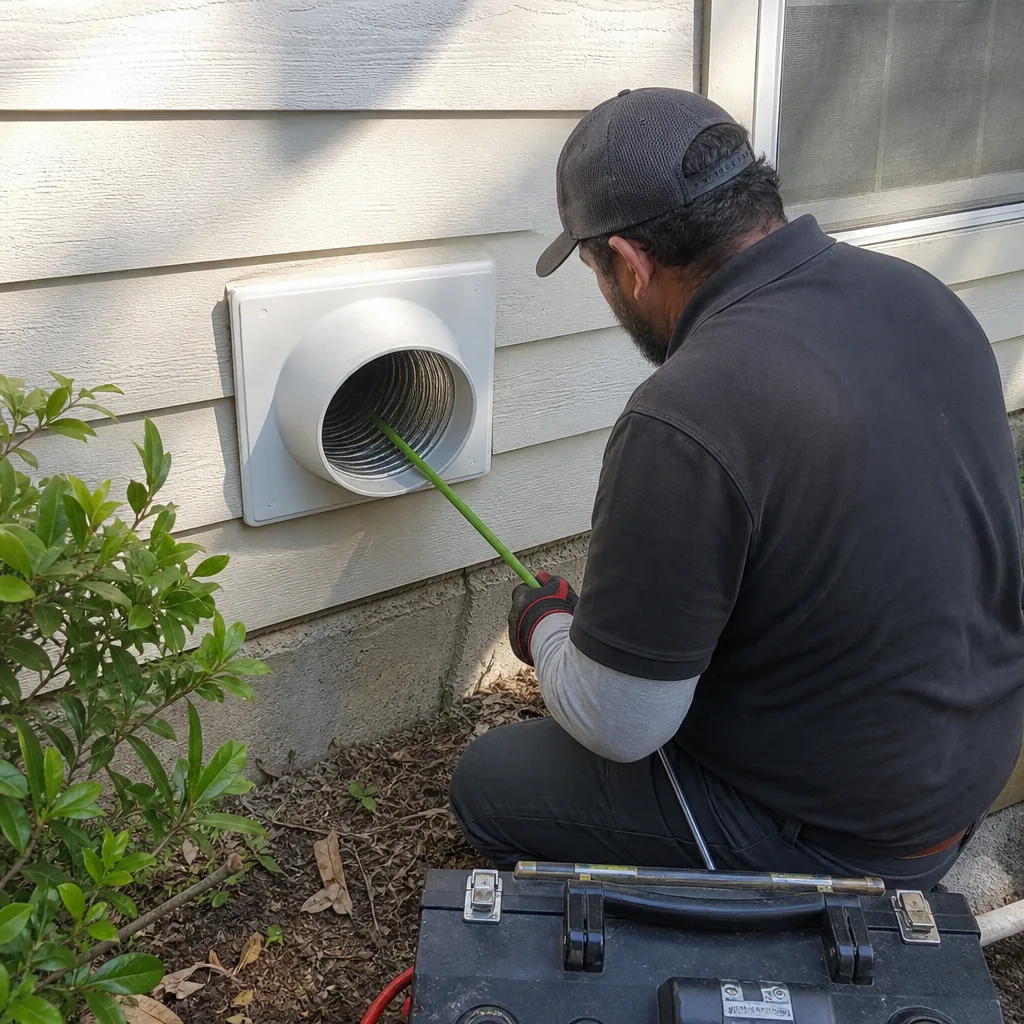
- Check the exterior cap. If you can see ribbed white or silver plastic inside the cap opening from outside, the entire run may be plastic flex. This is a strong signal the whole vent needs replacement, not just cleaning.
- Feel the duct at the wall connection. Plastic accordion flex is flexible and thin. Rigid metal pipe doesn’t give when you press it. Foil flex is soft but has a crinkly metallic texture. Plastic feels smooth and almost rubbery.
Why does this matter for maintenance? Because you cannot properly clean a plastic accordion duct. Rotary brushes tear the ribs, homeowners’ brush kits punch holes in the thin vinyl, and even if you manage to loosen lint, the folds re-catch it immediately. If you find plastic flex in your San Antonio home, the correct move is replacement with 4-inch rigid metal duct, or at minimum, UL 2158A-listed semi-rigid metal. This is a recommendation we make often, and we’ll say it plainly: a new vent run is cheaper than a fire restoration.
Homes built during the San Antonio construction booms of the 1970s and early 1980s are where we see this most, along with homes that had a second, unpermitted dryer added in a garage or utility room. Those setups almost always used whatever flex was on the shelf at the hardware store, and plastic was the cheapest option for decades.
A Seasonal Cleaning Checklist Timed to San Antonio’s Calendar
San Antonio’s climate creates three distinct lint-loading seasons, and a generic “clean it in spring” checklist misses two of them. Here’s the seasonal rhythm we recommend for local homeowners, built around what actually blows through and packs into dryer vents in this part of Texas. For related advice, see our Seasonal Air Duct Cleaning Care for San Antonio: Year-Round Homeowner’s Guide.
Late Summer: Post-Summer Lint Load Check
San Antonio summers mean air conditioning, which means interior humidity is lower, which means clothes come out of the washer a touch drier and the dryer runs shorter. But summer is also when the dryer sees maximum throughput: swimsuits, towels, kids’ clothes, gym gear. By late August or early September, the vent has had a season of heavy use but nobody has thought about it since spring. This is the most important check of the year.
- Run the dryer empty on air-fluff for 10 minutes and stand at the exterior cap. You should feel a strong, warm, steady airflow.
- If airflow is weak or you can’t feel it at all, that’s a blocked vent, not a weak dryer motor.
- Inspect the exterior cap screen for lint buildup. San Antonio’s dry summer air lets lint collect on the screen guard faster than humid climates.
Pre-Holiday: High-Use Inspection (November – December)
The holiday season brings guests, extra laundry, and heavier loads of bedding and towels. It’s also when a marginal vent finally closes off completely, and that’s when dryer fires happen. The National Fire Protection Association notes that the leading factor in dryer fires is failure to clean, and the leading season for those fires is winter, when people are running the dryer continuously for days.
- Clean the lint screen housing with a vacuum, not just the screen itself. Lint slips past the screen edges over time.
- Check the full vent run one more time before relatives arrive.
- Listen for the dryer rumbling or thumping. A high-pitched squeal during the holiday laundry marathon means the blower wheel is straining against a clogged duct.
Spring: Cap and Screen Clearing for Debris Season
San Antonio’s spring brings oak pollen, live oak tassels, and fine limestone dust from construction. All of it lands on and inside the exterior dryer vent cap. By late March, many caps in older neighborhoods are visibly caked with yellowish-green pollen paste. That layer restrics airflow even if the duct itself is clean.
- Brush the exterior cap clear with a stiff nylon brush. Don’t use water; pollen turns to cement when wet.
- Check the damper flap. San Antonio’s high spring winds can warp the flap so it stays partly open, letting birds and wasps into the vent.
- After spring storms, check for crushed or dented vent hoods, especially on the west and north sides of the house where wind loads are highest.
What a Rotary Brush System Reaches That a Homeowner Kit Cannot
Homeowner dryer vent brush kits, the kind that attach to a drill and spin a 10-foot flexible rod, work fine on short, straight runs. They fail on the long, multi-elbow, partially hidden runs that are common in San Antonio’s older housing stock. A Nikro rotary brush kit, mounted to a HEPA-filtered vacuum, cuts through packed lint inside a 25-foot or 35-foot run, around corners, through sagging horizontal sections, and right up to the exterior cap. That’s the difference between cleaning the first eight feet and cleaning the whole run.
Here’s what the professional-grade equipment actually does:
- Rotobrush rotary brush system: stiff nylon bristles sized to the duct diameter that spin while the vacuum pulls negative pressure. This mechanical agitation is what breaks loose the hardened lint shell that forms on duct walls after 18 or 24 months of San Antonio’s dry, dusty air.
- Nikro HEPA vacuum: captures loosened debris at the source with HEPA filtration, meaning lint and dust go into the vacuum bag, not back into your laundry room. Homeowner shop-vac setups blow as much as they collect, especially on longer runs where the vacuum’s pull weakens.
- Abatement Technologies containment: used on heavier jobs to isolate the work area so the cleaning doesn’t send a puff of lint through the house. For dryer vents, this matters less than for air duct cleaning in San Antonio, but it’s the same standards we bring to every job.
The practical takeaway: if your vent run is longer than 10 feet, includes two or more elbows, or includes any hidden section you can’t visually inspect, a homeowner kit won’t get the job done. It’ll clear the first few feet and leave the rest. And the rest is where the fire risk lives.
The “My Dryer Is Old” Misdiagnosis That Is Actually a Blocked Vent
The single most common misdiagnosis we hear from San Antonio homeowners is this: “The dryer still works, but it takes two cycles to dry a load now, so it must be getting old.” In our experience, that’s wrong more often than it’s right. A dryer that takes twice as long to dry clothes as it did a year ago is, far more often, a dryer with a partially or fully blocked vent. The heating element works. The drum spins. But the moist air has nowhere to go, so the dryer’s moisture sensor, the little metal strip inside the drum, keeps telling the machine the clothes are still wet, and it keeps running.
Here are the signs that point to a blocked vent, not a dying dryer:
- Clothes are hot at the end of the cycle but still damp. The heat is on, the air is moving, but moisture can’t escape. A blocked vent causes exactly this.
- The dryer shuts off before the timer expires. Many dryers have a thermal cut-out that trips when the exhaust temperature climbs too high. The machine stops to protect itself. That’s the vent’s fault, not the timer’s.
- You smell a slight burning or musty smell when the dryer runs. That’s hot lint, and it’s the immediate predecessor to a dryer fire.
- The exterior cap flap doesn’t open during the cycle, or opens only barely. If the air can’t push the flap open, the vent is clogged downstream.
Before you call an appliance repair company and pay a service fee, check the vent. A blocked vent is a $99 to $189 cleaning. A new dryer is $700 to $1,400. The math favors checking the vent first, and in San Antonio, where the dryer runs year-round in three-digit summer heat, vent blockages happen faster than in cooler climates.
How Often Should You Actually Clean Your Dryer Vent in San Antonio?
Now we get to the question the checklist is actually about: how often.
The national guidance says once a year. For San Antonio homes, the honest answer is: it depends on your vent configuration, but most local homes need cleaning once a year, and homes with long or multi-elbow runs need it twice. Here’s the breakdown:
- Short, straight run (under 10 feet, under 2 elbows): every 12 months. This is the new-construction profile, common in homes built after 2010 in areas like Cibolo or far west San Antonio.
- Medium run (10 to 25 feet, 2 to 3 elbows): every 10 to 12 months. This describes a large share of San Antonio’s 1980s and 1990s suburban homes.
- Long or complex run (over 25 feet equivalent, 3+ elbows, or rout through an attic): every 6 months. This describes most of the mid-century ranch stock inside Loop 410.
- Homes with plastic accordion flex duct: inspect immediately and replace. Cleaning intervals don’t apply to a duct that can’t be cleaned safely.
Use this rule of thumb: if you don’t know your vent length, clean it twice a year. The cost of an extra cleaning in San Antonio runs $89 to $149, which buys a lot of insurance against a fire that the USFA says causes about $35 million in property damage annually.
For a complete breakdown of what a professional cleaning covers and a price range for your home, see our full guide to dryer vent cleaning in San Antonio.
Common Mistakes to Avoid
- Skipping the exterior cap inspection. San Antonio’s pollen, dust, and construction debris clog exterior caps even when the duct itself is clean. A clean duct behind a blocked cap is still a blocked vent.
- Using a leaf blower to “clear” the vent. A leaf blower builds pressure inside a clogged vent and can blow the duct apart at a joint, push the exterior cap off, or compact lint into a harder blockage. The correct method is rotary agitation with negative pressure, not positive pressure.
- Forgetting that lint accumulates on the blower housing, not just in the duct. The dryer’s internal blower wheel can be caked with lint even when the vent is clear, reducing airflow and causing longer dry times. This is internal to the dryer and requires removing the front panel to access, which is a service call, not a DIY item.
- Assuming the builder followed code. San Antonio homes built before 2006 frequently have plastic flex duct, undersized pipe, or vent terminations in soffits that are now covered by insulation. Assuming the original builder did it right is a mistake we see weekly.
- Cleaning “when you remember.” Maintenance that runs on memory runs late, and a late dryer vent cleaning in San Antonio means the difference between a routine service and a fire department visit. Put it on the calendar with the same recurrence as your HVAC filter change.
- Ignoring a dryer that’s still working but has gotten louder. A dryer that’s louder than it used to be, especially a rhythmic thumping, often means the blower is fighting a restriction. That’s not a sound to live with; it’s a sound to fix.
When to Call a Professional
Call a professional when the vent run exceeds 10 feet with two or more elbows, when you can’t visually verify the full duct path, when you find plastic accordion flex anywhere in the run, when the dryer already takes two cycles to dry a load, or when you smell burning during a cycle. For help choosing, read How to Hire a Air Duct Cleaning Contractor in San Antonio: A Step-by-Step Guide. These are the conditions where homeowner tools and homeowner time run out, and where the risk of missing a hidden clog is highest.
Cardinal Air Duct San Antonio offers free estimates for dryer vent cleaning across the San Antonio area, and every job includes a written price before work starts. Call (254) 347-3897 to schedule or to ask about your specific vent configuration. You can also start with a maintenance checklist review over the phone if you’d rather talk through what you’re seeing before booking.
Frequently Asked Questions
Dryer vent cleaning in San Antonio typically runs $89 to $189 for most single-family homes, depending on vent length, number of elbows, and whether the exterior cap needs replacement. If the vent needs significant repair such as replacing plastic flex with rigid metal, the total can run higher. Cardinal Air Duct San Antonio provides a written price before any work starts, so the number you approve is the number you pay. Call (254) 347-3897 for an exact quote based on your vent configuration.
A clogged dryer vent shows up as clothes taking two cycles to dry, the dryer feeling unusually hot on the outside, a burning smell during operation, weak airflow at the exterior cap, or the cap flap not opening during a cycle. Any one of these is enough to justify a cleaning. In San Antonio, where dry, dusty air accelerates lint accumulation, these signs often appear within 18 to 24 months of the last cleaning on longer vent runs.
You can clean a short, straight vent run with a homeowner brush kit, but most San Antonio homes have runs that are too long, too multi-elbowed, or too old to clean properly with consumer tools. If your vent is under 10 feet with fewer than two elbows and you can see both ends, a DIY cleaning is reasonable. Anything beyond that, professional rotary brush equipment is the only reliable way to remove the full lint load. The risk of DIY on a long run is clearing the first few feet and leaving the real blockage in place.
Once a year is the minimum for most San Antonio homes, and twice a year is the right interval for homes with vent runs over 25 feet equivalent, multiple elbows, or older construction with questionable duct material. San Antonio’s hot, dry climate means lint dries faster and packs harder, which accelerates buildup compared to more humid regions. Our seasonal checklist above covers the three times of year when local conditions create the most lint loading. Explore more guides & resources for keeping your home’s air systems maintained.
In San Antonio, a dryer that takes two cycles to dry clothes is usually suffering from a blocked vent, not a failing dryer. The city’s dry air produces fine lint particles that pack into duct walls tightly, and the long vent runs common in local ranch homes clog faster than short runs in newer houses. Before replacing the appliance, have the vent inspected. A cleaning resolves the problem in the majority of cases we see.
Plastic accordion-style flex duct is a fire code violation for dryer exhaust under the IRC, which San Antonio adopts, and has been prohibited since the 2012 code cycle. Many San Antonio homes built before 2006 still have it, and it should be replaced with 4-inch rigid metal or UL 2158A-listed semi-rigid metal. Plastic flex cannot be cleaned safely with a rotary brush and should be treated as a replacement job, not a cleaning job.
The Bottom Line
Dryer vent maintenance in San Antonio starts with knowing what you actually have: a measurable vent run length, a duct material that may be a pre-2006 code violation, and a cleaning schedule that follows San Antonio’s climate, not a national average. Homes with long, multi-elbow runs need twice-a-year cleaning, and the $89 to $189 that costs is the cheapest fire insurance you’ll ever buy. If you’re seeing two-cycle drying, a weak exterior airflow, or a burning smell, call a professional before the next load goes in. Cardinal Air Duct San Antonio has been serving San Antonio homeowners since 2005 with written pricing and the 365-Day Done Right Promise: if the work isn’t right within a full year, we return and make it right at no charge. Call (254) 347-3897 to schedule your dryer vent cleaning, or to talk through your vent configuration with a live person before you book.
Written by Omar Haddad, Owner at Cardinal Air Duct San Antonio, serving San Antonio since 2005.
See the difference
 Before
 After
After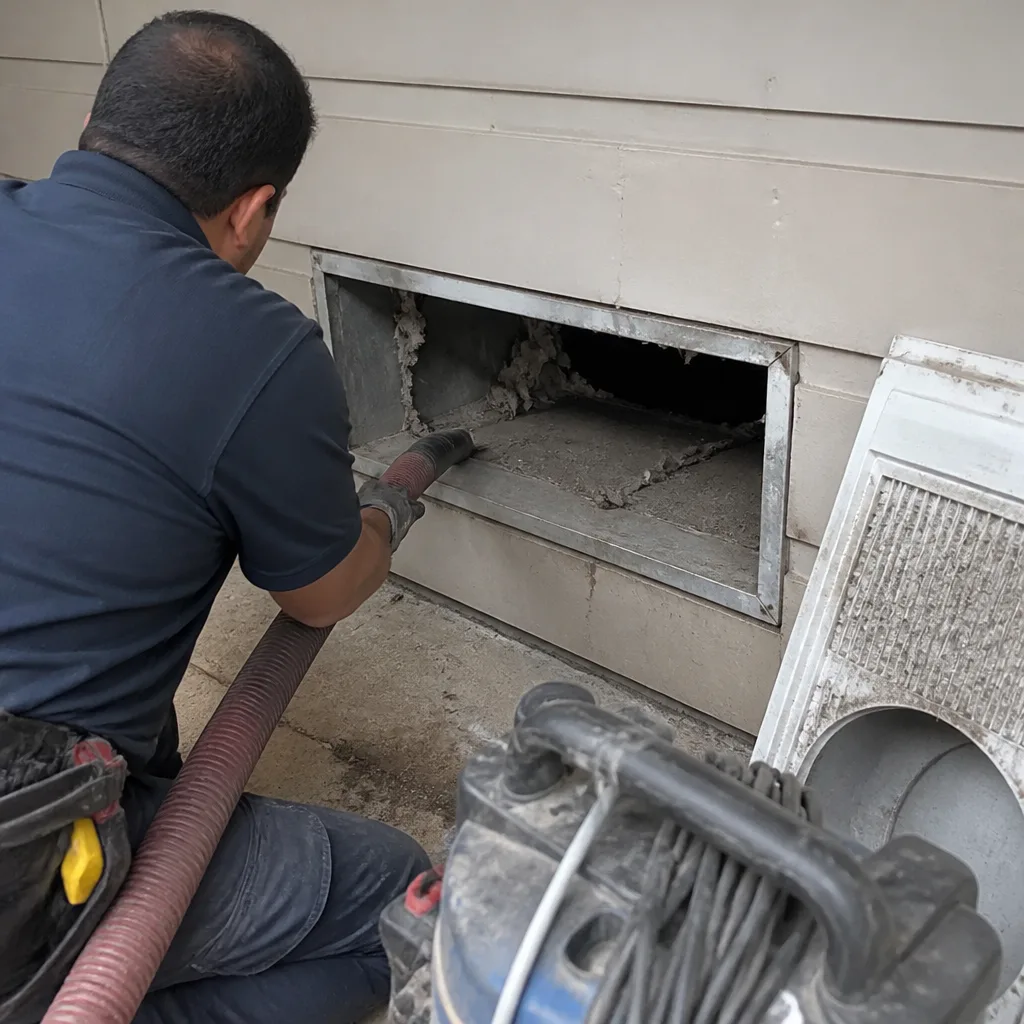 Before
 After
After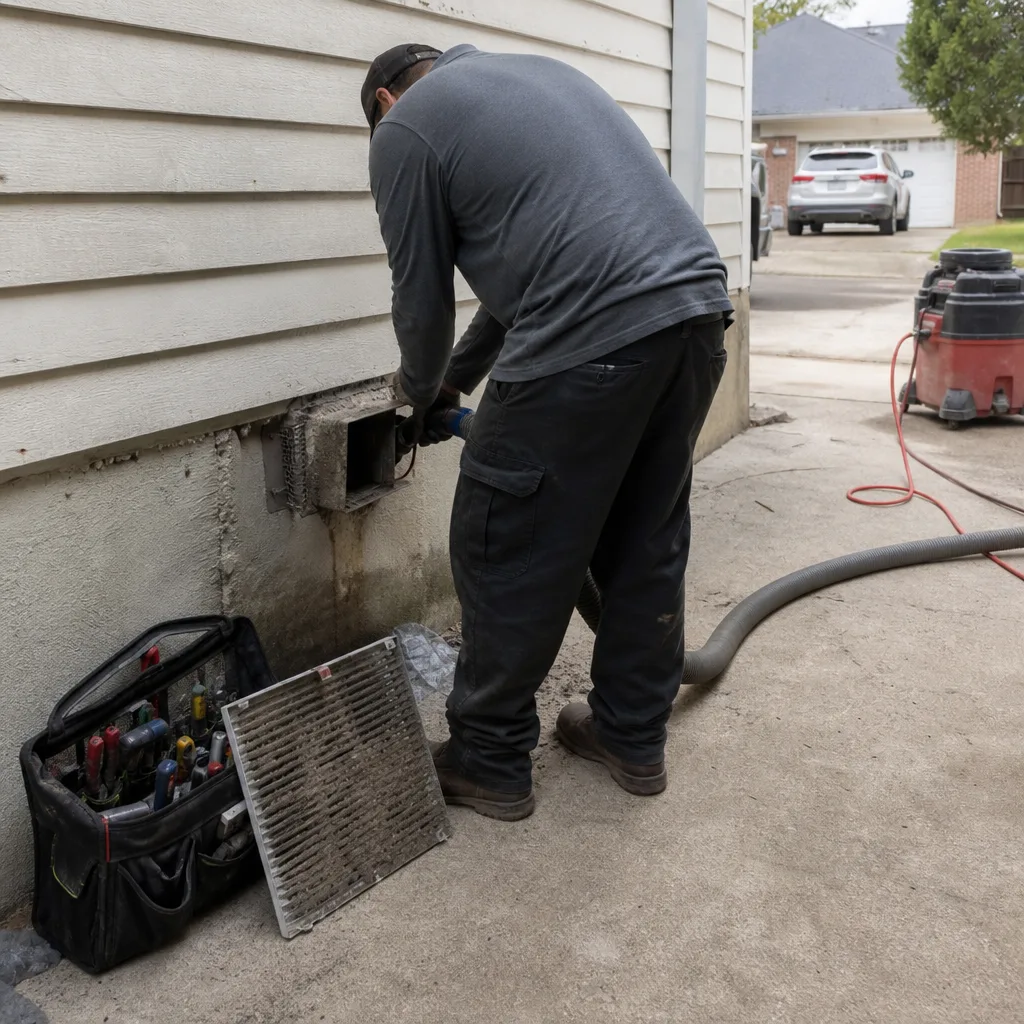 Before
 After
After