
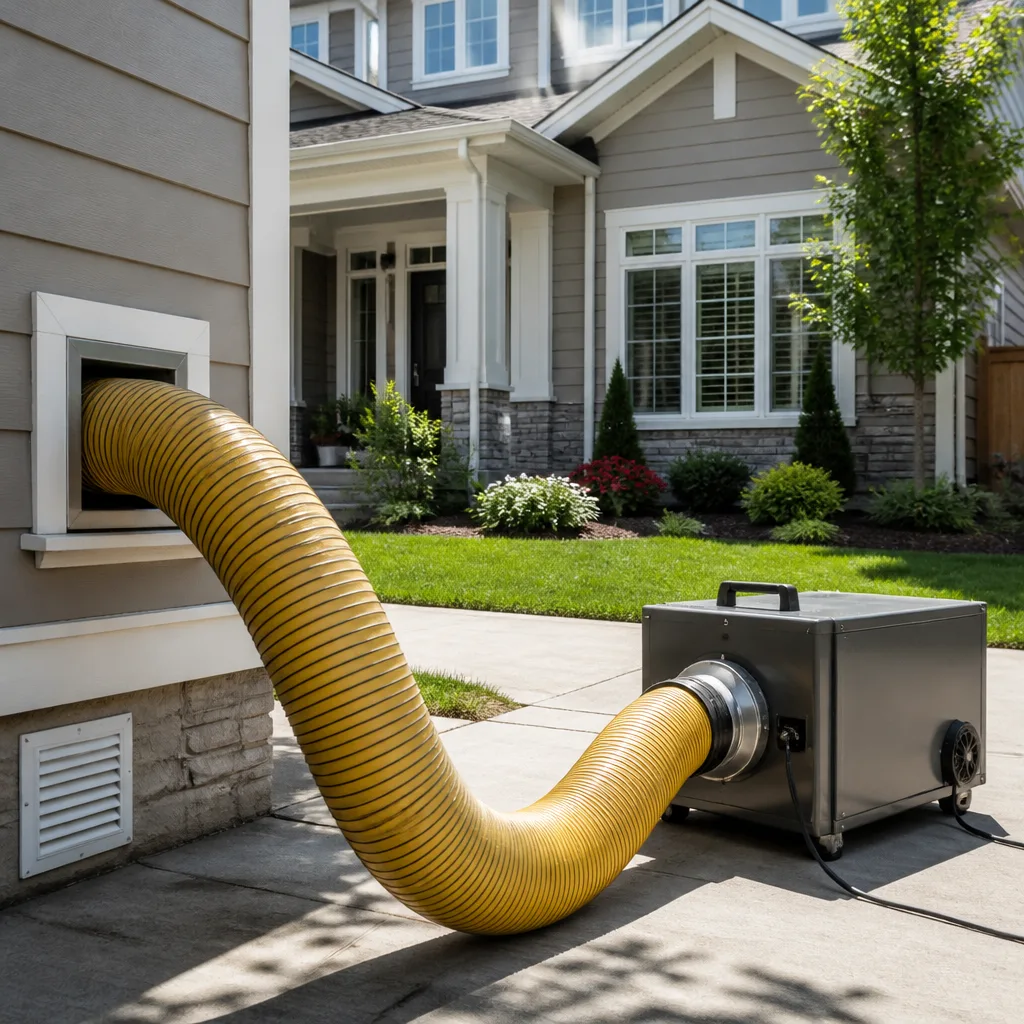
 Whole-home duct cleaning
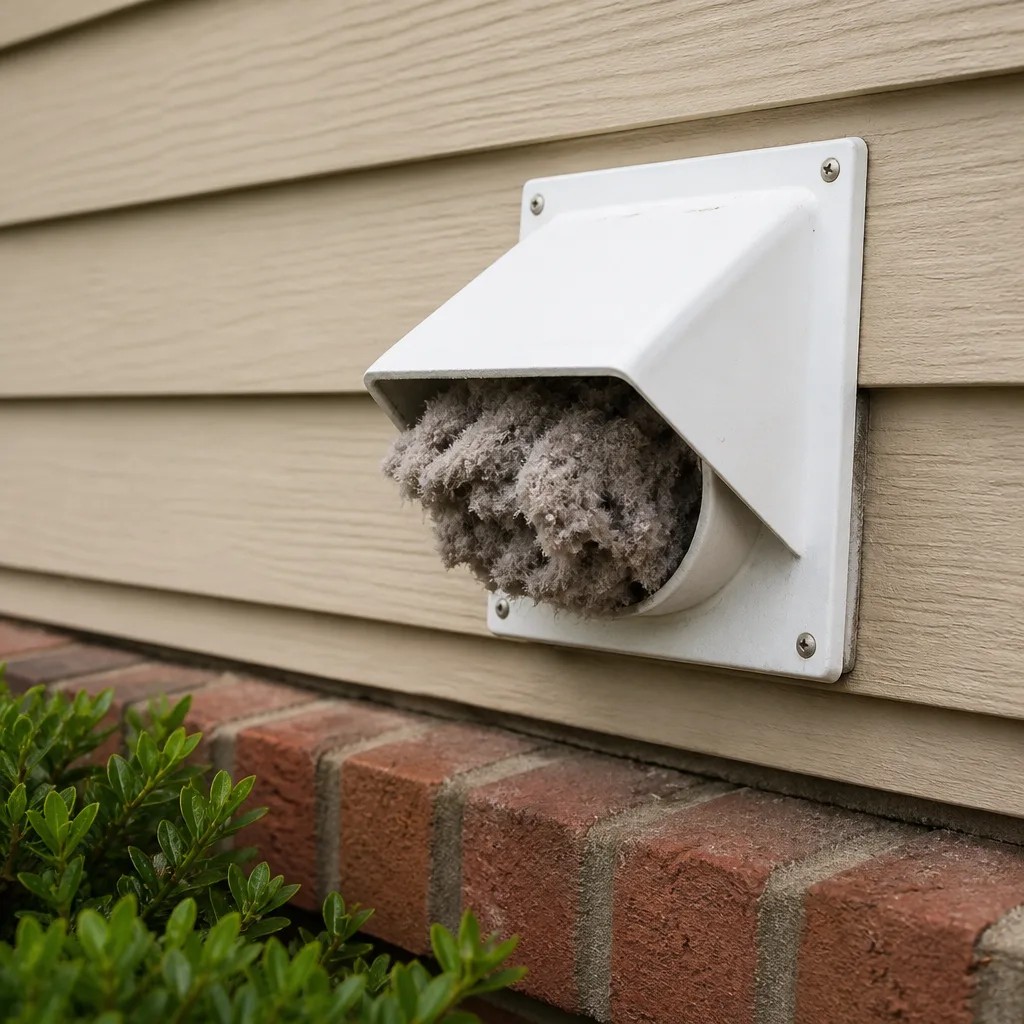 Dryer vent cleaning
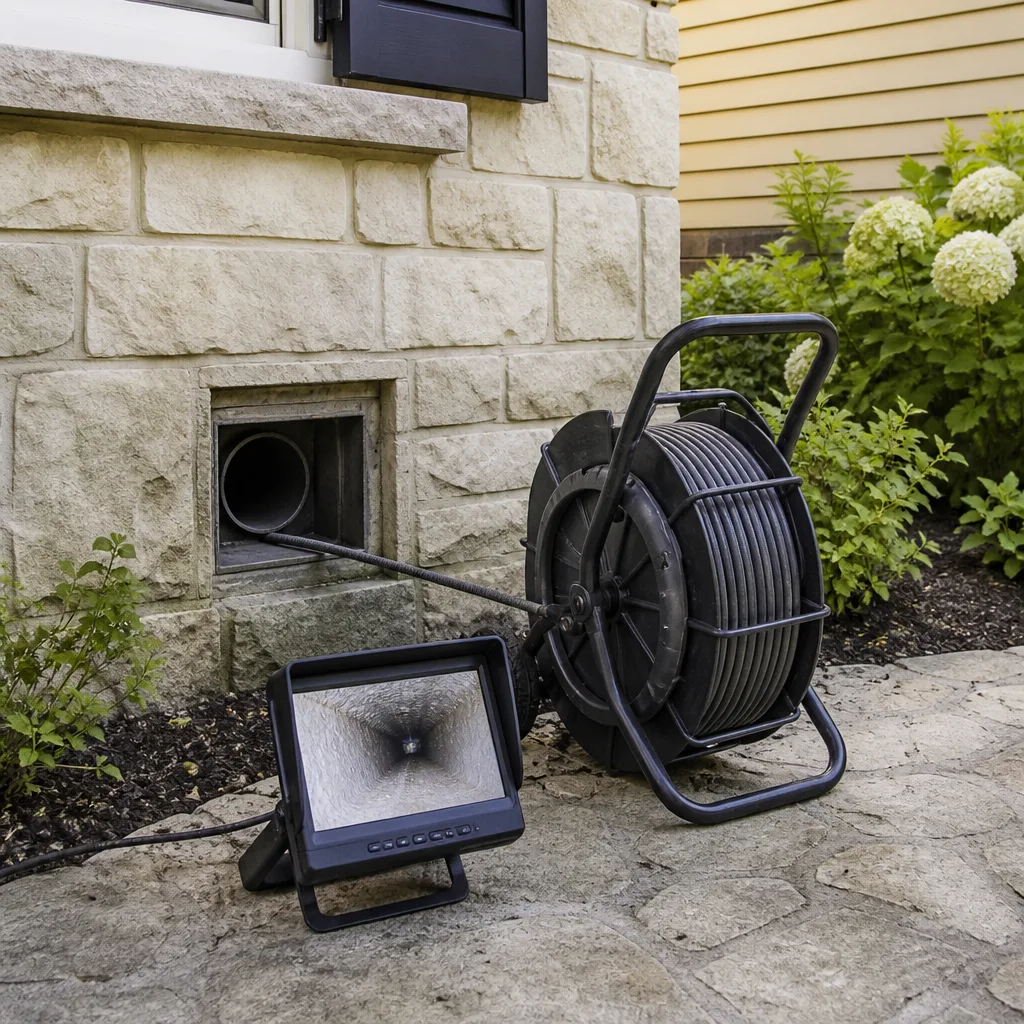 Camera inspection
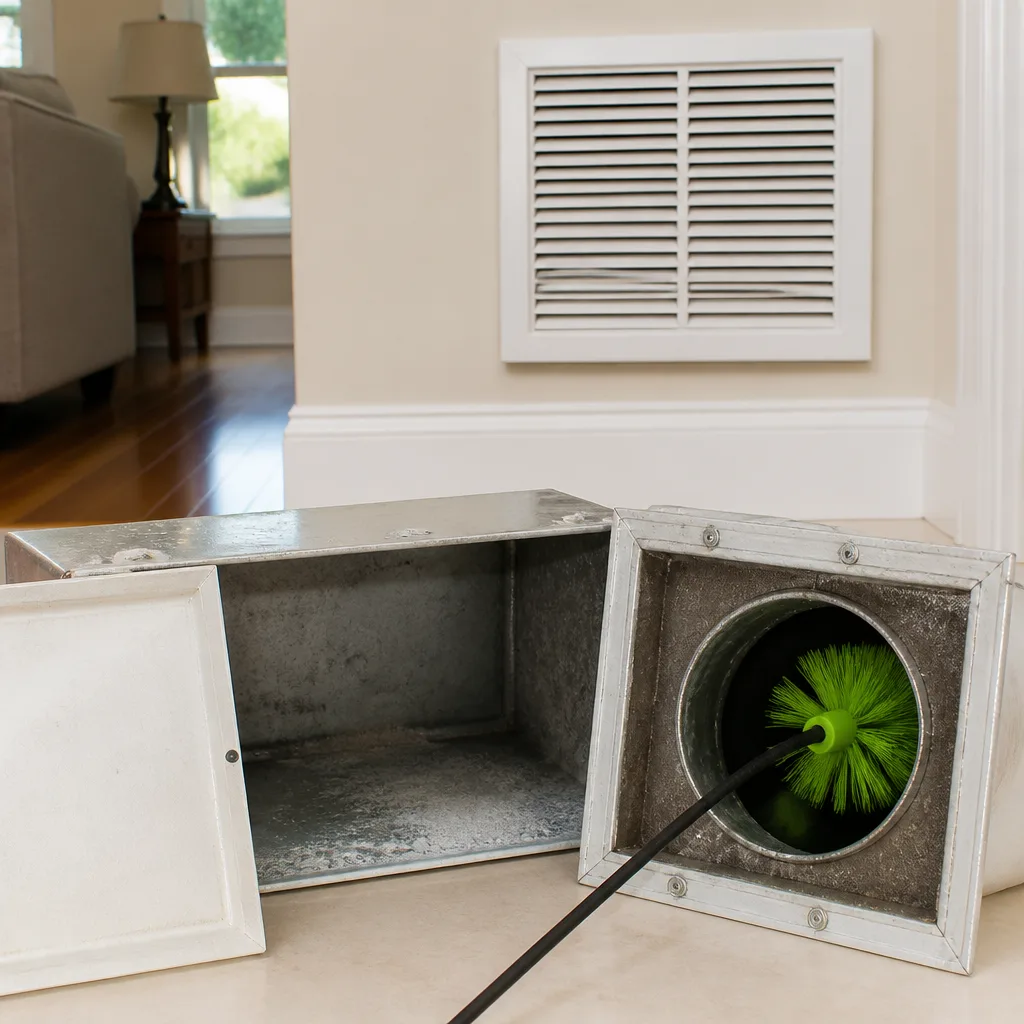 Sanitizing & deodorizing
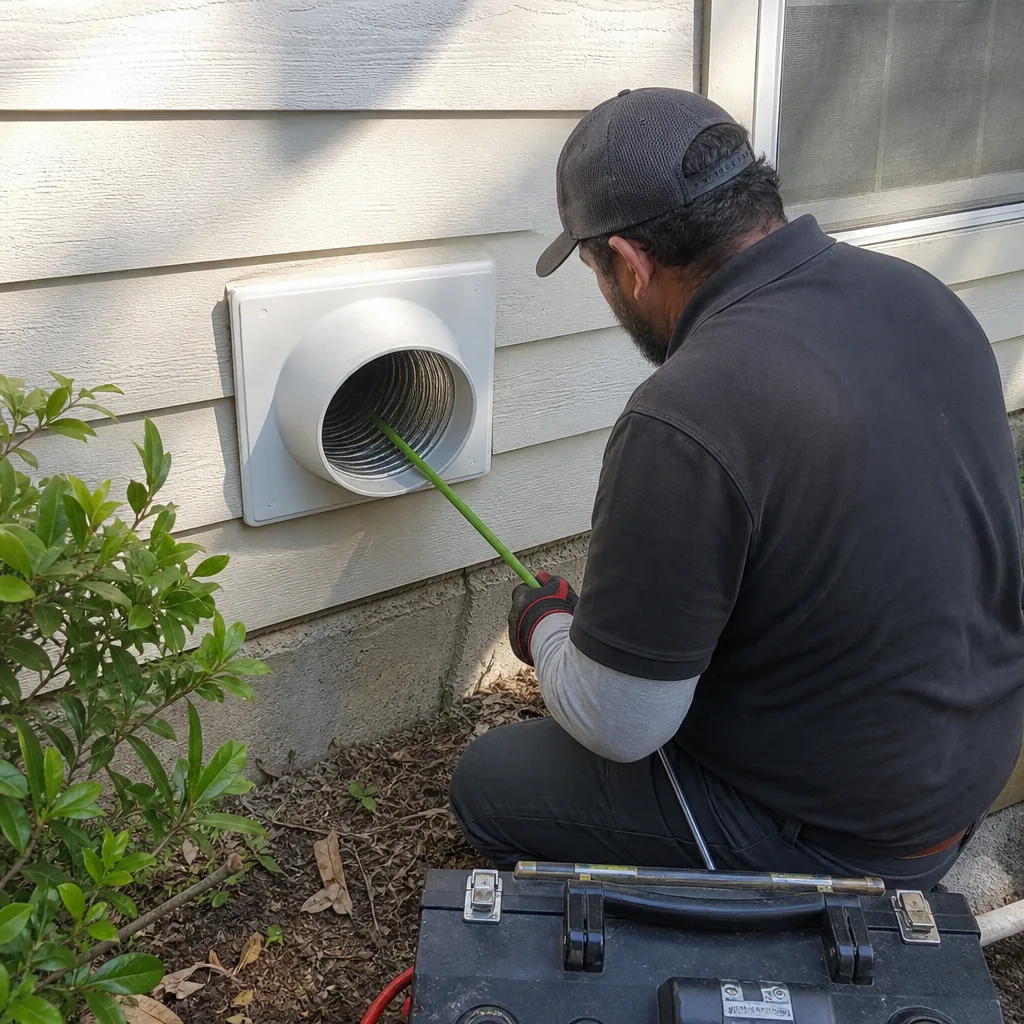
Whole-system duct and dryer vent check with before-and-after photos - you see exactly what came out of your vents
That "$99 whole-house special" is a bait ad - the real number appears once they are in your hallway, or the "clean" is a shop-vac at the register. We photograph the inside of your ducts before and after instead.
Honeywell Register & Grille Cleaning: The San Antonio Owner’s Guide
Honeywell register and grille cleaning for a typical San Antonio home runs $45 – $110 per system when performed as part of a full air duct cleaning, or $150 – $350 as a standalone deep clean of all registers, grilles, and return boxes. We stock Honeywell-compatible replacement registers and grilles on the truck and can swap worn, bent, or rust-damaged units the same visit. Most San Antonio homeowners discover they need this service when they remove a floor register to vacuum and find a gray felt of dust, pet hair, and sheetrock powder caked on the underside, or when a ceiling grille won’t sit flush anymore because the metal frame has warped from years of condensate exposure.
Here’s the reality: your Honeywell registers and grilles are the only part of your HVAC system you see every day, and they’re also the most ignored. They get walked on, vacuumed over, dripped on, and painted around. By the time a grille looks dirty from the top, the airflow restriction underneath is already measurable. We run Nikro HEPA extraction directly at each register opening during a cleaning, pulling the loosened debris into a sealed vacuum rather than pushing it back into the room. Omar Haddad and our crew have cleaned thousands of these across the city, from two-story builds near Stone Oak to 1970s ranchers in Leon Valley.
Which Honeywell Models This Applies To
This service applies to residential Honeywell register and grille lines commonly installed in San Antonio homes, including the Honeywell Home decorative series (HZ311, HZ322, and the true-touch adjustable models), the standard multi-shutter steel lines, and the aluminum return grille series. Honeywell registers are typically stamped on the frame edge or back of the louver with a part number beginning in either “HZ” or “CT,” and most San Antonio homes use either 4×10, 4×12, or 6×12 floor-register sizes with a handful of 12×12 or 14×14 ceiling return grilles.
One compatibility gotcha we run into constantly in San Antonio: Honeywell’s stamped-steel registers from the mid-2000s have a slightly narrower mounting flange than generic big-box replacements, which means a universal register will leave a gap along one edge if the original boot is anything less than perfectly square. We measure the boot opening, not the old register, before recommending a replacement. If the original Honeywell part is still mechanically sound but just filthy, cleaning is almost always the better call. If the louvers have bent or the finish has corroded, we’ll show you the aftermarket option side by side with the OEM part and give you the honest price for both. We’re an independent service provider, not affiliated with Honeywell, so there’s no brand bias in what we recommend.
Styles & brands we work with
Signs Your Honeywell Register & Grille Cleaning Is Failing
- Dark streaks on the register face that won’t wipe off. This isn’t just dust – it’s airborne particulate that has bonded to the metal with humidity. San Antonio’s summer dew points push indoor humidity past 60% for weeks, and the register face stays cool enough to trap moisture and bake that grime on. Surface cleaning won’t fix the buildup underneath.
- Reduced airflow from vents that used to blow strong. A Honeywell register with clogged louvers or a damper blade stuck half-shut will silently cut airflow to a room. You notice it as a bedroom that never cools or a hallway that smells stale. The register is the last choke point in the system, and it’s the cheapest one to fix.
- Visible dust plume when the system kicks on. When the blower starts, a puff of dust from the register means the supply-side buildup has reached the point of being blown back into the living space. That dust was sitting on the louver blades and inside the boot, and the same layer is coating the inside of your ductwork.
- Condensation or rust on the metal frame. You’ll see this most on ceiling return grilles in bathrooms, laundry rooms, and kitchens where humidity is highest. San Antonio’s hard water leaves mineral deposits, and those deposits collect dust faster than clean metal. This is also where painted Honeywell grilles start to flake and look permanently dirty.
- Mold-like smell when air moves through a specific register. Any organic buildup in a damp boot, combined with the dark environment inside a duct, creates conditions where microbial growth can start. If one register smells different from the others, don’t ignore it and don’t just spray the vent cover. The source is almost always inside the boot itself.
See the difference
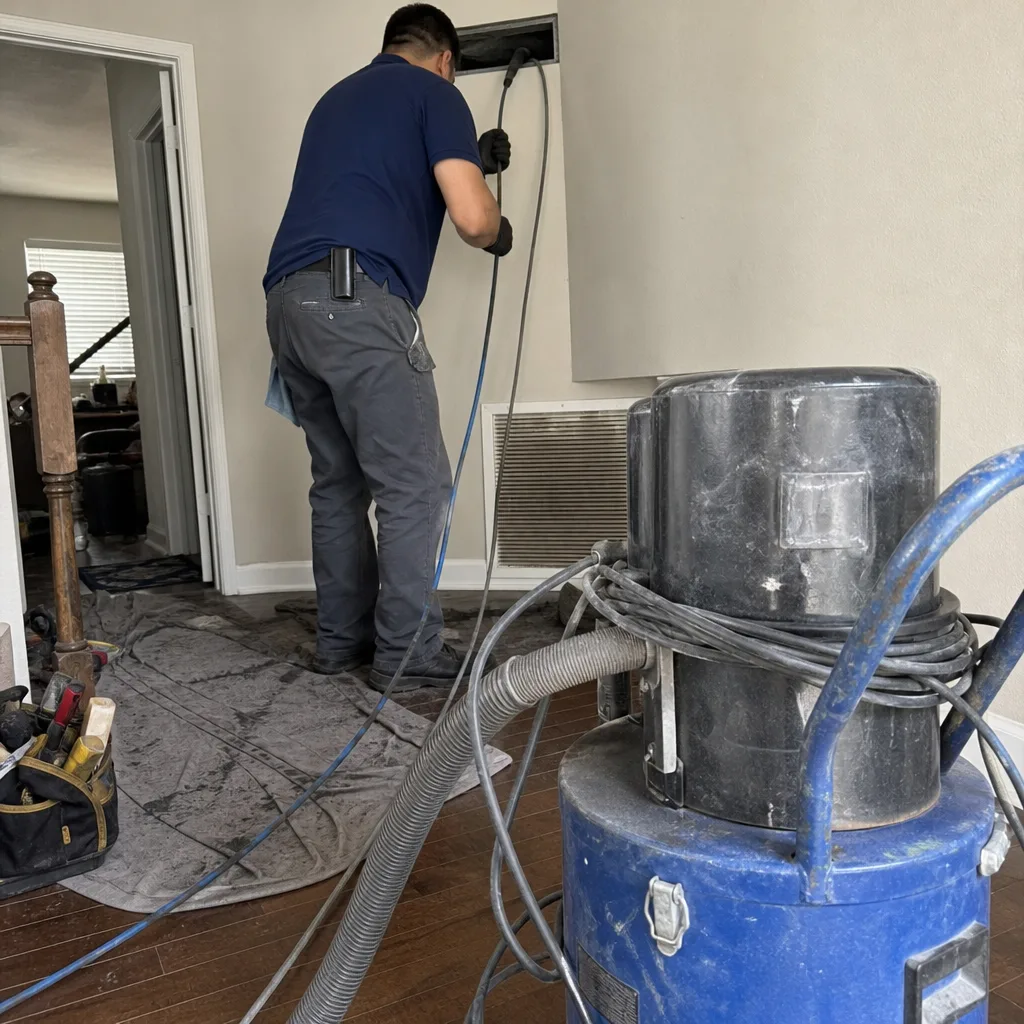 Before
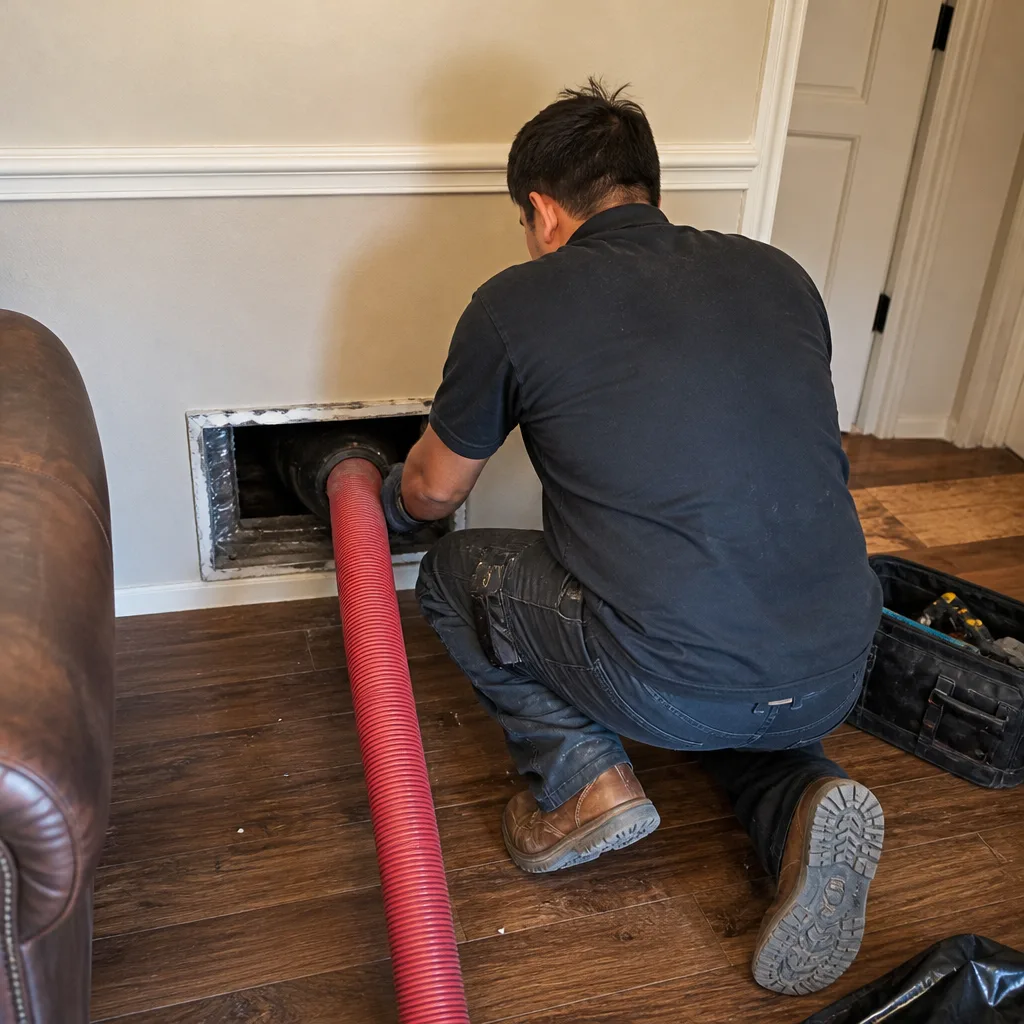 After
After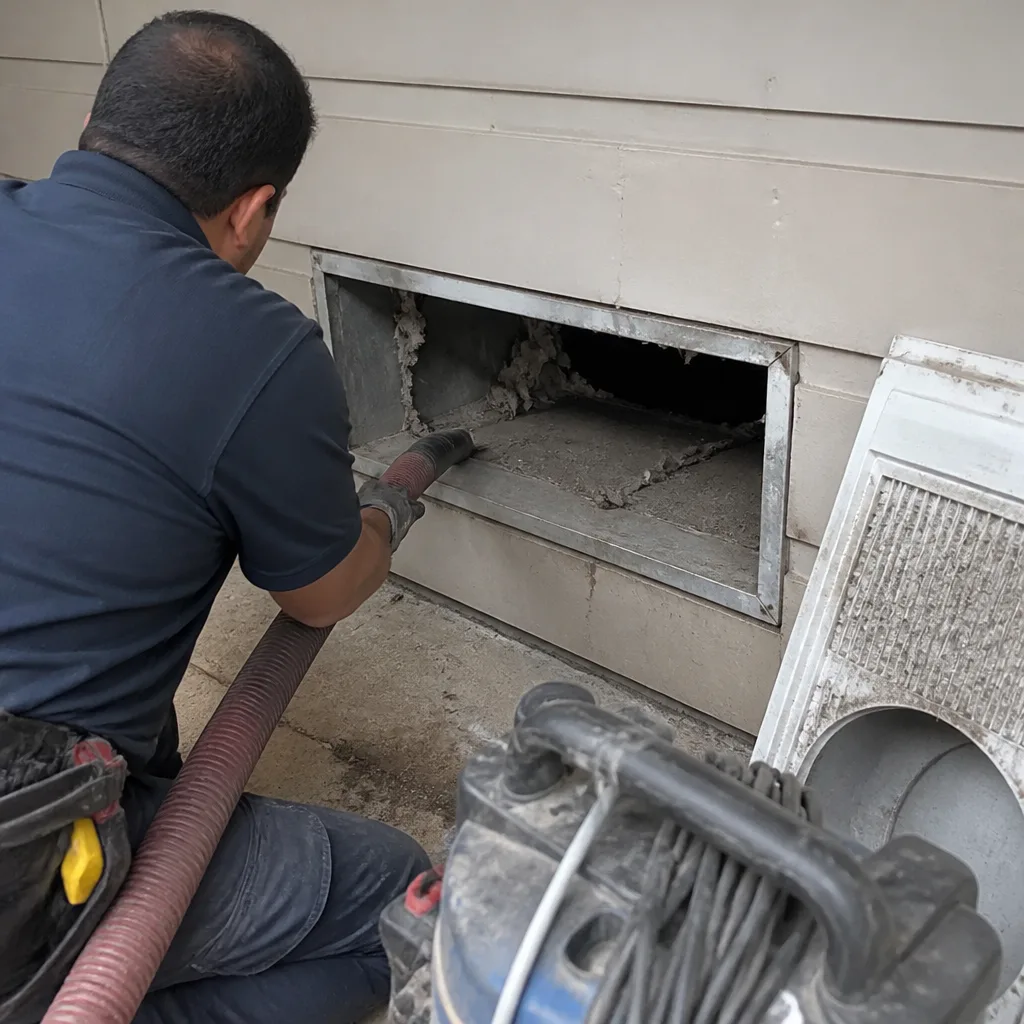 Before
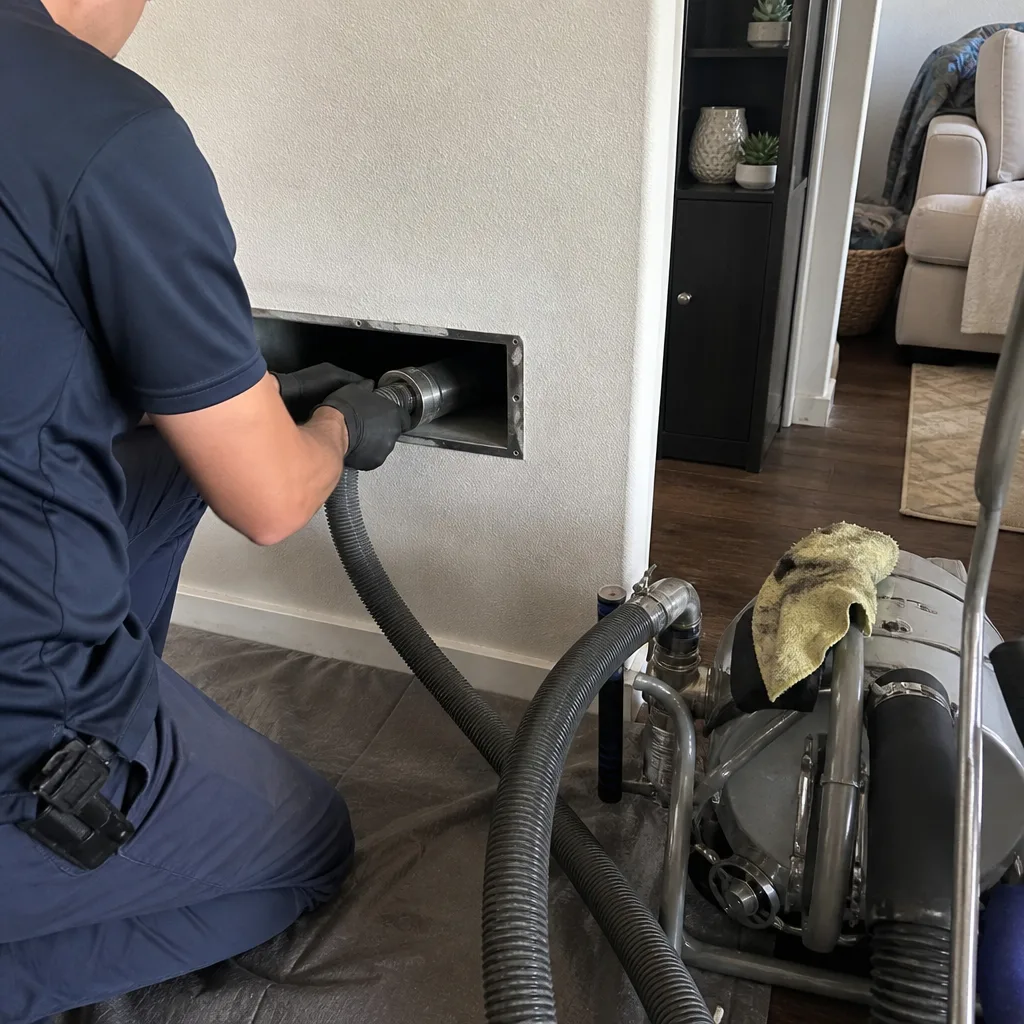 After
After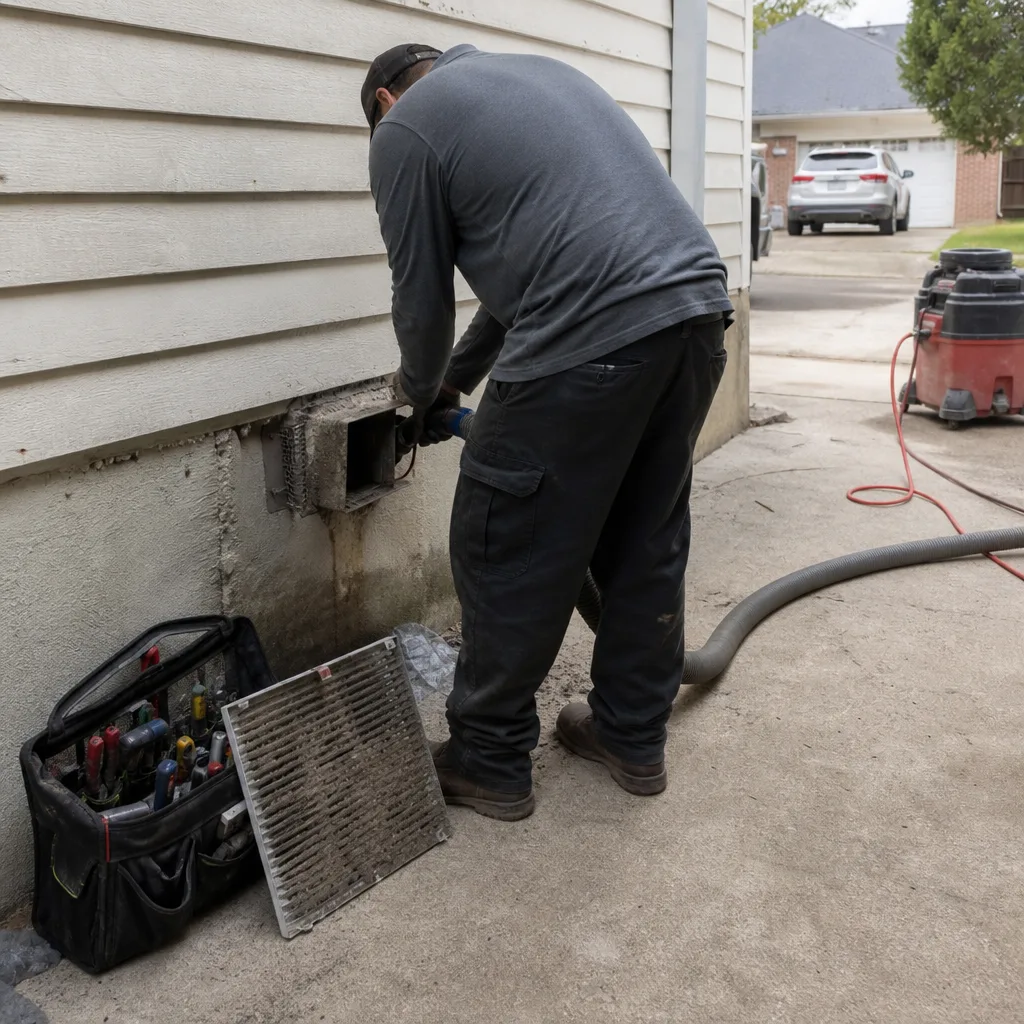 Before
 After
AfterReplacement Cost & What’s Included
Register and grille cleaning in San Antonio runs from $150 – $350 as a standalone job covering all registers, grilles, and return boxes in a typical 1,500 – 2,500 square foot home. If it’s bundled with a full air duct cleaning, which we quote at $450 – $795 for most homes in this market, the register and grille work is included and priced as a line item so you see exactly what you’re paying for. A full-system replacement of registers and grilles with quality matches typically adds $120 – $240 in parts depending on count and size.
| Service | Typical San Antonio Price | What You Get |
|---|---|---|
| Full register & grille deep clean (standalone) | $150 – $350 | All registers, grilles, return boxes; Nikro HEPA extraction |
| Register & grille cleaning (bundled with full duct cleaning) | $45 – $110 added line item | Complete system clean, registers/grilles included |
| Honeywell-compatible register replacement (each) | $12 – $35 per register | Replacement part, removal of old register, flush install |
| Return grille replacement (each) | $25 – $65 per grille | Replacement part, removal of old grille, flush install |
Every register cleaning and replacement we do carries a written price before work starts, and that number does not change at the door. The price includes removal of every register and grille, direct HEPA extraction at each opening, physical cleaning of the metal components, and a written guarantee on any replacement parts. If a replacement register warps, loses paint, or fails to seat correctly within 365 days, we return and correct it at no charge under the 365-Day Done Right Promise. That applies to every job, not select ones.
DIY or Call Us?
You can absolutely pull a register out and vacuum the top surface. That’s five minutes and it’s worth doing between professional cleanings. What you can’t do from the surface is reach the real buildup, which sits inside the register boot, along the damper mechanism, and inside the first few feet of the duct run. That requires negative-pressure extraction, which means the debris is pulled into a sealed vacuum as it’s dislodged, not stirred up and blown back into the room. Without containment, DIY register cleaning often makes the dust problem worse, not better.
The DIY route also won’t tell you what’s really going on down the duct. We use Rotobrush rotary brush systems to agitate buildup inside the duct, Nikro HEPA vacuums for extraction, and Abatement Technologies containment when the job requires it, which most residential jobs don’t. If you want to know whether the inside of your duct looks like the top of your register, we’ll show you before-and-after photos of your own system. Call (254) 347-3897 and we’ll give you a straight price before we ever touch a screw.
FAQs
In San Antonio’s climate, you should plan on 10 – 15 years for Honeywell steel registers and grilles before corrosion or mechanical wear becomes a problem, and that’s a shorter window than you’d get in a drier climate. The repeated humidity cycles, plus the constant temperature swing when your AC runs hard from May through September, cause the metal to expand and contract until the mounting tabs fatigue.
A dirty register can almost always be cleaned and restored if the metal is still straight and the louver mechanism still moves. A bent louver, a corroded frame, or a cracked mounting tab is not worth repairing, and we’ll tell you that directly. We’ll show you the part before we recommend anything. Call (254) 347-3897 and we can quote it over the phone once you describe the issue.
A standalone register and grille cleaning for the whole house typically takes 60 – 90 minutes. If it’s part of a full duct cleaning, that job runs 2 – 4 hours depending on the size of the home and the number of systems, and the register work is included in that window.
Yes, we stock the most common Honeywell-compatible sizes, including 4×10, 4×12, 6×12, 12×12, and 14×14, plus the matching hardware in our service vehicles. If your home has a non-standard size, we’ll source it and schedule a follow-up install. We also carry compatible parts for Lennox, Trane, and Carrier systems, so a mixed-brand home is not a problem. Call (254) 347-3897 and we’ll confirm what your home needs before the first visit.
Clean ducts, straight answers, real price – that’s the whole pitch.
Written by Omar Haddad, Owner, Cardinal Air Duct San Antonio at Cardinal Air Duct San Antonio, serving San Antonio and nearby areas.