
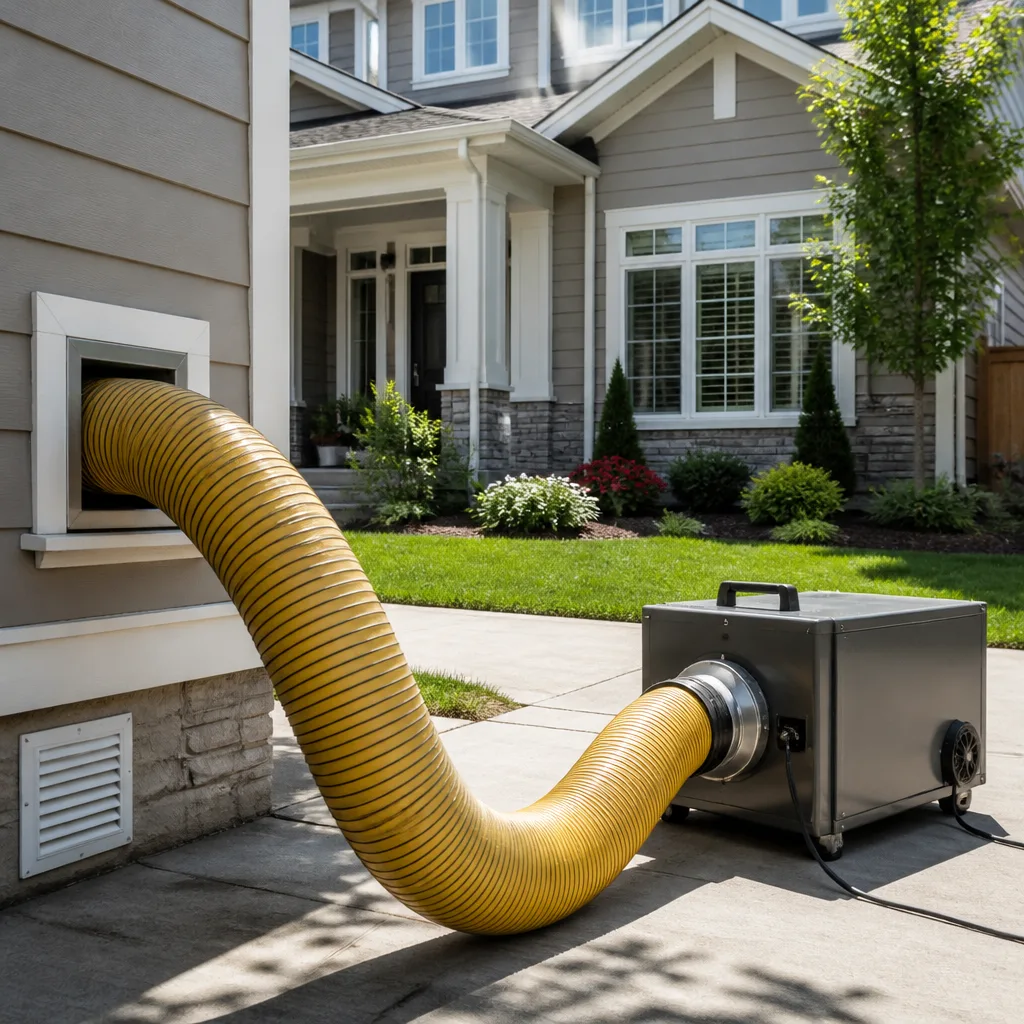
 Whole-home duct cleaning
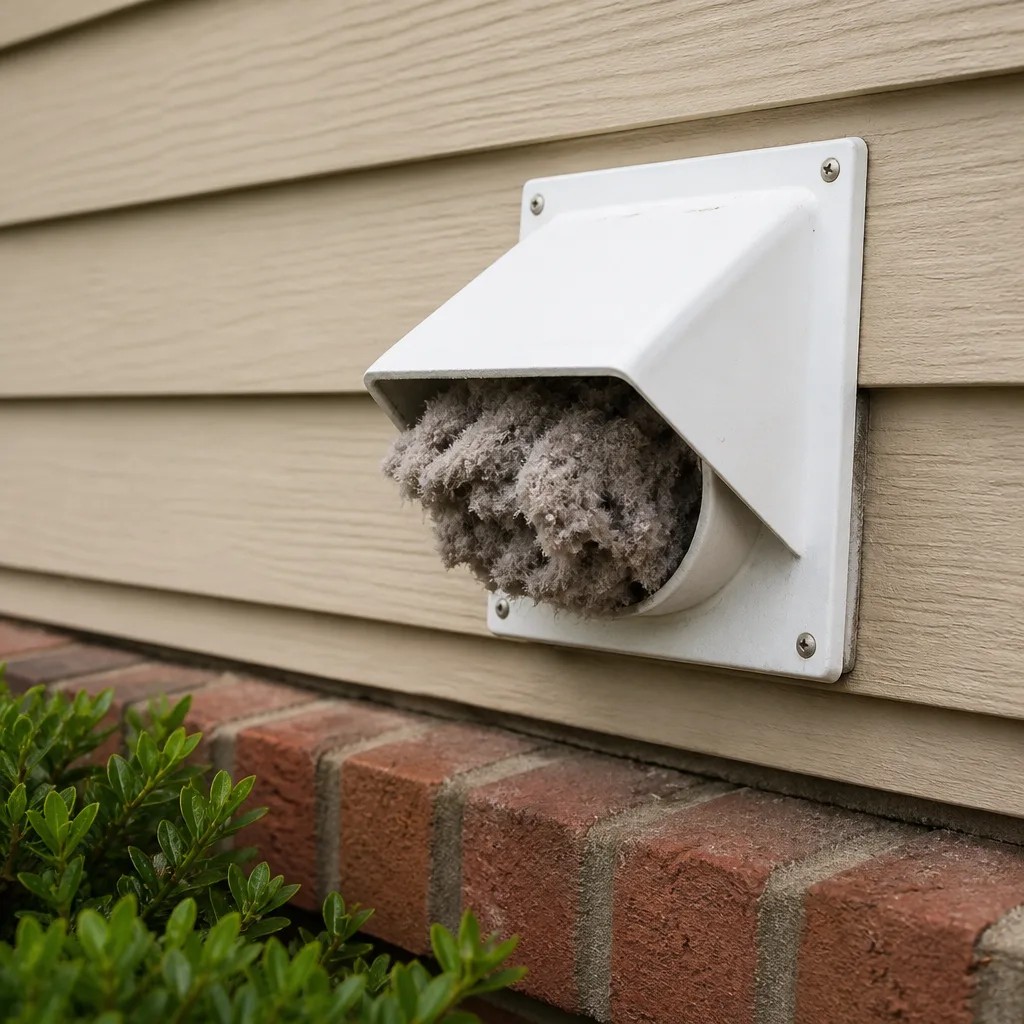 Dryer vent cleaning
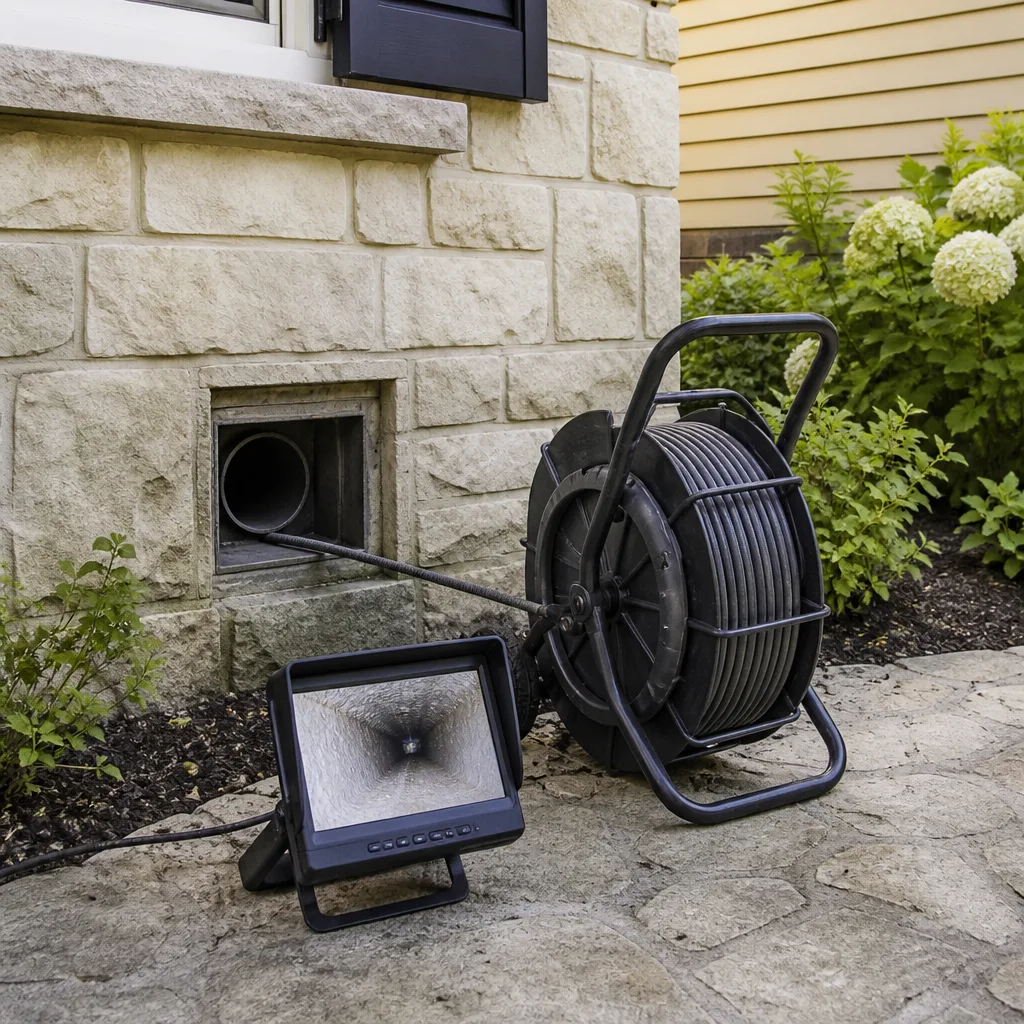 Camera inspection
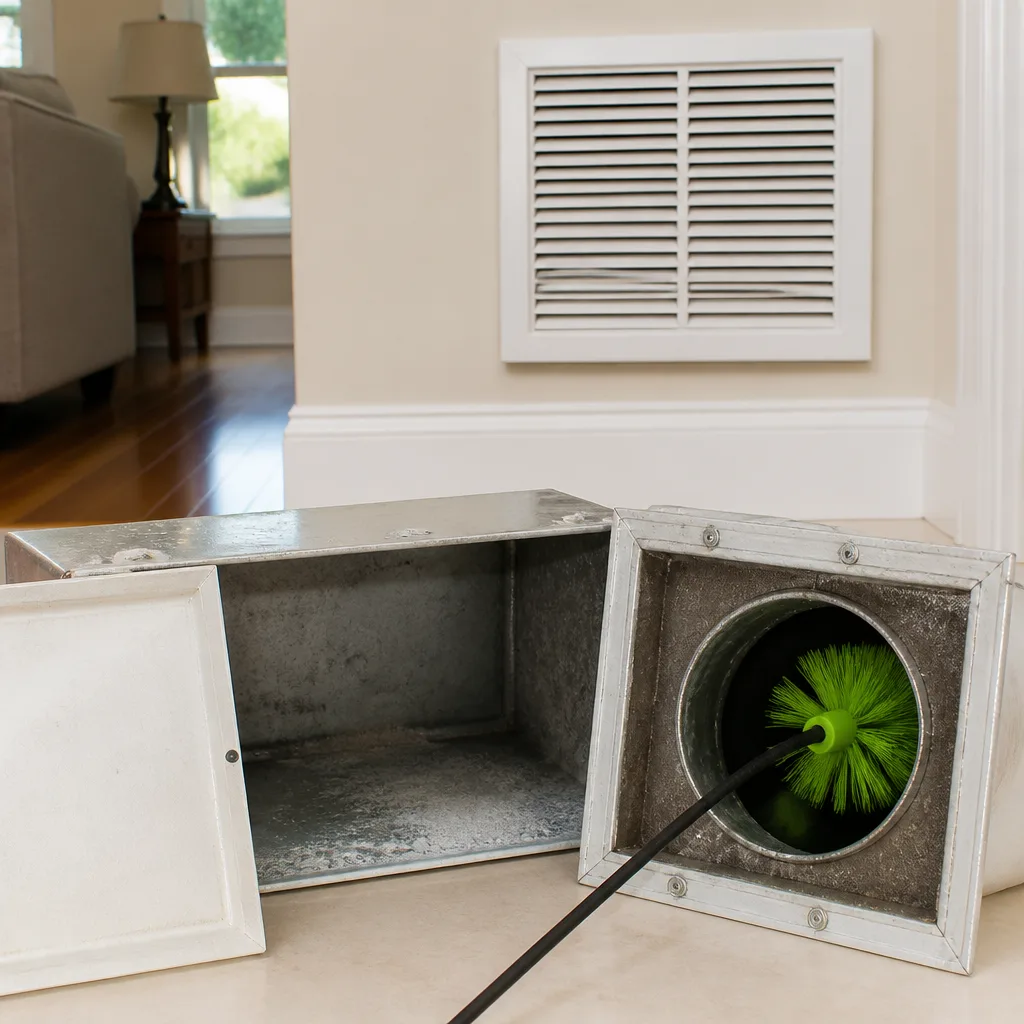 Sanitizing & deodorizing
Whole-system duct and dryer vent check with before-and-after photos - you see exactly what came out of your vents
That "$99 whole-house special" is a bait ad - the real number appears once they are in your hallway, or the "clean" is a shop-vac at the register. We photograph the inside of your ducts before and after instead.
Nikro Vent Sanitizing: The San Antonio Owner’s Guide
If your Nikro vent sanitizing unit has stopped fogging, lost pressure, or is leaking sanitizer into the wrong places, you’re in the right spot. We stock Nikro-compatible replacement parts and can have your unit back in service, typically within one to two days of diagnosis. Most Nikro vent sanitizing part replacements run $185 to $410 installed depending on which component failed.
Here’s the pattern we see every week in San Antonio: a tech arrives for a routine duct cleaning, fires up the Nikro unit for the sanitizing pass, and the fog just doesn’t come. Or it comes in a weak dribble instead of a fine mist. Or worse, the tank cracks because it was stored in a truck bed through a 104-degree August afternoon. The owner didn’t do anything wrong. Nikro parts simply work hard and wear out, especially in our climate. But figuring out which part failed, and matching it to your specific Nikro model, is where people get stuck and that’s exactly what this page is for.
We’re not a Nikro dealer or an authorized Nikro service center. We’re an independent air duct cleaning company in San Antonio that runs Nikro HEPA vacuums and sanitizing systems every day. That means we know these units from the inside out, because we use them the same way you do. Omar Haddad and our crew have replaced enough Nikro foggers, pumps, and hose assemblies across San Antonio to tell you in minutes what’s wrong and what it should cost.
Which Nikro Models This Applies To
Before you order a random part online and pray, let’s get specific. Nikro has sold several vent sanitizing configurations over the years, and parts are not as universal as third-party listings would have you believe. The fogging heads, fittings, and pump cartridges differ between the older tank-style units and the newer self-contained sprayers.
The two most common setups we see in San Antonio homes and commercial properties are:
- Nikro cartridge/tank fogging units: These use a small electric pump and a flexible fogging wand with a brass or nylon nozzle. The failure point on these is almost always the pump diaphragm or the nozzle O-rings, which harden and crack after two or three summers of use.
- Nikro aerosol/canister sanitizing systems: These use a pressurized canister and a simple trigger head or dosing valve. The canister is sealed and not serviceable, but the valve assembly and gaskets are replaceable and we stock them.
The single biggest compatibility gotcha we counsel people on: the hose barb sizes are not standard hardware-store fittings. Nikro foggers use a narrow 3/16-inch (sometimes 1/4-inch on older models) push-fit barb that looks like it should swap with a Home Depot part, but a generic fitting will either starve the nozzle or blow off under pressure. Measure the barb and the hose inner diameter before ordering anything. If you bring us the model number off the unit label, we’ll cross-check it against the Nikro parts diagrams we keep in the shop and get the right match the first time.
On the OEM-versus-aftermarket question: for Nikro pumps and nozzle assemblies, we recommend OEM or direct OEM-equivalent parts. These units run sanitizing chemicals through plastic and rubber internals, and cheap aftermarket hoses or seals degrade fast when exposed to quaternary ammonium and peroxide-based sanitizers. For simple things like hose clamps or tank gaskets, a quality aftermarket equivalent works just fine.
Styles & brands we work with
Signs Your Nikro Vent Sanitizing Is Failing
You don’t need a diagnostic report to spot a failing Nikro unit. These are the five symptoms we hear most from San Antonio homeowners who call us before a full failure ruins a job:
- No fog, or fog that looks like a squirt gun. The pump has lost its ability to maintain pressure. Because the pump diaphragm is a rubber part, it hardens and microfractures over time. When it can’t build pressure, the nozzle won’t atomize the sanitizer, so you get a stream instead of a mist, and that stream does not coat duct surfaces evenly.
- Sanitizer leaking from the wand or base. The O-rings and gaskets shrink in San Antonio’s dry heat, especially in the summer when a truck interior hits 130 degrees. When a seal shrinks, sanitizer finds the gap and leaks down your hand or onto the floor. It’s not dangerous in small amounts, but it’s wasteful and it means air is getting into the system where it shouldn’t.
- The unit runs but makes a loud rattling or buzzing noise. The pump motor is fine, but the diaphragm or impeller inside has cracked. The noise is the broken part vibrating inside its housing. Continuing to run a pump with a cracked diaphragm makes the motor work harder, which shortens its life and can turn a $50 part replacement into a $200 pump assembly replacement.
- Sanitizer volume drops during use. You start with a full tank and good fog, then halfway through a job the fog weakens. That’s usually a clogged pickup line or a cracked internal filter, not a bad pump. It’s the cheapest fix in the Nikro parts world, but it’s often misdiagnosed as a full pump replacement by people who just want to sell you the expensive part.
- The fogging nozzle drips after you release the trigger. This is a sticking check valve inside the wand. It’s a small spring-loaded part that seals the liquid line when pressure drops. When it sticks open, whatever is left in the hose weeps out, leaving a puddle on your equipment tray or your customer’s floor.
Any one of these symptoms usually means you have a part that is wearing out, not a unit that is broken beyond saving. We prefer to fix the failing part before it takes out a neighboring component.
See the difference
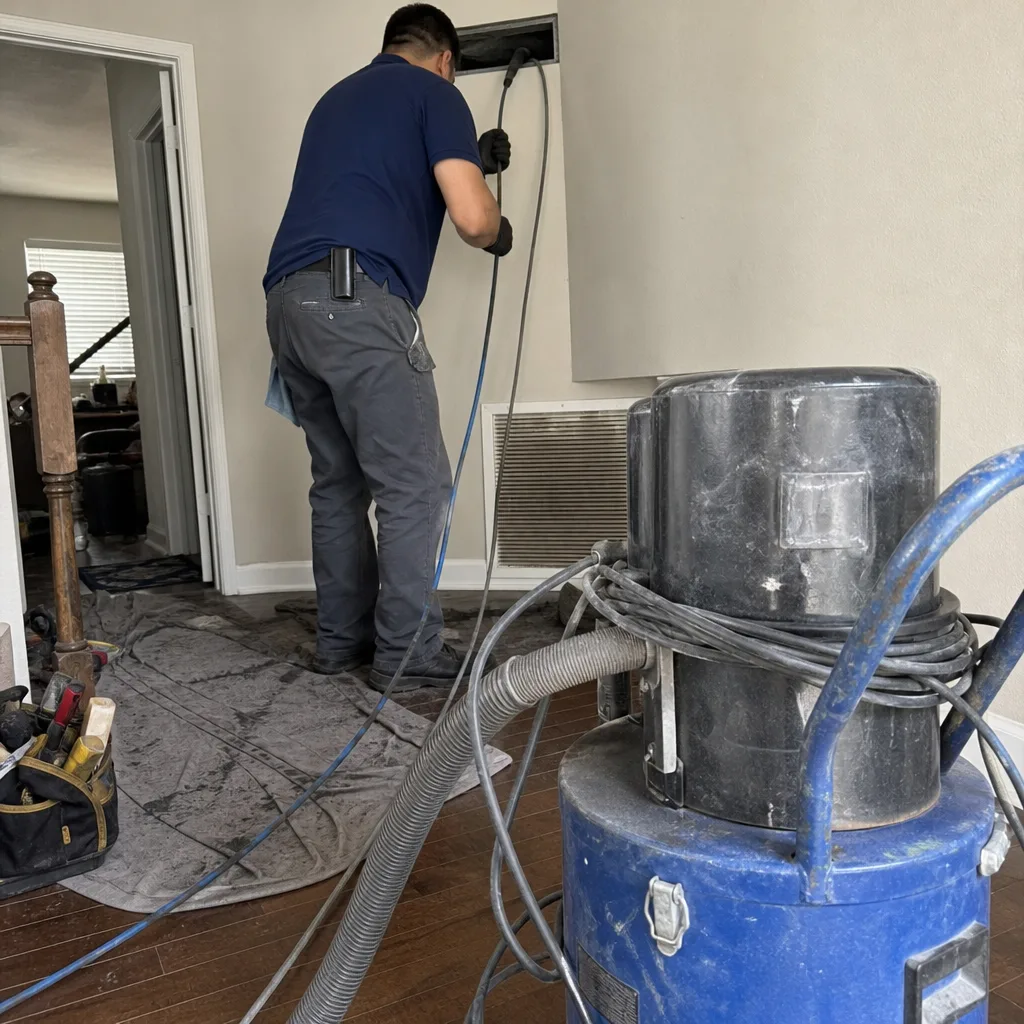 Before
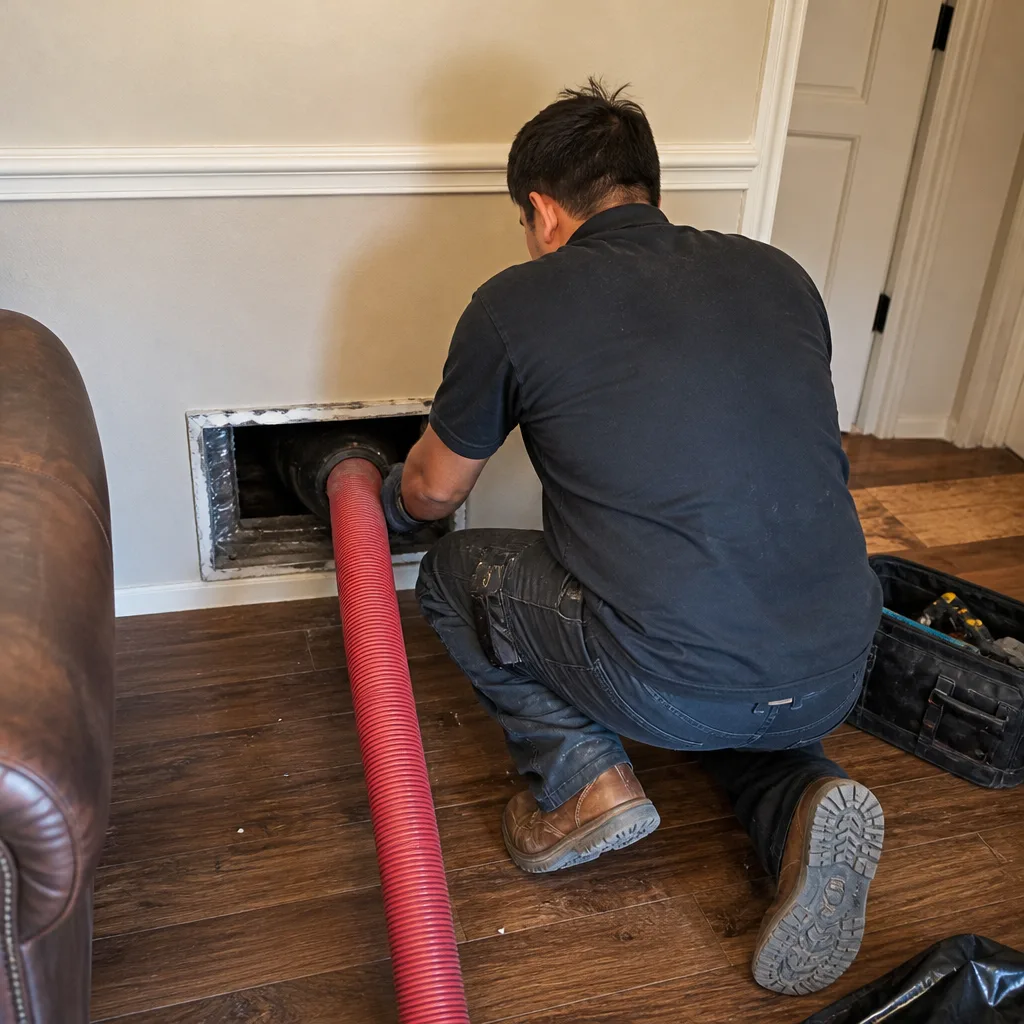 After
After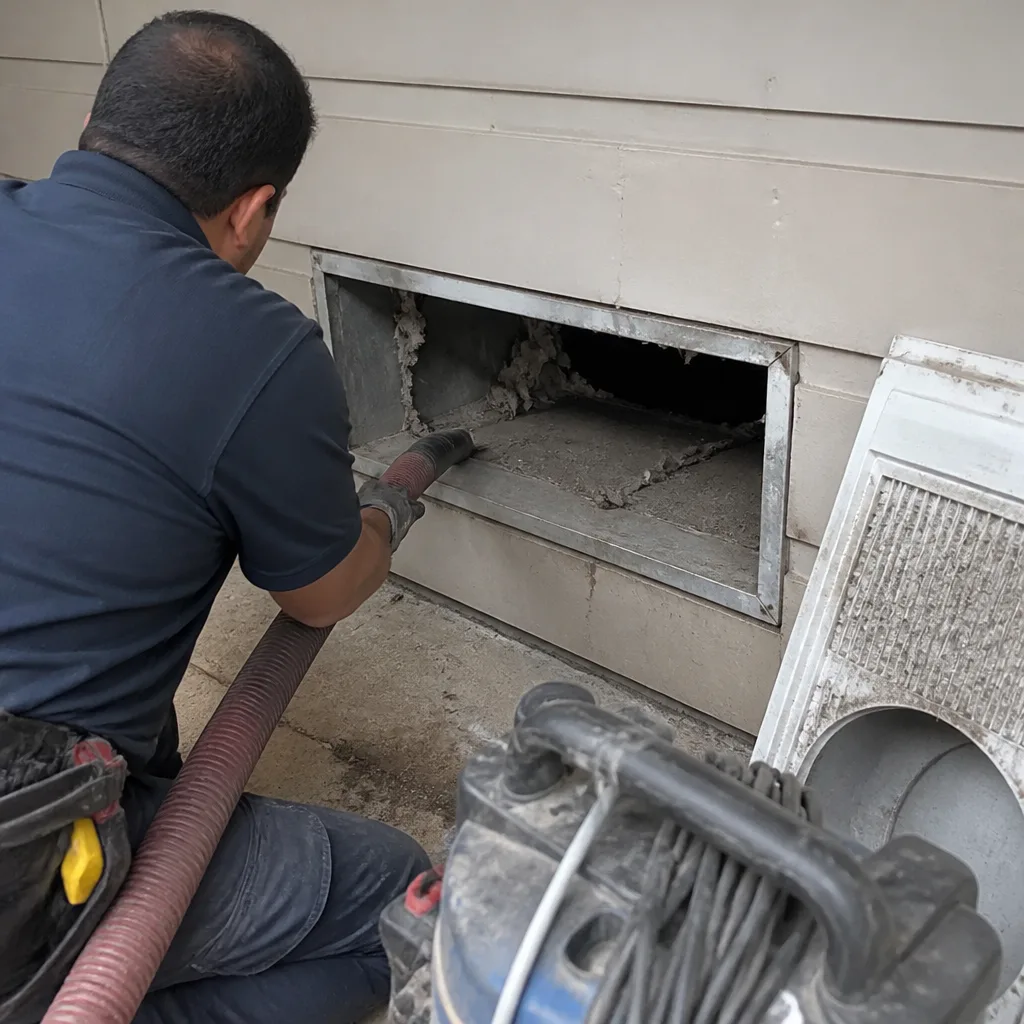 Before
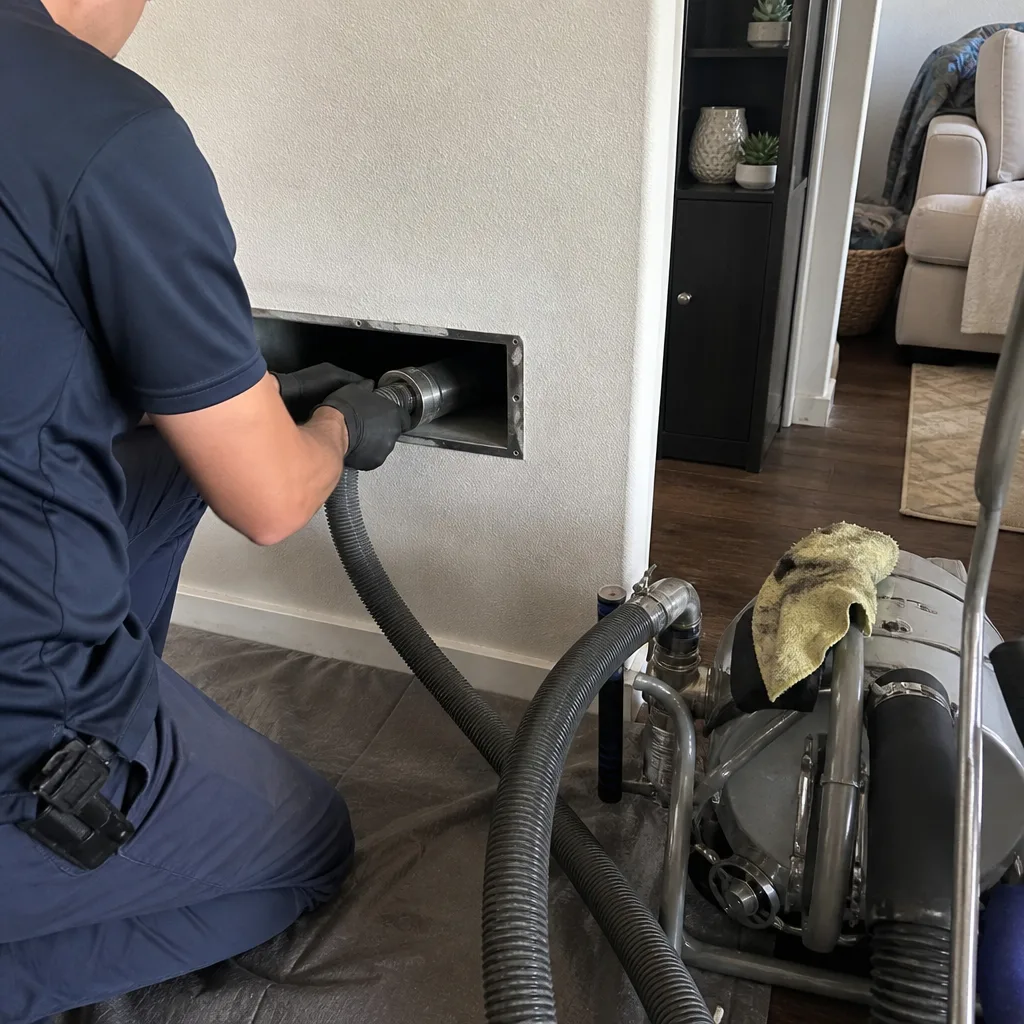 After
After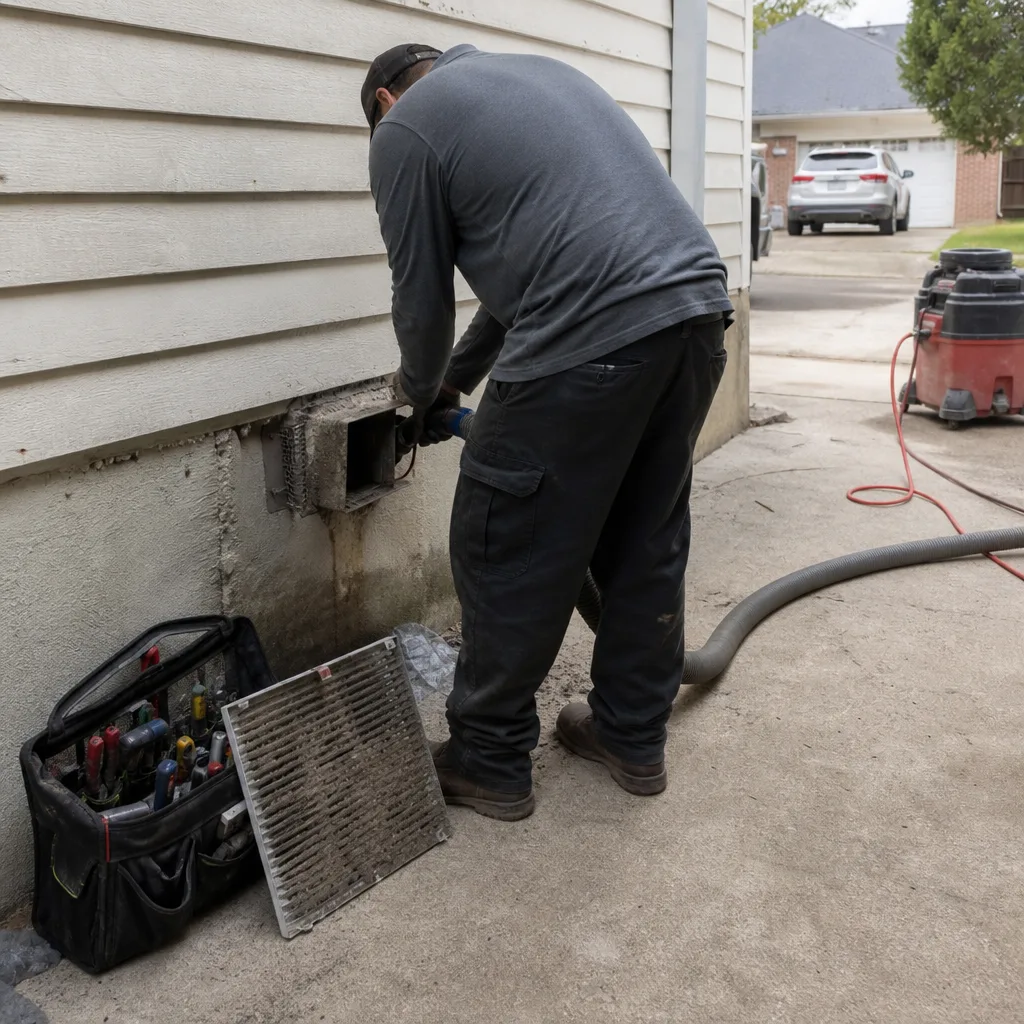 Before
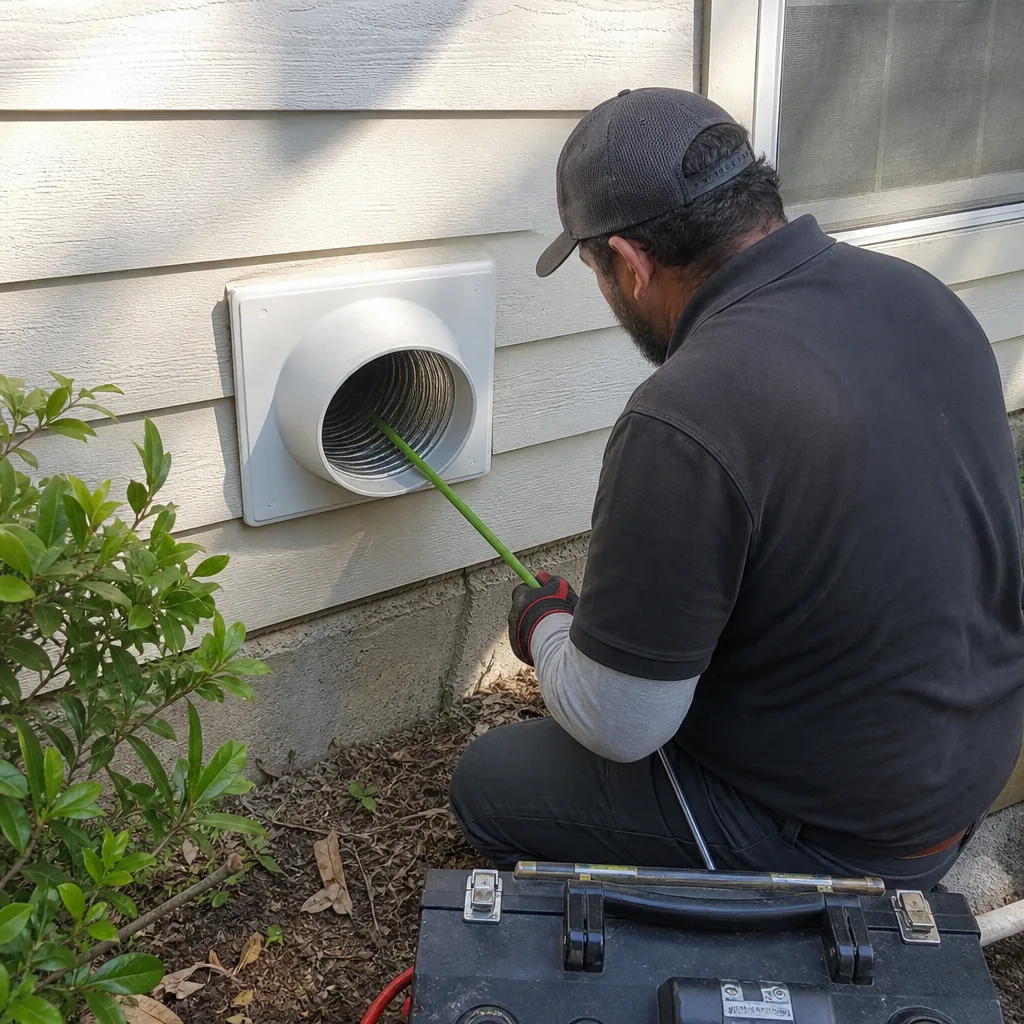 After
AfterReplacement Cost & What’s Included
Here’s what Nikro vent sanitizing part replacement actually costs in San Antonio, based on the jobs we’ve done this year. You’ll get a written price before we turn a single screw, in line with how we run every Cardinal Air Duct job.
- Nozzle assembly or O-ring kit replacement: $185 to $245 installed. This covers the part, a full pressure test, and a test fog cycle with a sanitizer that’s safe for the unit’s internals.
- Pump diaphragm or rebuild kit replacement: $220 to $310 installed. The diaphragm is the hardest part to access on most Nikro tank units, so labor is the bigger driver here.
- Hose, fitting, or check valve replacement: $195 to $260 installed, depending on hose length and whether the barb fitting is a standard or non-standard size.
- Full pump assembly replacement: $340 to $410 installed. We recommend this only when the motor has been running on a cracked diaphragm long enough to burn itself out or if the pump housing is physically cracked from being dropped or left in a hot truck.
Every replacement includes the part, the labor, a pressure and leak test, and a written guarantee on the work itself. That guarantee sits on top of our 365-Day Done Right Promise: if the work isn’t right, we come back and make it right, at no charge, within a full year. No fine print, no prorated nonsense. We also give you a free second visit if any repair fails.
DIY or Call Us?
We’ll be straight with you. There are things you can safely check, and things you shouldn’t try to fix with a pair of pliers and a YouTube video. The safest checks are simple: confirm the tank has sanitizer, look for kinks in the hose, and snug any fitting that has a hand-tightened collar. If those aren’t the fix, stop there.
Here’s where DIY goes wrong with Nikro units. The pump and nozzle internals are small, tightly seated, and easy to crack. The checking valve spring is tiny and disappears the moment you open the housing. And the sanitizing chemicals that sit in these units are not something you want to spill or splash on yourself while working blind. You can definitely replace a nozzle O-ring with the right part and a steady hand. But if you crack the pump housing, you’ve turned a $220 diaphragm job into a $410 pump assembly replacement. We’ve seen that happen twice this year.
If you’d rather have us diagnose it and fix it right the first time, call (254) 347-3897 and describe the symptom. We’ll walk through the most likely part, the cost, and the soonest we can put it back in your hands.
FAQs
In our experience, expect two to three years from normal commercial or high-volume use in San Antonio’s climate before a gasket, O-ring, or diaphragm failure appears. The heat is the main factor; truck-bed storage in August accelerates seal degradation dramatically. Units stored indoors, out of direct sun, typically get an extra year out of the same parts.
Sometimes. Diaphragms, O-rings, and check valves are serviceable and we repair them regularly. But a cracked pump housing, stripped fitting, or a burned-out motor is a replacement situation. We’ll tell you which it is before we do anything, and we’ll show you the damaged part if you want to see it. Call (254) 347-3897 and we’ll give you an honest read.
Most replacements take 30 to 60 minutes on a bench, including a pressure test and a fog cycle to verify the fix. If you bring the unit to us, you can usually wait or run an errand and pick it up the same day.
We keep the most common Nikro O-ring kits, check valves, diaphragms, and hoses in our San Antonio shop. Niche parts like a full pump assembly may need to be ordered, which usually adds one to two business days. We’ll tell you up front which situation you’re in.
If your Nikro unit is down and you’re losing time on jobs, don’t guess. Call (254) 347-3897 for a straight diagnosis and a written price before any work begins. We also stock parts for Lennox, Trane, and Carrier systems, but when it comes to Nikro vent sanitizing specifically, we know exactly what fails, what fits, and what it should cost. Clean ducts, straight answers, real price – that’s the whole pitch.
Written by Omar Haddad, Owner, Cardinal Air Duct San Antonio at Cardinal Air Duct San Antonio, serving San Antonio and nearby areas.