
Last updated October 15, 2026
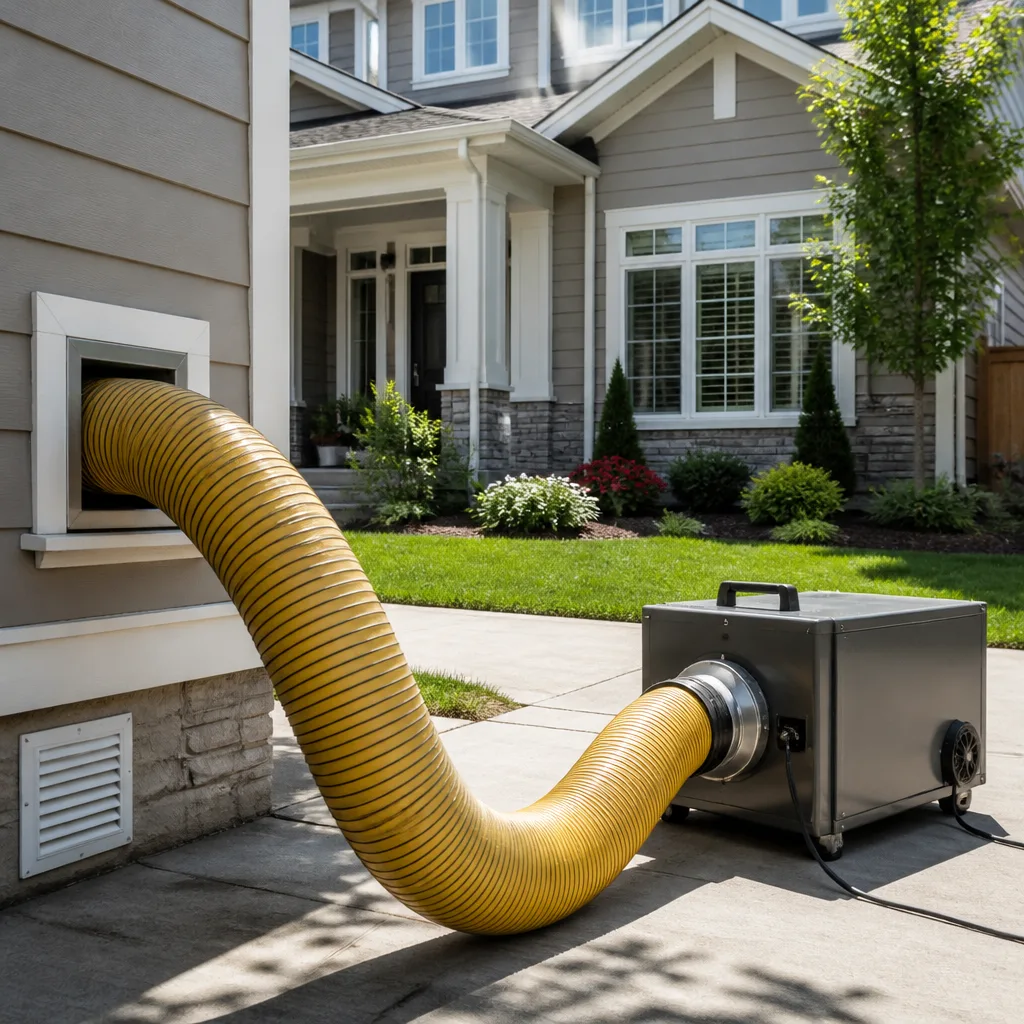 Whole-home duct cleaning
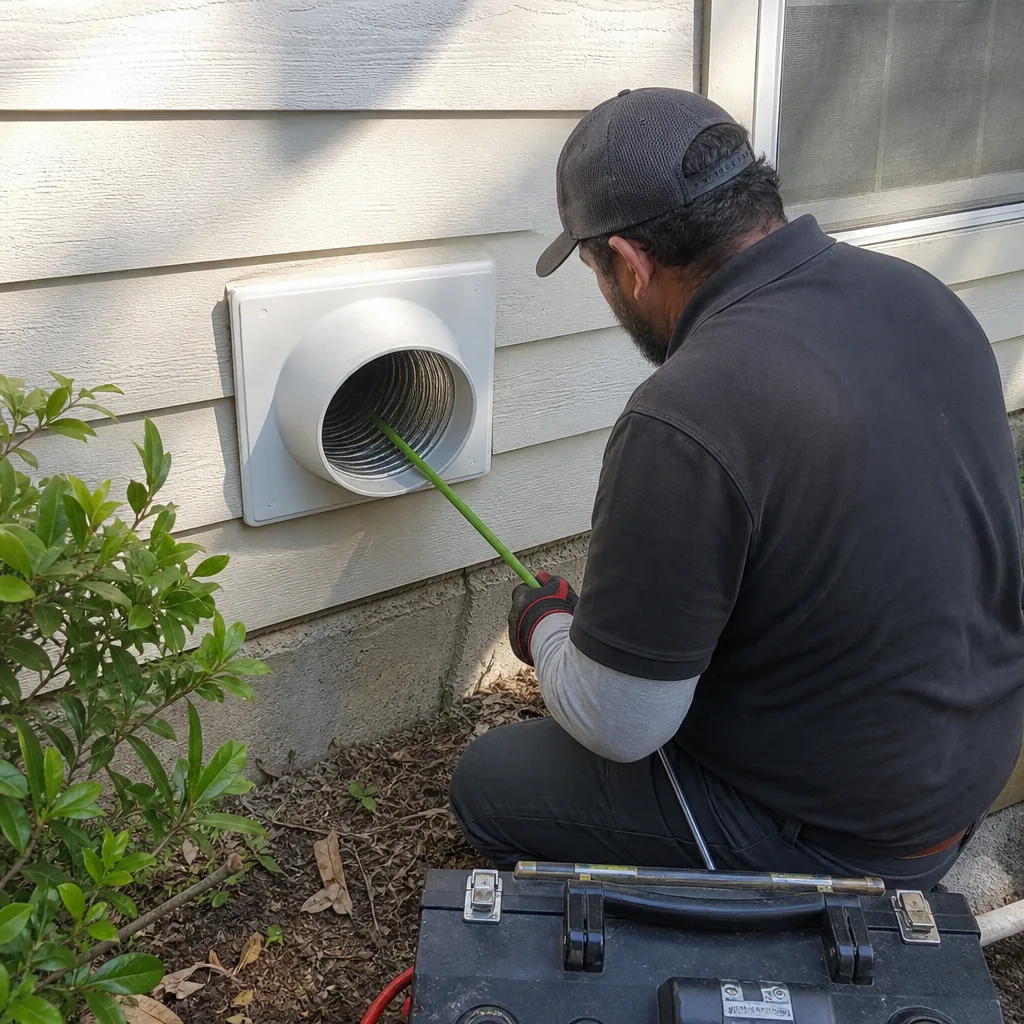
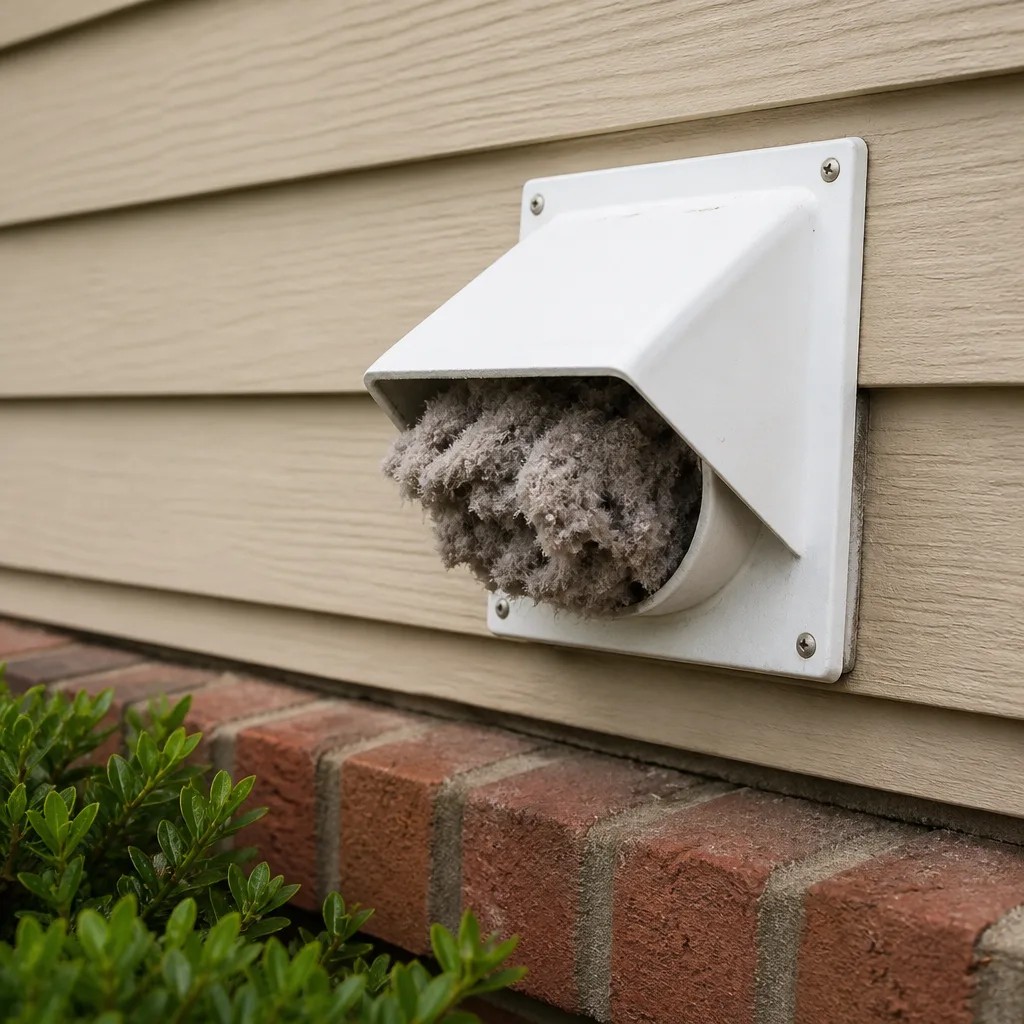 Dryer vent cleaning
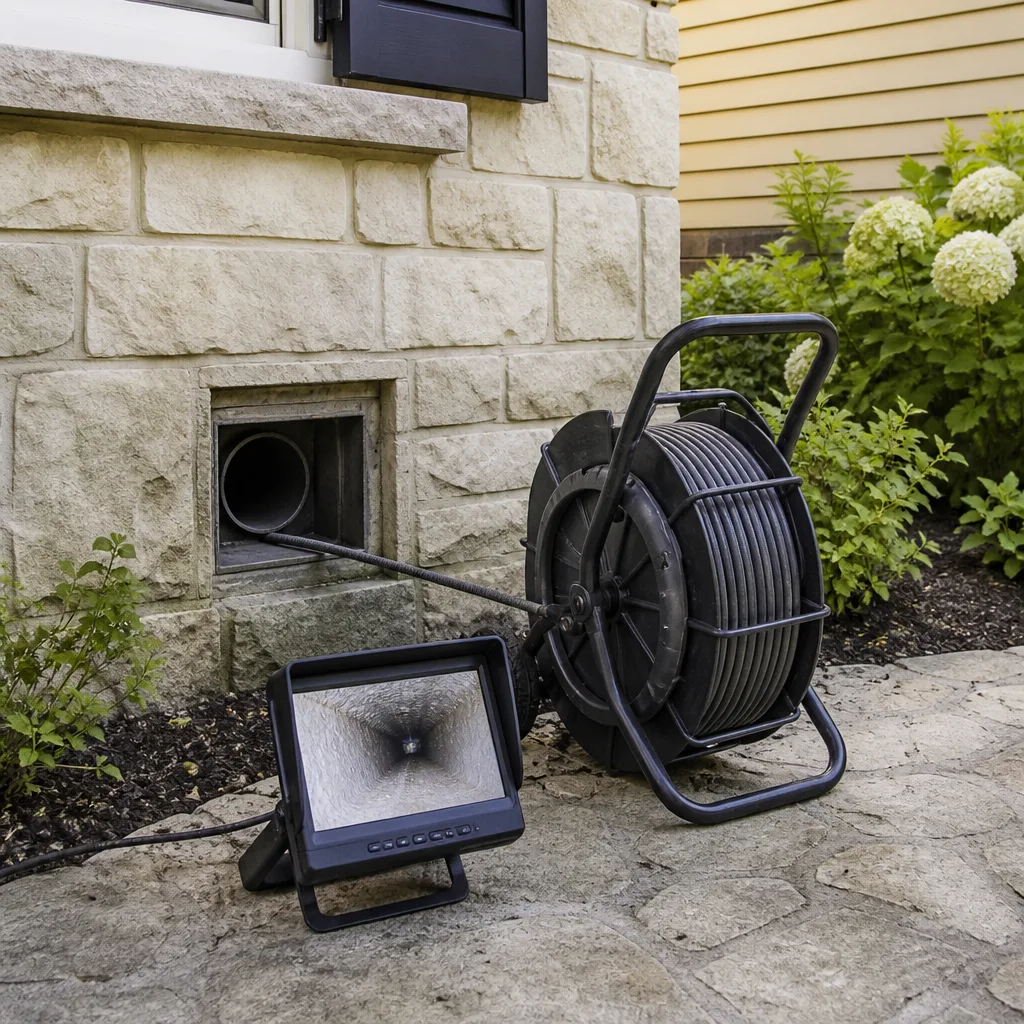 Camera inspection
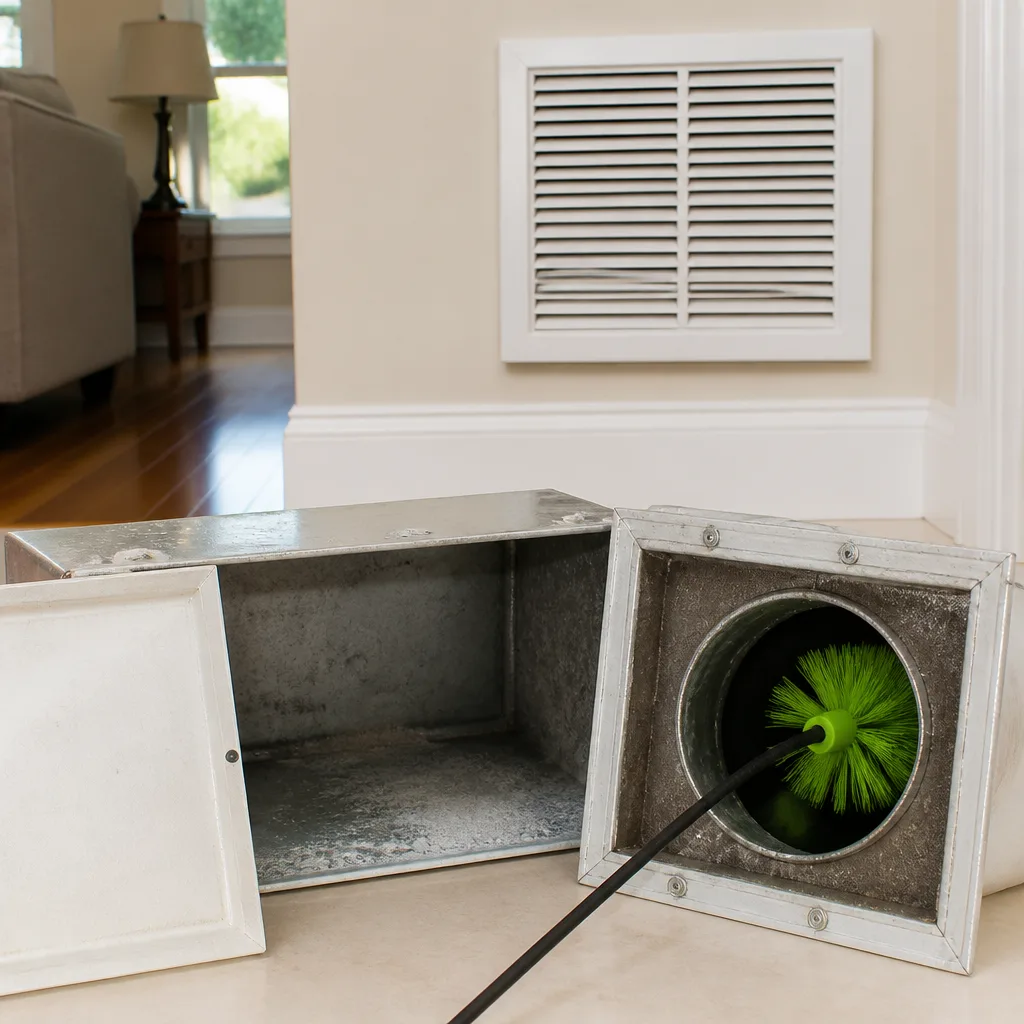 Sanitizing & deodorizing
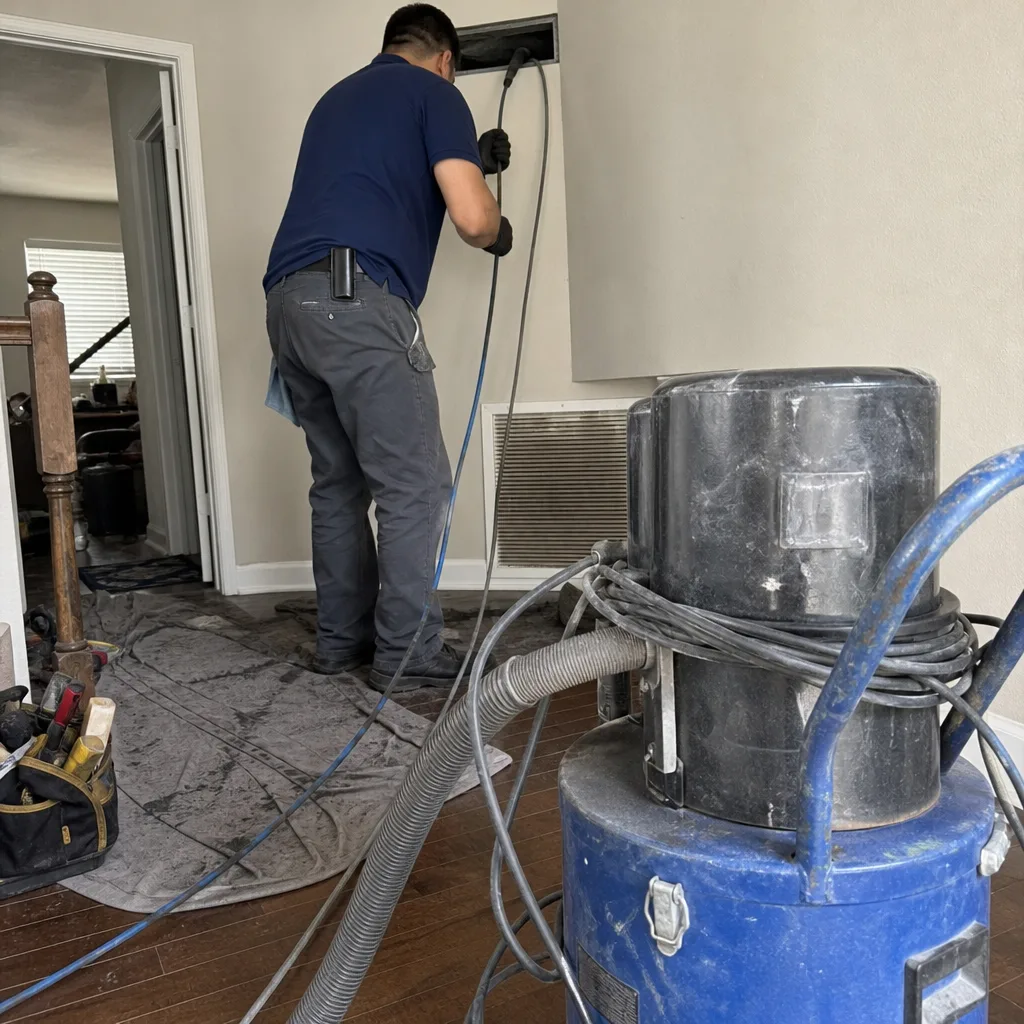
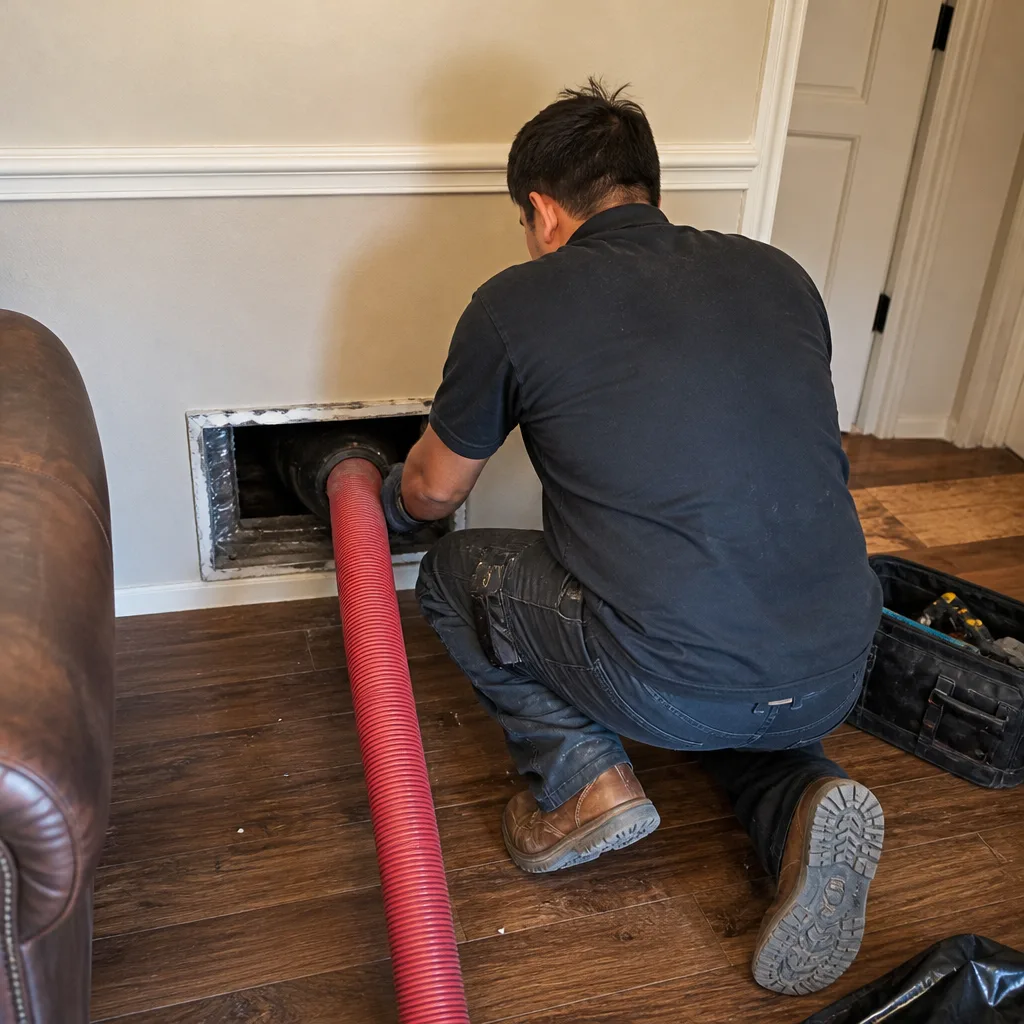
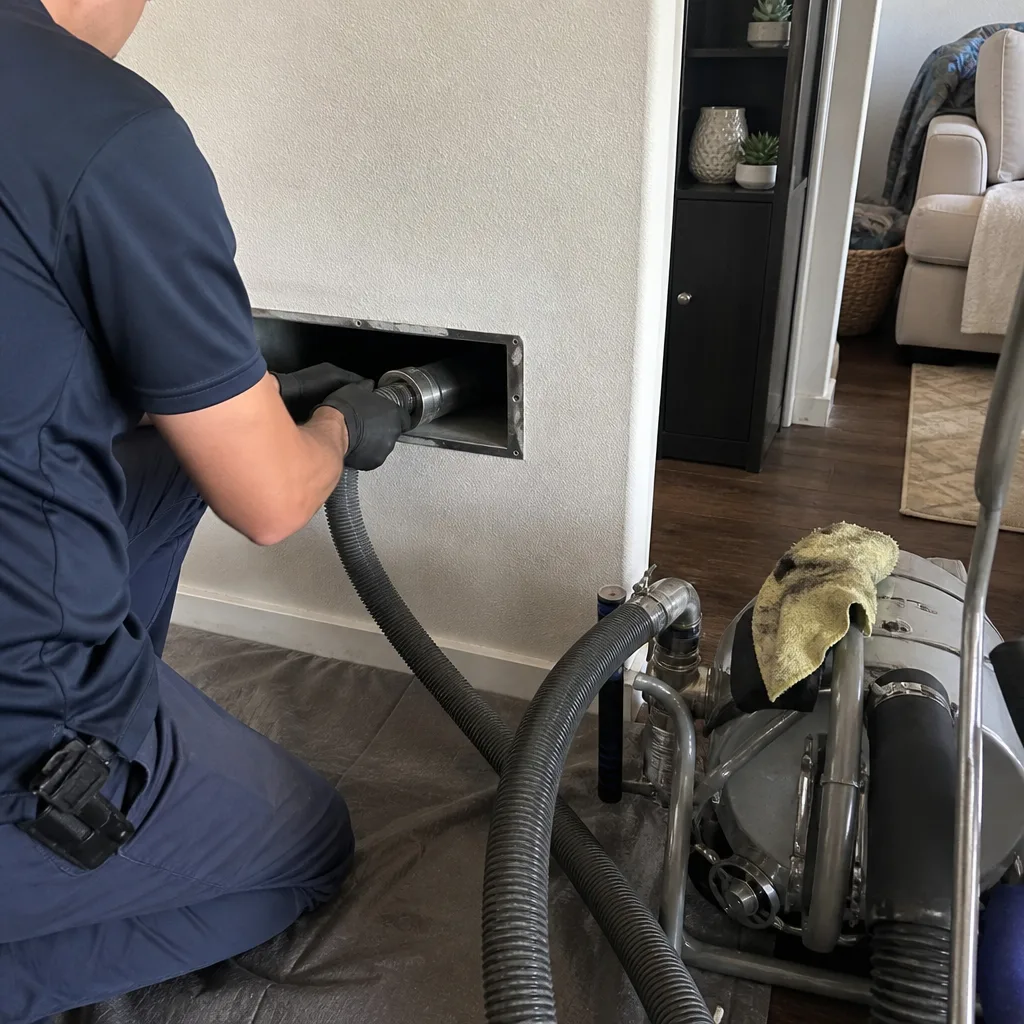
Whole-system duct and dryer vent check with before-and-after photos - you see exactly what came out of your vents
That "$99 whole-house special" is a bait ad - the real number appears once they are in your hallway, or the "clean" is a shop-vac at the register. We photograph the inside of your ducts before and after instead.
Air Duct Cleaning Warning Signs: A San Antonio Homeowner’s Reference Guide
Dust on your furniture is not a warning sign. Every home in San Antonio has dust on furniture, especially from March through October when windows stay shut and the AC runs around the clock. The actual warning signs that your ductwork is the source of a problem are specific, observable, and measurable. Most homeowners walk past them every day without recognizing what they’re seeing. This guide gives you a reference for what actually matters: register tests you can run with a paper towel, temperature patterns that point to trunk line blockages instead of equipment trouble, and how to distinguish harmless condensation from a real mold issue in San Antonio humidity. By the end, you’ll know whether your ducts need attention or whether you can put the phone down.
Styles & brands we work with
Quick Answer
The clearest warning signs that your air ducts in San Antonio need cleaning are: visible debris blowing from supply registers during the first 30 seconds of a cooling cycle, a gray film that reappears on vent grilles within days of wiping them, room-by-room temperature differences of more than 4 degrees in a single-story home, and a musty odor that intensifies when the blower runs. Any one of these warrants a professional assessment. The good news is most our Air Duct Cleaning services in San Antonio run $300 to $600 for a typical single-family home, and you can get a written price before any work starts.
Table of Contents
- The Register Test: What a Paper Towel Can Tell You
- Uneven Room Temperatures in a Single-Story Home
- Visible Mold at Return Grilles vs. Surface Condensation
- The Post-Renovation Cleaning Trigger
- Odor Mapping: Tracing Musty or Burning Smells Room by Room
- What Your Air Filter Is Telling You
- Allergy and Respiratory Signals Specific to San Antonio
- Common Mistakes to Avoid
- When to Call a Professional
- Frequently Asked Questions
- The Bottom Line
The Register Test: What a Paper Towel Can Tell You
Here is a test you can run in the next 15 minutes with nothing more than a white paper towel and a piece of tape. This is the single most reliable at-home indicator of debris-loaded ductwork, and it works best in San Antonio because our cooling cycles are long enough to generate meaningful airflow.
- Choose a supply register in the room where you spend the most time. Remove the grille if it lifts off easily. Otherwise, hold the paper towel directly over it.
- Turn your thermostat down 3 to 4 degrees below the current room temperature so the system kicks on.
- Hold the white paper towel over the register for the first 30 seconds of the cooling cycle. Tape it loosely if that helps.
- Turn the system off and examine the paper towel in good light.
Here is what the results mean. Light, fine gray dust is normal, especially in a San Antonio home with pets or carpet. What you are looking for is different. If you see dark specks, coarse grit, or a gray-brown smear, that debris came from inside the supply run, not from normal household dust. If the paper towel shows a tan or reddish tint, that points to insulation particles, often from aging flex duct in attics. San Antonio attics routinely hit 140 degrees in July, and that heat breaks down duct liner over time. In neighborhoods like Alamo Heights or Terrell Hills where homes date from the 1950s and 1960s, we frequently find original metal ducts with deteriorated interior lining contributing exactly this kind of particulate.
A paper towel that comes back visibly dirty after one 30-second cycle is a direct indication for Air Duct Cleaning in San Antonio. A paper towel that comes back with only a faint gray haze means your ducts are probably fine, and you should direct your attention elsewhere.
Uneven Room Temperatures in a Single-Story Home
In a two-story San Antonio home, upstairs rooms running warmer is normal physics. Heat rises, and the upstairs return is often undersized. But in a single-story home, room-to-room temperature differences of more than 4 degrees are a strong indicator of partial blockage in the supply trunk line, not an equipment problem. Here is why this distinction matters.
Think of your supply trunk as the main artery running through your attic or slab foundation. Branch ducts tap off it and feed individual rooms. When debris accumulates at a branch takeoff, that room starves for air while the rest of the house gets normal or even excessive airflow. The AC unit itself is working fine. The blower is moving air. The coil may be perfectly clean. But one room simply is not receiving its share. In our experience across San Antonio homes in subdivisions like Stone Oak, Alamo Ranch, and Helotes, partial trunk line blockages are one of the most common discoveries during a duct cleaning, and homeowners often report they had assumed the issue was a failing compressor or a bad zoning damper. It is usually neither.
How to check: walk your home with a thermometer on a hot afternoon when the AC has been running steadily for at least an hour. Write down the temperature in each room. If one room is 4 or more degrees warmer than the majority, and the supply grille in that room is also the one that shows the weakest airflow when you hold your hand to it, you have a pressure imbalance. That imbalance points to a restriction. And restrictions in ductwork are exactly what professional cleaning with a rotary brush system addresses. If the temperature readings vary across most rooms but airflow feels uniform, the issue is more likely insulation, window exposure, or duct leakage rather than debris. We tell San Antonio homeowners this because it saves them money: knowing whether you have a duct problem or an insulation problem before you start hiring people matters.
Visible Mold at Return Grilles vs. Surface Condensation
San Antonio’s humidity is relentless. Average afternoon humidity from May through September runs 55 to 75 percent. That creates real condensation on metal surfaces where cool air meets warm air, especially on return grilles and around supply boots. And here is the problem: surface condensation looks a lot like mold to an untrained eye. Confusing the two leads to expensive and unnecessary mold remediation, and it happens constantly.
Here is how to tell the difference. Condensation is water. It forms beads. It runs. When you wipe it with a dry paper towel, the residue is clear or very slightly gray. Mold is a growth. It does not bead. It appears as dark or discolored spotting with a fuzzy, powdery, or velvety texture. When you wipe actual mold, the residue is greenish, brownish, or black, and it stains the towel. Condensation is most likely on warm humid mornings before the AC has run or on grilles directly exposed to humid outdoor air. Mold, once present, does not disappear when the room dries out.
The more common issue in San Antonio homes is what is inside the return. We have opened return plenums in houses in Castle Hills and found surface mold on the interior of the return box, the first 18 inches of return duct, and the filter frame. This is where cold air meets unconditioned attic air, and the condensation feeds fungal growth over months. The risk factor is not just the return grille you can see; it is what is downstream. If you see dark discoloration on your return grille, remove the filter and inspect the metal lip behind it. If the dark discoloration extends behind the filter and into the return box, you have a genuine mold condition and the affected surfaces need cleaning or replacement. If the grille itself is simply wet with clear condensation, you have a humidity management problem, and a dehumidifier or a simple fix to the register orientation is often the actual solution.
We take a straight line on this. We tell our customers in San Antonio when they need duct cleaning and when they do not. A small area of condensation is not a reason to clean ducts. Visible mold growth on the interior of return ducting is. If you are unsure which you are seeing, take photos, then call someone who will tell you honestly rather than sell you a remediation package.
The Post-Renovation Cleaning Trigger
Any home improvement project that generates dust within 30 feet of a return vent is a near-automatic indication for duct cleaning. That includes drywall sanding, insulation installation, flooring removal, tile cutting, and even large painting projects done with a sprayer. Here is the mechanism. Your return vent is pulling air into the system the entire time it runs. If it runs during construction, or if it runs within days of construction while fine particulate is still airborne, that particulate enters the return, passes through the filter, and deposits itself throughout the supply side of the system. Even a MERV 11 filter does not catch everything, especially the fine gypsum powder from drywall sanding.
How long to wait before cleaning: about 10 to 14 days after the final sanding or demolition is complete. That window lets the heaviest airborne particulate settle so you are not paying to clean the system twice. Clean too early, and the remaining airborne dust just reloads the ducts within days. Wait longer than three weeks, and the debris has had time to bind with the normal humidity inside the ductwork, making it harder to remove and increasing the chance it absorbs moisture and becomes sticky.
This is not a theoretical concern in San Antonio. Our city has one of the most active renovation markets in Texas, with constant rehabs in older neighborhoods like Monte Vista, Alta Vista, and Government Hill, plus continuous new construction and build-outs in areas like Cibolo and Schertz. We regularly hear from homeowners who renovated a kitchen or replaced flooring and then spent months wondering why the whole house felt dusty and stale despite cleaning constantly. The answer in most cases: the renovation loaded the ducts, and the ducts have been redistributing that renovation dust into every room on every cycle. If you are coming off a renovation in a San Antonio home, a professional cleaning with containment, the Abatement Technologies approach, is the standard. Loose drywall dust and fiberglass particles are exactly what you do not want recirculating into a home where you are living and breathing daily.
Odor Mapping: Tracing Musty or Burning Smells Room by Room
Odor is the symptom homeowners report most often to us, and it is also the easiest to misdiagnose. A musty smell when the AC runs could come from the ducts, the evaporator coil, or even the condensate pan. A burning smell could be the blower motor, an overheating capacitor, or dust burning off the heat strips in winter. Before you call anyone, run a simple room-by-room elimination to localize the source. This one habit saves San Antonio homeowners hundreds of dollars in unnecessary service calls.
Here is the process, step by step:
- With the system off, walk each room and smell at the supply registers specifically. Note which rooms, if any, produce the odor at the register with no airflow.
- Turn the system on in cooling mode and let it run for 5 minutes. Smell each supply register again. If the odor appears at some registers but not others, the source is in the branch lines serving those rooms. If the odor appears at every register, the source is upstream: the coil, the blower, or the main trunk.
- Sniff at the return grille while the system runs. A strong odor here that is absent at the supplies means the debris is being pulled in from the living space or the return side, not generated inside the system.
- Stand near the indoor air handler (usually in a closet or attic). If the smell is strongest here and present everywhere in the house, the issue is at the equipment, not the ductwork.
In San Antonio, a musty, dirty-sock odor in the supplies almost always traces to microbial growth on the evaporator coil or inside the supply plenum, both fed by our summer condensation and attic humidity. That is an HVAC Cleaning in San Antonio issue as much as a duct issue, because the coil and the ducts are one connected air path and should be cleaned together. A burning smell on first heating in November or December is typically accumulated dust on the heat exchanger or heat strips burning off, common in San Antonio because our heating season is short and the system sits in cooling mode for nine months. If the burning smell persists beyond the first few heating cycles of the season, kill the system and call a professional immediately; that pattern points to an electrical fault, not dust.
What Your Air Filter Is Telling You
Your air filter is a diagnostic tool, not just a maintenance item. In a San Antonio home where the AC runs 2,000 to 2,500 hours per year, the filter sees more airflow than a filter in most other American climates. How it looks at the end of its life tells you a lot about what is going on inside the system.
A filter that comes out evenly gray is normal. A filter that comes out with a heavy accumulation on one side but not the other indicates uneven airflow through the system, often pointing to a partially blocked return or a crushed return duct in the attic. A filter with visible chunks, fibers, or construction debris tells you that debris is being drawn through the return side, and that same debris is passing into the system when the filter is full or poorly sealed. A filter that develops a musty odor within weeks of install is a red flag for microbial growth upstream or downstream of the filter, especially common in San Antonio attics where the filter box sits in humid, unconditioned air. If you see fiberglass from deteriorating duct liner in your filter, do not ignore it. That material is moving through your air handler and into your living space.
We recommend checking filters monthly in the cooling season, not because we sell filters, but because a full filter starves the system and turns a smooth-running AC into a stressed one. The more stressed the system, the faster debris accumulates on the coil and inside the ducts. If you are seeing filter issues that defy explanation, that is a signal to have the entire air path inspected and cleaned. For homes with persistent dust and filter loading, our team at Cardinal Air Duct San Antonio home is direct about what is actually causing it, and we write the price before any work starts.
Allergy and Respiratory Signals Specific to San Antonio
San Antonio sits in a band of Texas where mountain cedar from the Hill Country, oak pollen from our native live oaks, and mold spores from our high humidity converge for overlapping seasons. It is genuinely hard to be an allergy sufferer here. But here is the distinction we want every San Antonio homeowner to understand: if your symptoms are seasonal and match the pollen calendar, your ducts are probably not the primary issue. If your symptoms are year-round, worse in your own home than at work or outdoors, and accompanied by visible dust accumulation on vents and surfaces, your system may be acting as a continuous allergen delivery mechanism.
The mechanism is simple. Pollen and mold spores enter the return, get pulled through the system, and then get redistributed through every supply register during every cooling cycle. Even after outdoor pollen counts drop, the material that settled inside the ductwork remains. Each cooling cycle kicks some of it back into the air. That is why some San Antonio homeowners report sneezing and congestion in their own home even on days when the outside allergen count is low. The system is recycling what has already been captured.
What checks out in our experience: homeowners who run good filtration (Honeywell or Aprilaire media cabinets, or Guardsman filters with proper MERV ratings) and still experience constant indoor symptoms often have debris loaded in the supply side of the system where filtration cannot help. The filter protects the equipment. It does not clean the ducts downstream. If you have a good filter, a clean home, and indoor symptoms that persist, a professional evaluation of the ductwork is the logical next step. For customers in San Antonio, we are honest about whether cleaning will make a difference or whether the issue is more properly addressed with a whole-home air quality system.
Common Mistakes to Avoid
- Assuming dust on furniture means dirty ducts. In San Antonio, with our long cooling season and hard water, surface dust is often just ambient household dust. Run the register test before you call anyone.
- Cleaning ducts without addressing the source. If the debris is coming from a deteriorated flex duct in your attic, cleaning does not fix the duct. The source has to be repaired or replaced, or the problem returns within months.
- Waiting far too long after a renovation. Three weeks after drywall sanding, the dust has combined with humidity and set into the duct walls. Clean too late and removal is harder, longer, and more expensive.
- Mistaking condensation for mold. San Antonio humidity creates beads on cold metal. That is water, not mold. Wipe it, check the residue, and look behind the filter before reacting.
- Choosing a duct cleaner on price alone. A $99 whole-house special is a bait price in this trade. Expect to pay $300 to $600 for a proper San Antonio whole-home cleaning. Anyone below that is cutting corners you will pay for later.
- Ignoring a burning smell after the first heating cycles of the season. Dust burn-off is one thing. A persistent burning smell means electrical trouble. Kill the system and call a pro the same day.
- Running the system during construction. If you are renovating, cover the returns or turn the system off during dusty phases. The cost of preventing debris from entering the system is zero compared to the cost of removing it later.
When to Call a Professional
Call when the register test shows dark grit or particulate blowing from your supplies after one 30-second cycle. Call when one room in your single-story San Antonio home runs 4-plus degrees warmer than the rest with weak airflow at the register. Call when you find visible mold behind the return grille, inside the return box, or on the interior of supply registers. Call when a renovation has loaded your system and the dust is not settling after two weeks. Call when you map an odor to the ductwork and it persists after filter replacement. And call if you simply want certainty rather than guesswork. For The Complete Guide to Air Duct Cleaning in San Antonio and a free estimate, contact Cardinal Air Duct San Antonio. We arrive with written pricing before a single duct is touched, and every job is backed by the 365-Day Done Right Promise. Our number is (254) 347-3897.
Frequently Asked Questions
Most standard air duct cleanings in San Antonio run $300 to $600 for a typical single-family home, depending on the number of systems, the total number of registers, and the degree of contamination. That range assumes a professional-grade cleaning with rotary brush agitation and HEPA-filtered negative-pressure extraction. Anyone quoting significantly below that range is almost certainly selling a partial job or a bait-price upsell. Call (254) 347-3897 for an exact written quote. Our estimates are free and the price does not change at the door.
Because they are selling something different than what they are describing. The common model is a low advertised price that covers only a count of vents, quick vacuuming at the register, or a visual inspection. Once the technician is in the home, the job gets “upgraded” to the real cleaning at two to three times the original quote. A legitimate whole-system cleaning requires rotary brush agitation, HEPA-rated vacuum extraction, and time. With Cardinal Air Duct San Antonio, you get a written price before any work starts, and that price does not change when the technician arrives.
Request before-and-after photos of the interior of your main trunk line and at least two branch lines. A reputable contractor will capture those images with a camera inspection system. At Cardinal Air Duct San Antonio, before-and-after photo documentation is standard, not an upsell. You will see the interior condition of your ductwork before we start and the same surfaces after we finish.
For most San Antonio homes, every 3 to 5 years is a reasonable interval, assuming normal occupancy and no major renovations. Homes with multiple pets, smokers, recent construction, or a history of water intrusion may need more frequent attention. The better approach than a strict calendar schedule is to run the register test annually and watch for the specific warning signs outlined in this guide. If the signs are absent, you can defer. If they are present, do not wait for a “due date.”
It depends on whether the allergens are coming from the ducts. If your system is loaded with years of accumulated pollen, dust, and debris that gets redistributed on every cycle, then yes, cleaning removes that reservoir and reduces indoor allergen exposure. If your ducts are relatively clean and your symptoms are seasonal, cleaning will make little difference. The register test and odor mapping in this guide will help you determine where the allergen source actually is. For a deeper comparison, see DIY vs Professional Air Duct Cleaning: The San Antonio Homeowner’s Decision Guide. We are straightforward about this because we would rather tell you the truth than sell you a cleaning you do not need.
No. Your dryer vent is a separate system from your HVAC ductwork, with its own function and its own safety considerations. Lint buildup in a dryer vent is a fire hazard and needs its own cleaning service, typically every 12 to 24 months depending on usage. We offer dedicated Dryer Vent Cleaning in San Antonio as a separate service, and it is worth doing on its own schedule regardless of when your HVAC ducts were last cleaned.
Yes, for the first few minutes at minimum. You will want to confirm the scope of work, see the equipment being used, and receive your written price before anything starts. After that, most homeowners remain in the home or step out, whichever is more comfortable. Our technicians at Cardinal Air Duct San Antonio are background-checked and uniformed. You will know who is arriving before the door opens.
The Bottom Line
The honest truth about air duct cleaning warning signs in San Antonio is that most homeowners overreact to the wrong signals and underreact to the right ones. Dust on the dresser is not a diagnosis. A dark smear on a paper towel held over a supply register is. Condensation beads on a return grille are not an emergency. Visible mold growth extending behind the filter frame is. A room that runs 4 degrees warmer than the rest of your single-story home is a clue most people never follow. If you take away one thing from this guide, take the register test. It costs nothing, takes 10 minutes, and tells you more than any online quiz ever will. For more guides & resources on maintaining healthy indoor air, visit our blog. And if the test or any of the other signals point to a real problem, call (254) 347-3897 and we will give you a straight answer and a written price.
Written by Omar Haddad, Owner at Cardinal Air Duct San Antonio, serving San Antonio since 2005.
See the difference
 Before
 After
After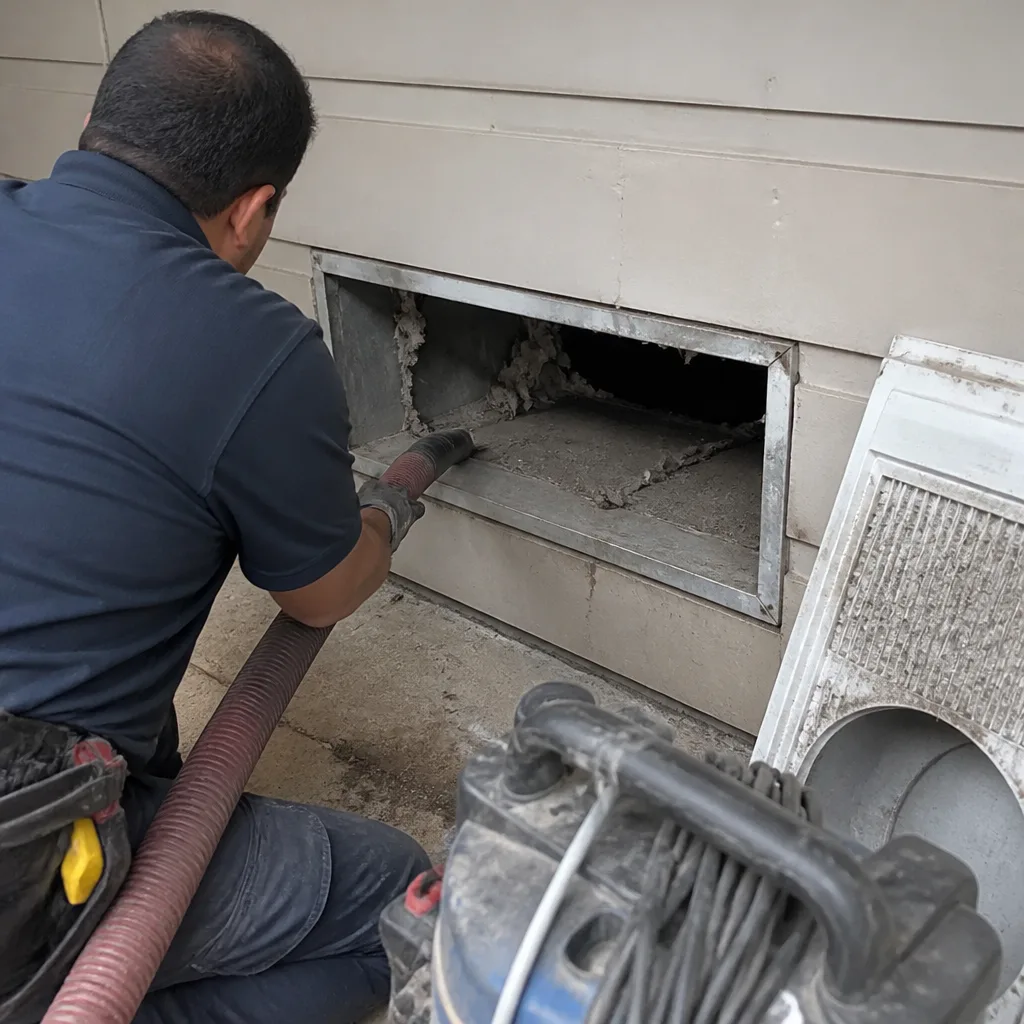 Before
 After
After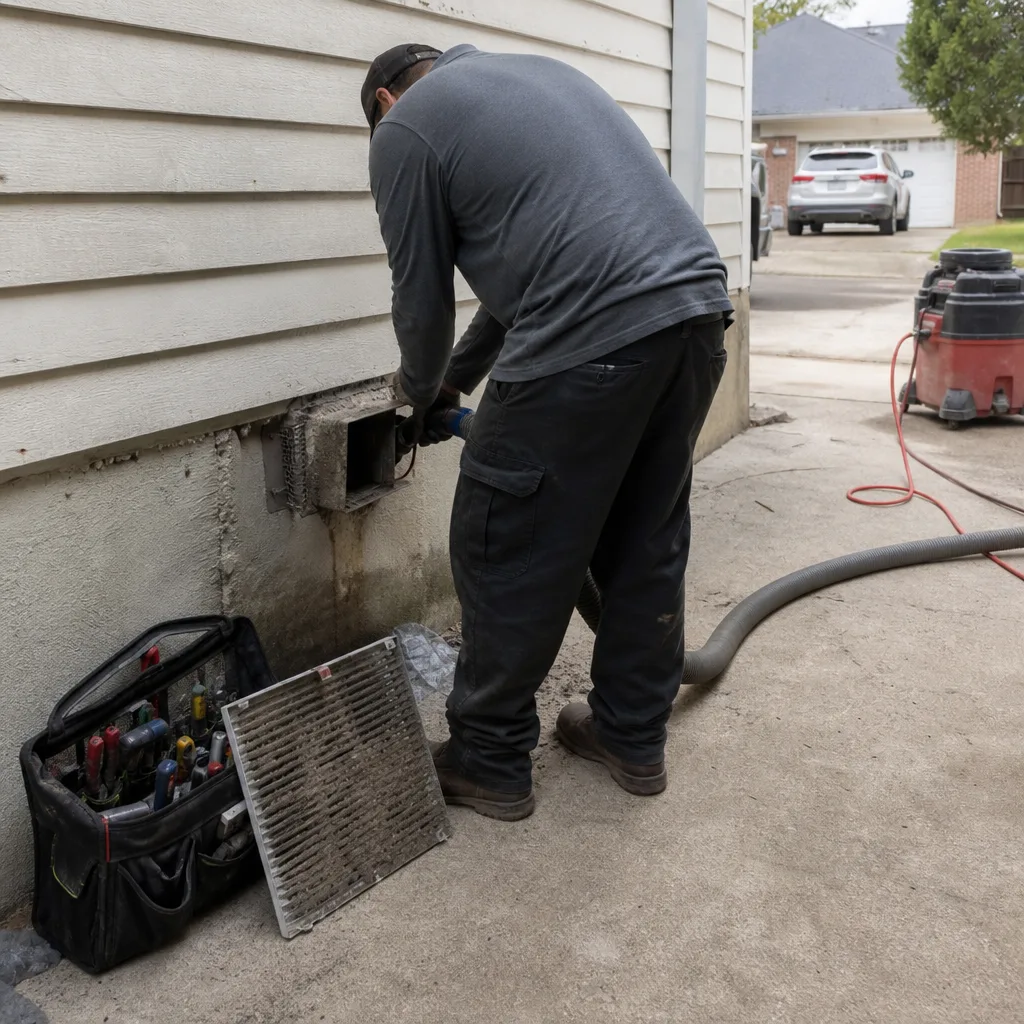 Before
 After
After